At a glance
Use day one in York for the Minster, a manageable section of the city walls and the streets around the Shambles. Give day two to the National Railway Museum or a deeper visit to the city’s social history, then leave time for the gardens and river. York works well as a car-free overnight stay, with the station close to the historic centre.
Choose a route through York's different histories
York brings together a large cathedral, medieval streets, archaeological interpretation and railway collections within a relatively small city. Two days let you choose among them without turning each visit into a brief stop. Begin with the Minster and old centre, then use the second day for a substantial museum visit and a more relaxed outdoor circuit.
The itinerary assumes two full days. If you arrive after lunch, move the main Minster visit to the following morning and use the first afternoon to get your bearings. A walk through the streets does not require the same fixed entry time as a booked attraction, so it is the easiest part of the plan to move.
York also fits a longer journey through Britain. Our Edinburgh itinerary offers another historic-city stay farther north. Check the rail journey for your dates and leave each city enough time of its own; a convenient train connection does not turn travel between them into extra sightseeing hours.
| Time | Suggested route | Main choice |
|---|---|---|
| Day one morning | York Minster and nearby walls | Decide separately whether to add a tower climb |
| Day one afternoon | Shambles and surrounding streets | Add one history experience or keep the walk flexible |
| Day two morning | National Railway Museum or Castle Museum | Choose the subject you want to explore in depth |
| Day two afternoon | Gardens, river and a final meal | Leave time for luggage and an onward train |
Start with York Minster
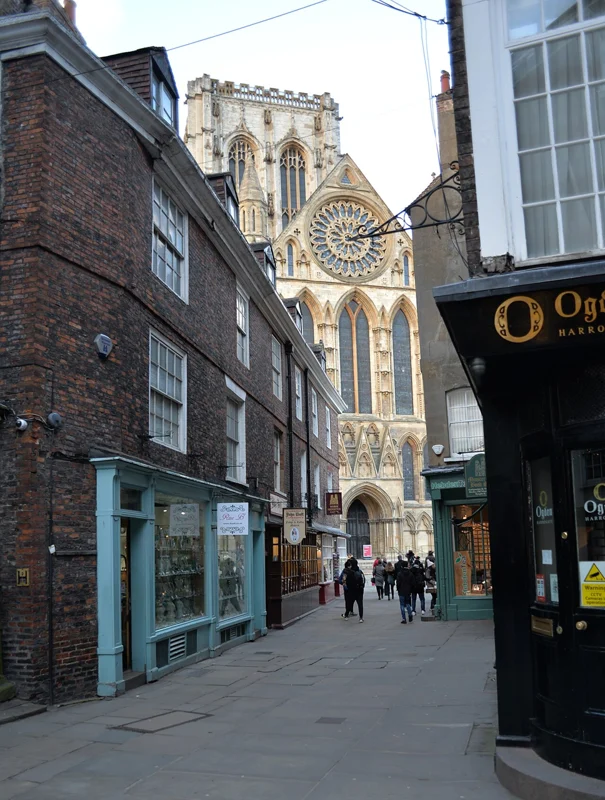
Make York Minster the main visit of the first morning. Look at the exterior as you approach, then allow time inside for the building's scale, stained glass and details that are easy to miss when moving quickly. Choose a few areas to study rather than trying to photograph every part of the interior in one continuous circuit.
The Minster is a working cathedral. Check the visitor information for your date and distinguish sightseeing admission from attendance at a service. If worship or music is part of your interest, approach that as its own experience and respect the arrangements for the congregation. It should not be treated as a way to conduct an ordinary tourist visit during a service.
A tower climb requires a separate decision about time and physical effort. Read the current conditions and booking arrangements before adding it. If the climb is not suitable for your group, keep the ground-level visit and use a later walk for views of the skyline. You do not need to climb the tower to appreciate the cathedral's relationship with the city around it.
Walk a section of the walls
After the Minster, choose a manageable section of the city walls. A full circuit is not necessary for a first visit. The section around the northern side of the centre can provide views towards the cathedral, but choose an entry and exit that fit your route and check which stretches are accessible during your stay.
The walls are not a continuous, level pavement around the city. Access can involve stairs, and conditions on exposed sections differ from those in the streets below. Wear footwear suited to the surface and follow local signs. If the route is unsuitable because of mobility needs or weather, use the streets beside the walls and the views through the gateways instead.
Allow the walk to end near a convenient lunch area rather than committing to a circuit that leaves you far from your next booking. The walls work best as a way to understand the city's shape, not as a task that must be completed before you can enjoy the afternoon. A shorter walk with time to look around is a useful introduction in its own right.
Explore the Shambles and the lanes around it
Continue into the streets around the Shambles. The narrow street and overhanging buildings make a strong impression, but it can become crowded. Walk through once, then explore the adjoining lanes and small squares instead of spending the whole afternoon in a queue for one shop. Returning later may give you a different view of the same street.
York's old centre has more to offer than one familiar photograph. Follow a short loop through the surrounding streets, stop where a building or shop interests you and use the Minster or the river to orient yourself. Keep entrances clear and remember that the lanes serve people working and living in the city as well as visitors.
The Shambles is often associated with fantasy-film imagery in visitor conversation. Enjoy the atmosphere without assuming that a shop's theme proves a filming connection. York's tourism information states that the Harry Potter films were not filmed in York. The street's own history and architecture are sufficient reasons to visit.
Pick one extra history experience for the afternoon
If you want another structured visit, choose a subject rather than simply the nearest ticket desk. JORVIK Viking Centre offers an interpreted encounter with the city's Viking past, while York Castle Museum focuses on social history. These are different experiences, with different rhythms and demands on your time. Check the programme and admission arrangements before selecting one.
For a family visit, consider how everyone responds to a guided or immersive attraction compared with a museum where you can set more of your own pace. A well-chosen visit followed by an unhurried snack is usually easier to enjoy than two consecutive admissions after a long morning in the Minster. Leave room for the interests you discover during the first day.
You can also keep the afternoon outdoors and save the museum for day two. Our art and museums collection groups trips around the subjects worth spending time on. In York, choosing between railway, archaeological and social history is more useful than trying to count how many attractions you can enter.
Day two: give the National Railway Museum a proper visit
The National Railway Museum makes a strong centrepiece for the second day, especially for visitors interested in engineering, design or the experience of rail travel. It is near the station side of the city, so check the current pedestrian approach before setting out. Allow enough time to look beyond the most conspicuous locomotives and explore the stories behind them.
General museum admission is free at the time of our source check, with advance booking offered. Special activities and experiences can have separate arrangements. Check the museum's own visitor information when planning, particularly if you are travelling for a named locomotive or a specific activity. Collection displays and the location of individual vehicles can change.
The size of the exhibits can make the museum appealing even to visitors who do not consider themselves railway enthusiasts. Look at how passengers, staff and engineers used the vehicles and spaces, rather than treating the collection as a list of engine names. Give yourself permission to spend longer on one part of the story and skip an area that matters less to you.
Alternative: Castle Museum and the southern centre
If railway history is not your main interest, use the second morning for York Castle Museum and the surrounding part of the centre. Its recreated Victorian street, Kirkgate, is one way into the museum's social-history themes. Allow time for the wider displays instead of treating that street as the only reason to enter.
Clifford's Tower is another distinct visit nearby. Choose it for its setting, history and views, and check access arrangements before making it part of the plan. Proximity does not mean both visits will suit everyone in your group. One substantial museum stop followed by a walk may be a better balance than adding another admission immediately afterwards.
This southern-centre option also works when your first day has concentrated on the Minster and northern streets. It gives the second day a different focus without requiring an excursion outside York. If you want both the Railway Museum and Castle Museum in depth, a third day provides a more comfortable solution than reducing each to a hurried hour.
Finish with gardens, the river and a meal
After the main museum visit, use Museum Gardens or a suitable riverside stretch for a change of pace. These are places to pause rather than another set of compulsory stops. A short walk with a bench or café break can be enough after several hours indoors, particularly if you have an onward train later in the day.
Choose riverside paths according to conditions and local signs. The River Ouse is part of York's character, but a particular low-level path is not essential to this itinerary. Higher streets and bridges still provide views when a waterside route is unsuitable. Never cross a closure or flooded path to complete a suggested walk.
For dinner, choose an area that makes the return to your accommodation easy. A restaurant in the historic centre, a quieter meal away from the busiest lanes and a quick supper before a train can all suit different trips. Booking a meal may be useful when you have a firm preference, but leave enough time after a museum visit to reach it comfortably.
Stay centrally and use rail sensibly
Accommodation near the station is useful for luggage and early departures, while a room within the historic centre can make evening walks easier. Compare actual walking routes and room access. Older buildings may have stairs or narrow entrances, and a central address does not guarantee that the last part of the journey is easy with bags.
You do not need a car for the two days described here. Walk between the main central areas and use a local transport option when distance or mobility makes that preferable. The car-free travel guides include more destinations where a well-chosen base matters more than parking close to each attraction.
Before leaving, allow time to retrieve luggage and reach the correct station platform. If continuing south, our London guide can help plan the next city stay. Keep the final York afternoon light enough that a long lunch or an extra gallery does not turn departure into a race.
Frequently asked questions
Is two days enough for York?
Two full days allow time for the Minster, old streets, a section of the walls and one or two substantial museum visits. Add a day if you want several major collections in depth.
Can you walk the York city walls with a wheelchair or pushchair?
Many wall sections involve stairs and uneven or narrow surfaces. Check access information and use street-level routes where necessary; the complete walls should not be assumed to be step-free.
Is the National Railway Museum free?
General admission was free when checked, with advance booking available. Check current visitor information and separate charges for special activities before your trip.
Was Harry Potter filmed in the Shambles?
York’s official tourism information says the Harry Potter films were not filmed in York. Visit the Shambles for its historic buildings and streetscape, rather than a claimed filming location.
Sources and checks
- York Minster: visitsChecked: 23 October 2026
- City of York Council: city wallsChecked: 23 October 2026
- National Railway Museum: visitingChecked: 23 October 2026
- Visit York: visitor FAQsChecked: 23 October 2026
- Visit York: history itineraryChecked: 23 October 2026
- Visit York: travel informationChecked: 23 October 2026
Itineraries are editorial suggestions for independent visits. Check current prices, opening hours and trail conditions with official providers.