At a glance
Spend day one in Bath around the Roman Baths and Abbey, then walk to Pulteney Bridge and along Great Pulteney Street. Use day two for the Circus, Royal Crescent and a house-museum or art visit. The historic Roman Baths are a museum, not a swimming venue; a modern thermal-spa session is a separate experience that needs its own time.
Build the weekend around two different parts of Bath
Bath rewards a route that separates its Roman centre from its Georgian streets. Start near the Abbey and Roman Baths on the first day, then move towards the river. On the second, walk uphill through the Georgian part of the city towards the Circus and Royal Crescent. This division keeps the distances manageable and avoids repeatedly crossing the same central streets.
Choose your most important paid visit before filling the rest of the timetable. For many first-time visitors that will be the Roman Baths, with one other museum or house visit on day two. Someone interested primarily in paintings might instead give the Holburne Museum a longer afternoon. The itinerary allows those choices without requiring every attraction to fit into one weekend.
If Bath forms part of a longer British rail trip, our London itinerary provides a contrasting large-city stay. Two full days in Bath give you time to walk between places and sit down for meals, rather than combining the whole city with an excursion to Stonehenge or the Cotswolds.
| Time | Suggested area | What to prioritise |
|---|---|---|
| Day one morning | Roman Baths and Abbey | Book the main museum visit and allow time inside |
| Day one afternoon | Pulteney Bridge and Great Pulteney Street | Choose Holburne Museum or a longer outdoor walk |
| Day two morning | Queen Square, Circus and Royal Crescent | Add No.1 Royal Crescent if domestic history interests you |
| Day two afternoon | Park, spa or a flexible final walk | Choose one main activity before departure |
Begin with the Roman Baths
Book a Roman Baths entry time that works with your arrival and gives you enough time inside. If you reach Bath late in the morning, a later slot is more comfortable than a reservation dependent on a perfectly punctual train. Once inside, treat the site as a museum and archaeological visit rather than a single photograph beside the Great Bath.
The displays and surviving structures help explain how the complex functioned and why the hot spring mattered to the Roman settlement. Follow the visitor route, pause where a particular object or explanation interests you, and allow the visit to take longer than a quick circuit of the pool. An audio guide or interpretation can add context to spaces that otherwise look like disconnected remains.
There is no swimming in the historic Roman Baths. If bathing in thermal water is part of your trip, plan a separate visit to a modern spa and check its admission conditions. Keeping these experiences distinct avoids arriving at the museum with the wrong expectations or allocating a single ticket and time block to two different activities.
Give the Abbey and surrounding streets time
Bath Abbey stands beside the Roman Baths, making it a natural next stop. Look at the exterior from the square before entering, then decide how much time you want for the interior. The building serves a worshipping community as well as visitors, so tourist access needs to fit around services and events.
An Abbey tower tour is a separate choice. Check the booking and physical requirements if you want to climb, and allow time beyond an ordinary interior visit. Travellers who prefer to remain at ground level can still appreciate the church and surrounding squares. Avoid assuming that a tower experience is an essential part of seeing Bath.
For lunch, move a few streets away from the busiest queues and compare what is actually available. A long restaurant meal suits an afternoon with one museum; a lighter lunch leaves more room for walking. Keep this meal flexible if you have spent longer in the Roman Baths than expected, rather than rushing through the final rooms to reach an arbitrary lunch time.
Walk to Pulteney Bridge and Great Pulteney Street
From the Abbey area, continue towards Pulteney Bridge. The bridge is lined with shops, so its appearance from the crossing differs from the familiar view from beside the river. Take time for both perspectives. Choose a public viewing point with safe footing and leave space for others using the pavement rather than stopping in the middle of a narrow passage.
Across the bridge, Great Pulteney Street leads towards the Holburne Museum. This is a good afternoon walk even if you are not planning a museum visit. The long street gives you a different sense of Bath's architecture from the enclosed spaces around the Abbey. Walk far enough to understand its scale before turning back.
If you want more time outdoors, continue into the green space around Sydney Gardens according to your energy and the weather. If you prefer an indoor afternoon, use the Holburne as the main stop. These alternatives should replace one another in a short itinerary; you do not need a long park circuit, an extended museum visit and another attraction before dinner.
Choose the Holburne for an art-focused afternoon
The Holburne combines its collection with a changing exhibition programme. Look at what is showing during your stay and choose the visit for those subjects, rather than relying on an old list of temporary exhibitions. A special exhibition may be the reason to spend most of an afternoon here, while another visitor may prefer a shorter collection visit.
Leave time after the galleries for a seated break before walking back towards the centre. The return along Great Pulteney Street and over the bridge is straightforward to include, but it is still part of the day's walking. If someone in your group is tired, a shorter return or a local transport option may be more useful than another scenic detour.
Our art and museums guides cover other destinations where the collection and the neighbourhood around it can shape a whole day. In Bath, the museum's position makes it easy to connect art with a city walk without scheduling several unrelated admissions.
Day two: Queen Square, the Circus and the Royal Crescent
Start the second day with a walk towards Queen Square, then continue through the Georgian streets to the Circus. The route rises away from the lower city centre, so allow a slower pace if hills are tiring. Look at the buildings as groups as well as individual façades: the shape of the streets and spaces is central to the experience.
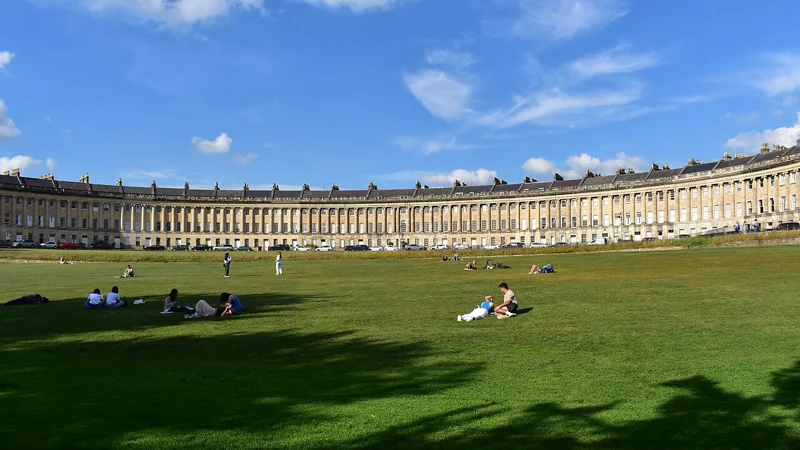
At the Circus, take time to walk part of the circle before continuing to the Royal Crescent. The two places are close enough to combine naturally, but they create different effects. The Crescent opens towards a broad outlook, while the Circus draws attention around its enclosed curve. You do not need specialist architectural knowledge to notice that contrast.
At the Royal Crescent, use the public paths and respect the boundaries of private property. Most of the houses are not sightseeing interiors. No.1 Royal Crescent is the specific house museum to choose if you want to go beyond the exterior and learn about domestic life in Georgian Bath.
Step inside No.1 Royal Crescent or spend longer outdoors
No.1 Royal Crescent presents the life of a wealthy Georgian household and the servants who worked there. It gives a different perspective from simply admiring the row of houses outside. Check the visitor experience and reserve if the house is a priority, especially when you have limited flexibility in your second day.
Historic houses can have uneven floors, narrow stairs and partial step-free access. Consult the museum's access information if this affects your group, rather than assuming that a lift means every room is accessible. Choose the route that works for you and allow time for any alternative interpretation offered for spaces you cannot enter.
If you prefer to stay outdoors, continue into Royal Victoria Park and make the morning a longer walk. A park stop also works well after the house visit, provided you have left the afternoon open. Bath's second day does not need to duplicate the first day's sequence of museum, church and crowded central streets.
Fit in a spa visit without squeezing the rest
A modern thermal spa can be a main event in a Bath weekend. Put it in the plan as a substantial reserved block, then shorten the surrounding sightseeing. It may replace the Holburne afternoon or the house-museum visit, depending on what matters most to you. Trying to add it after a full day of admissions often leaves little time for a relaxed meal.
Check the spa's current booking terms, age restrictions, facilities and what you need to bring. These details belong to the operator and can change. A museum ticket does not provide spa access, and a spa reservation does not include the Roman Baths. Keep the confirmations separate when organising the trip.
If you are travelling with children or a mixed group, make sure the chosen experience suits everyone before paying. Splitting up for a few hours can be a sensible option when interests differ. One person can enjoy the galleries or a park walk while another takes the spa session, then meet back in the compact centre for dinner.
Arriving, choosing a base and adapting the walks
Bath Spa station is convenient for the central part of this itinerary. Staying near the station can simplify luggage and an early departure; a room higher in the city may place you closer to the Georgian streets but add an uphill walk. Check the actual route to the entrance, especially if you are arriving with heavy bags.
A car is unnecessary for these two days. If you are driving as part of a wider trip, decide where to leave it before arrival rather than planning to move between central attractions by car. Our car-free travel collection includes more city itineraries built around walking and useful arrival points.
In rain, keep the same geographic structure and spend longer in the Roman Baths, Abbey or a museum. In fine weather, extend the river or park walks. Cobbles, slopes and historic buildings mean that a compact route is not automatically an easy-access route; adapt the order and transport to the people travelling.
For a third day, consider a separate regional excursion or another museum that matches your interests. For a second historic city stay, our York itinerary focuses on a cathedral, medieval streets and railway history. Give either city enough time of its own instead of treating travel between destinations as unused sightseeing time.
Frequently asked questions
Is two days enough to visit Bath?
Two full days allow time for the Roman Baths, Abbey, Georgian streets and one additional museum or spa experience. Add a day for trips beyond Bath or several longer indoor visits.
Can you swim in the Roman Baths?
No. The historic Roman Baths are a museum and archaeological site. Thermal bathing is available through separate modern spa facilities with their own bookings and admission conditions.
Do you need a car for a weekend in Bath?
No. This central itinerary works on foot from Bath Spa station, with local transport available when needed. Allow for slopes on the walk towards the Circus and Royal Crescent.
Can you go inside the Royal Crescent houses?
Most houses are private or have other uses. No.1 Royal Crescent is the house museum to visit for an interpretation of Georgian domestic life.
Sources and checks
- Visit Bath: Roman BathsChecked: 23 October 2026
- Bath Abbey: visitingChecked: 23 October 2026
- Visit Bath: Pulteney BridgeChecked: 23 October 2026
- No.1 Royal Crescent: visitor FAQsChecked: 23 October 2026
- No.1 Royal Crescent: access and visitsChecked: 23 October 2026
- Holburne MuseumChecked: 23 October 2026
- Visit Bath: visitor FAQsChecked: 23 October 2026
Itineraries are editorial suggestions for independent visits. Check current prices, opening hours and trail conditions with official providers.