At a glance
Group Seoul into three days: Gyeongbokgung, permitted Bukchon lanes and Insadong; the National Museum of Korea followed by Ichon Hangang Park; and Hongdae with Yeonnam’s former railway park. Put the palace day on a day when it opens, and respect Bukchon’s managed residential area, including its daytime window and Sunday rest guidance. Use the subway between these clusters and allow separate time for the airport journey.
Three days in Seoul: the route and the limits
This plan concentrates on royal architecture, Korean history and neighbourhood life. It does not try to add Gangnam, Lotte World, a DMZ excursion and two observation towers to the same short stay. The benefit of choosing three clusters is specific: the museum and river afternoon stay around Ichon, while Hongdae and Yeonnam share one station area. You spend the day learning a district rather than treating the subway as a sightseeing attraction. Arrival and departure are outside the three full days below.
A hotel near a useful station matters more than the word central in a listing. Jongno gives easier access to the first day; Hongik University makes the western day and some airport journeys convenient; neither makes every attraction a short walk. Check the actual exit nearest your hotel and whether that route has a lift if you need one. This is a researched editorial itinerary, without invented first-hand experience. Visit-length estimates assume a moderate independent pace and are planning allowances rather than guaranteed journey times.
| Day | Principal route | Suggested time | Calendar decision |
|---|---|---|---|
| 1 | Gyeongbokgung → permitted Bukchon streets → Anguk → Insadong | 2–3 hours palace; 45–60 minutes neighbourhood walk | Regular Tuesday palace closure; Bukchon managed-area rules |
| 2 | Ichon Station → National Museum → Ichon Hangang Park | 2–3 hours museum; 45–60 minutes river walk | Special exhibition and park conditions |
| 3 | Hongik University → Yeonnam park → Hongdae streets | Full flexible neighbourhood day | Confirm any booked workshop or evening venue |
Day one morning: enter the right palace on the right day
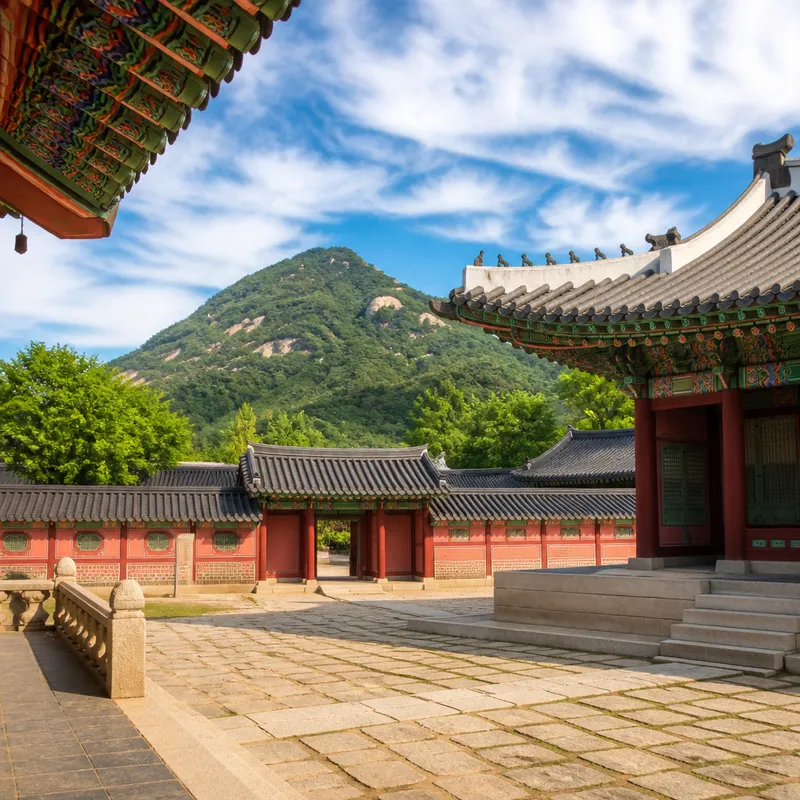
Take Line 3 to Gyeongbokgung Station or Line 5 to Gwanghwamun; Visit Seoul lists exit 5 for the former and exit 2 for the latter as approaches to the palace. Follow the actual entrance signs, since leaving the station is not the same as arriving at the admission point. Begin with the main palace instead of booking another cultural interior for the same morning. The open courtyards and gate sequence deserve time, and the scale of the grounds is easily underestimated from a photograph.
The tourism board’s September 2026 update lists a regular Tuesday closure, seasonal hours and last entry one hour before closing. It lists KRW 3,000 for foreign adults aged 19–64. These are the published conditions checked on 8 October 2026, not a quotation for every concession or special programme. A public holiday or special event can affect the calendar. If your available morning is Tuesday, move the palace day within the three-day plan; do not assume an exterior photograph replaces access to the grounds.
Allow roughly two to three hours for your selected palace route and interpretation. A guard ceremony, guided tour, hanbok hire and museum entry are separate choices; we have not promised a particular ceremony time. Choose one extra only if it fits the live programme. If the architecture is your main interest, keep the visit focused on the palace. If historical objects matter more, compare the adjacent palace museum as a substitution for part of the outdoor time, rather than extending the morning without a lunch break.
Day one afternoon: Bukchon rules change the walking plan
From the palace area, work east through the public streets towards the Bukchon cultural area and Anguk. Before entering residential lanes, look at the special-management map and local signs. The designated red zone is not the whole Jongno district, but it does impose real visitor restrictions. The official city notice gives a tourist window of 10:00–17:00 and identifies Sunday as a rest day for the alleyways. Older advice to photograph the residential slopes at dawn is therefore unsuitable for this route.
On Sunday, leave the managed residential alleyways out and go directly to Insadong or a cultural venue that confirms it is open. On another permitted day, keep the walk short and quiet, and follow the marked route rather than chasing an attractive private doorway. Do not enter homes or photograph through open doors. Forty-five to sixty minutes is an editorial allowance for a limited public-lane visit, not permission to remain after the window ends. If lunch or the palace takes longer, choose the shorter route to Anguk.
Continue south towards Insadong for shops, galleries and tea. The route has now moved from a palace to a residential heritage setting and then to a commercial street; those are different kinds of access. Browse public premises with their own opening arrangements and make dinner convenient to the station you will use home. Our Busan itinerary deals with a separate coastal city and its own neighbourhood rules. Do not assume the same visiting window applies to residential areas across Korea.
Day two morning: reach the National Museum through Ichon
The National Museum of Korea gives this day a different scale from the palace. Use Line 4 or the Gyeongui–Jungang line to Ichon Station. The museum’s own directions specify exit 2 and a 150-metre walk towards Yongsan Family Park, and describe the underground Museum Nadeulgil connection. Lift information is listed in the direction of exits 1 and 2. Save the museum address, 137 Seobinggo-ro, because a route to a district marker may not deliver you to the visitor entrance.
Give the permanent collection two to three hours, choosing a few themes rather than racing through the entire building. An introductory route through archaeological material, Buddhist art and later decorative objects can provide context for what you saw at the palace. Choose galleries from the current visitor map; room arrangements and temporary closures can change. A museum café or lunch nearby creates a clear break before the river. This is a substantial museum day, so another distant collection would reduce the time available to read and look.
The museum distinguishes its free permanent exhibition from special exhibitions that may charge. A separate children’s programme can also have its own arrangements. Free general admission does not mean every advertised experience is included or can be entered without booking. Check the particular display you care about and keep that confirmation with your route. If you are travelling mainly for a special exhibition, book it first and arrange the permanent halls around its actual slot, rather than using a generic opening time as proof of availability.
For travel in October 2026, the operator has announced a specific temporary closure of the Central Asia Gallery, Room 307, from 12 to 22 October, with a planned reopening on 23 October. That notice affects a gallery, not the whole museum. Choose your collection route from the current map and notices rather than assuming every room is available because general admission is free.
Day two afternoon: Ichon Hangang Park, rather than an unnamed river pin
After the museum, return towards Ichon Station and the neighbourhood’s southern side. The city’s official Ichon Hangang Art Park page identifies the park at 62 Ichon-ro 72-gil and gives exit 4 of Ichon Station as its approach. That is a distinct route from the museum’s exit 2 approach. Save the park’s own access point, follow the signed public route and use the appropriate crossing or underpass. You should not improvise a direct crossing over a major riverside road simply because the water looks close on the map.
Allow a generous connection between lunch and the waterfront, then choose a 45–60-minute out-and-back walk on the public riverside path. This is our suggested activity length; we have not measured the walk from a particular museum exit. Ichon gives you the Han River setting without a separate journey to Yeouido or Banpo. Follow the river for a comfortable distance, turn around at a clear landmark and return by the same known access. Artwork, reeds and the broad water provide the contrast with the indoor morning.
The municipal description says the park is open year-round, but that is not a guarantee that every path is usable during a flood, works or severe weather. Obey closures and reduce the river block if conditions are unsuitable. The nearby Yongsan Family Park setting or a longer museum visit can be a sensible alternative, subject to actual access. Do not add a cruise ticket simply to make the afternoon feel complete. One museum, a meal and a named local park are already a coherent day.
Day three morning: Yeonnam from Hongik University Station
Use Hongik University Station as the anchor for the western day. The station serves Line 2, the Gyeongui–Jungang line and the airport railroad; choose the actual service your journey requires. For Yeonnam, exit 3 is the tourism board’s recommended approach to the Gyeongui Line Forest Park. Begin with this former railway corridor rather than assuming that every street called Hongdae is beside the same exit. Save your hotel return route before exploring the surrounding lanes.
The entire park is 6.3 kilometres long, according to the official visitor description. This itinerary uses the Yeonnam section, not a requirement to walk all 6.3 kilometres before lunch. Choose a manageable stretch, then return through the nearby public café streets. The retained railway references help explain why this green strip runs through the neighbourhood. A suggested 60–90-minute park-and-street block leaves room to sit; visitors who enjoy browsing can stay longer and shorten the southern Hongdae section.
Lunch in Yeonnam keeps the first half of the day local. Compare the menu, queue and seating rather than following an old ranking to a business that may have changed. A vegetarian dish name does not establish the ingredients of a broth or sauce, so ask about the components that matter to you. There is no required café, branded shop or performance in this route. A workshop can replace part of the walk if you reserve an actual session and confirm the language and duration.
Day three afternoon: Hongdae streets with one useful finish
Return towards the station and use the southern Hongdae side for a different street atmosphere. Choose a small shopping or cultural block near Hongik University rather than immediately moving across Seoul to another shopping district. If books interest you, the official tourism material describes Gyeongui Line Book Street near exit 6 as another local choice. Individual book booths and events have separate schedules, so treat the street as an optional setting rather than a guaranteed programme of signings.
An evening gig or performance is worthwhile when it is an experience you actually want. Check the venue, admission, start time and journey home; spontaneous busking is not guaranteed. If departure is on this day, retain only the Yeonnam block and lunch before returning for luggage. The Tokyo itinerary gives another large-city approach, but its transport products and station access cannot be transferred to Seoul. Our city break guides help compare the type of stay before adding more cities.
Transport, spending and adaptations that fit this route
Use a current local journey planner for the exact station exit and transfer. Walking within a district and travelling between districts are different tasks; a subway line on the map does not remove corridors, stairs and the final approach. Compare a visitor transport product against the services you will actually use, especially for an airport journey. This guide does not publish a fare bundle whose current inclusions we have not reconciled. Buy an attraction pass only after checking the selected palace and exhibition arrangements.
Budget for accommodation, meals, subway journeys and the chosen paid palace or special exhibition. The museum’s permanent halls and the two public park blocks help balance those purchases without forcing extra admissions. In rain, make the museum day longer and shorten the river walk; in hot weather, reduce the exposed palace and neighbourhood blocks. For mobility needs, contact operators about your actual route and use the station lift information. This is not an audited step-free itinerary, and a listed lift does not prove every connecting street is accessible.
Before arrival, put the palace closure, Bukchon calendar, museum exhibition confirmation and departure transfer in one plan. The three sightseeing days can change order. The red-zone restrictions and a confirmed exhibition time cannot be changed by rearranging a list of attractions. Keep one nearby meal and one outdoor block flexible, but give each named destination a purpose. That makes the schedule useful even when the weather removes an optional walk.
Frequently asked questions
How should I divide three days in Seoul?
Use one day for Gyeongbokgung and Jongno, one for the National Museum of Korea and Ichon riverside, and one for Hongdae and Yeonnam. Keep arrival transfers and distant excursions outside those three full city days.
Can I visit Bukchon early in the morning or on Sunday?
The managed red zone restricts tourist visits outside 10:00–17:00, and the city notice identifies Sunday as a rest day for the alleyways. Follow the current zone map and signs; use Insadong or another open cultural venue when the residential lanes are unsuitable.
Which river park fits a National Museum visit?
Ichon Hangang Park keeps the afternoon in the museum’s wider neighbourhood. The museum approach uses Ichon exit 2; the municipal park directions use exit 4. Save the actual public access route, rather than crossing a major road towards a general river marker.
Is all National Museum of Korea admission free?
The permanent exhibition is free, while special exhibitions and separate programmes can have different admission or booking conditions. Confirm the particular experience before assigning it a place in the itinerary.
Sources and checks
- Visit Seoul: Gyeongbokgung access, published fee and seasonal calendarChecked: 8 October 2026
- Seoul Metropolitan Government: Bukchon managed-zone restrictions and Sunday restChecked: 8 October 2026
- Visit Seoul: Bukchon visitor conditionsChecked: 8 October 2026
- National Museum of Korea: subway directions and lift informationChecked: 8 October 2026
- Seoul Metropolitan Government: Ichon Hangang Art Park and exit4Checked: 8 October 2026
- Visit Seoul: Gyeongui Line Forest Park length and exit3Checked: 8 October 2026
- Visit Seoul: former railway, Yeonnam and book-street settingChecked: 8 October 2026
- National Museum of Korea — admission and current noticesChecked: 8 October 2026
- National Museum of Korea — Central Asia Gallery closure noticeChecked: 8 October 2026
Itineraries are editorial suggestions for independent visits. Check current prices, opening hours and trail conditions with official providers.