At a glance
Group Busan into three areas: Gamcheon and Nampo on the first day, Haeundae and its nearby shore on the second, then Haedong Yonggungsa and the northeastern coast on the third. Three full days work best when you respect the distances between these districts. Gamcheon is a residential area with a published 09:00–18:00 tourist visiting window, so a night photography walk is not part of this route. Treat coastal trains, capsules and other attractions as separate products with their own booking conditions.
Busan needs district grouping more than a long stop list
Busan’s coast and hills make a first visit visually varied, but the city is spread out. Repeatedly travelling between its western and eastern visitor areas can use much of a short stay. This route gives each day a geographical focus and leaves time for meals and the journeys between districts. Choose whether your priorities are neighbourhoods, temples, sea walks or ticketed coastal activities before reserving extras.
Select accommodation by your main interests and arrival point. A stay near Haeundae suits beach-area evenings but does not place you beside Gamcheon or Nampo. A base nearer the central transport network may simplify connections at the cost of a longer return from the eastern coast. Compare actual journeys rather than assuming one hotel can be equally close to every attraction. Keep arrival and departure transfers outside the three full sightseeing days.
| Day | Main area | Anchor | Key check |
|---|---|---|---|
| One | Gamcheon and Nampo | Residential hillside and market streets | Gamcheon tourist window and privacy rules |
| Two | Haeundae and nearby coast | Beach-area walk | Separate coastal ride products and reservations |
| Three | Northeastern coast | Haedong Yonggungsa | Temple access, steps and the return journey |
Day one morning: Gamcheon during permitted visitor hours
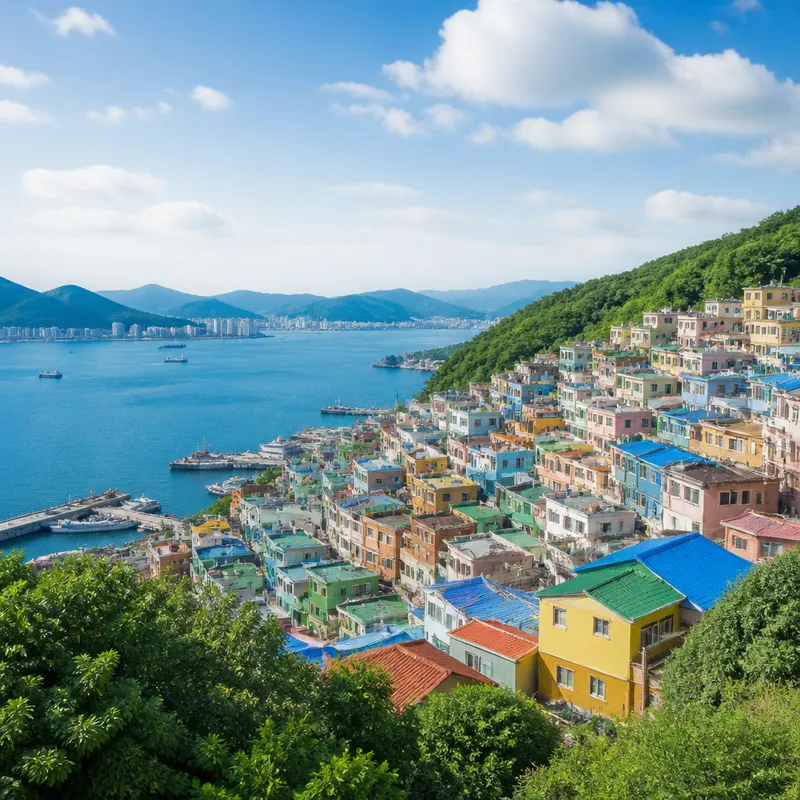
Visit Gamcheon in its published daytime window and approach it as a neighbourhood where people live. Korea Tourism Organization’s current visitor guidance describes a special management area and a 09:00–18:00 tourist window for residential areas. Do not copy older suggestions for a late-night wander or arrive outside permitted hours for an empty photograph. Follow local signs and staff instructions if the managed boundaries or access arrangements change.
Choose a modest public route through the hillside setting. Colours, artwork and views can be enjoyed without entering private lanes or looking inside homes. Keep noise low, leave doorways clear and ask before photographing people closely. The official guidance also sets specific requirements for larger groups and restricts tourist vehicles in the village. Check those arrangements if your visit involves a group or vehicle rather than assuming ordinary street access applies universally.
Slopes and stairs affect the pace, so allow rests and choose a route suitable for your mobility. A compact circuit and a café pause can provide a substantial morning without trying to cover every alley. Check the actual arrival point and final approach from your transport stop. Being dropped somewhere labelled Gamcheon does not guarantee an easy step-free route to every viewpoint. Save the local visitor information before travelling.
Day one afternoon: Nampo and market streets
Use BIFF Square and the Jagalchi Market area as the named references for a selected Nampo afternoon after Gamcheon. Visit Busan groups these within the older downtown. Gukje Market can be another selected section if commerce is your main interest, while Yongdusan Park adds a different uphill element. You do not need all of them after the residential village. Check an actual market meal’s prices and operating hours rather than promising every counter will be open.
Jagalchi and the surrounding streets can be part of this block if they interest you. Treat working businesses respectfully, keep aisles clear and ask before taking close photographs at a stall. A seafood meal is optional, not a requirement of visiting the area. Choose a comfortable alternative nearby if you prefer something else. Leave time to sit after the hillside morning rather than spending the entire day moving between standing stops.
Finish with a shorter central walk or return towards accommodation. A distant skyline or beach outing can wait for its own day. The Seoul itinerary offers a separate Korean city plan with a different palace and museum focus. Give the intercity journey its own allowance rather than counting it as a full sightseeing day at both ends.
Day two: Haeundae with one clearly chosen coastal activity
Spend the second day around Haeundae and the nearby shore. Begin with a manageable public beach-area walk, then decide whether you want a ticketed coastal ride or another local activity. A beach train and a sky capsule are different products, with different capacity and booking arrangements. Read the current operator’s route, station and ticket conditions before paying. Do not assume one admission allows every available ride along the coast.
If a particular experience is essential, reserve it according to the live calendar and save the correct starting station. Allow time to reach the platform and understand boarding instructions. An attractive coastal photograph does not establish the route you will travel or guarantee clear weather. Keep the rest of the morning flexible so a delayed or longer ride does not force you to rush lunch. Visitors who prefer walking can enjoy the shore without purchasing every activity.
Choose lunch in the Haeundae area, then continue with a modest coastal or nearby public-path loop. Check current access when a specific path matters to you, especially after poor weather. The route should fit the conditions and your energy rather than require a fixed distance. A café with a sea view can be a worthwhile pause, but compare the menu and price before choosing a seat solely for the setting.
For a public walking option, use the Haeundae beach setting and a selected Dongbaekseom coastal section as named references. Visit Busan describes the trail around Dongbaek and the Nurimaru APEC House setting. A visit inside that building needs its own calendar check. The coastal path is an alternative to a booked ride programme, not a promise that every trail, beach and ride station fits into the same brief morning.
Keep the Haeundae afternoon local
Use the remaining hours for the nearby shore, a selected interior or a quieter return. Do not add several distant beaches simply because each appears on a popular Busan list. A separate evening at Gwangalli can be an explicit choice if the journey and return suit you, but it is not necessary after a full coastal day. Check transport before committing to a late meal away from your accommodation.
In rain or strong wind, shorten the outdoor loop and keep one suitable indoor alternative nearby. A coastal activity can have weather-related restrictions, so follow the operator’s current information instead of assuming a ticket guarantees operation. A three-day stay gives some flexibility to change the order. Preserve the geographical grouping when you swap days, rather than turning each change into another cross-city journey.
Day three: Haedong Yonggungsa and the northeastern coast
Give Haedong Yonggungsa a considered morning if the temple interests you. Check current visitor access, the approach and any steps before setting out. The seaside setting is a distinctive part of the visit, but the temple remains a religious place. Follow signs and worship arrangements, keep noise modest and do not assume every building or prayer area is open to tourists. Choose a route that suits your group’s mobility.
Allow time for the journey as well as the site. A recommendation to visit at sunrise is not automatically appropriate when public transport, permitted access or your accommodation makes that impractical. A daylight visit with a calm arrival can be more useful than an elaborate early transfer. Check the current transport connection and final approach rather than assuming the nearest rail station is immediately beside the temple entrance.
Continue with one nearby coastal block, such as the Songjeong area, if it fits the actual journey. Keep lunch convenient and leave enough time for the return. Avoid adding a full western-city attraction on top of the northeastern morning. The Tokyo itinerary provides another example of district-based planning, while our islands and coasts guides help compare different waterfront stays.
Keep the temple journey separate from the previous day’s beach block and save the actual approach and return before setting out. If an eastern coastal ride is your priority, its booked station and direction may provide the alternative programme for this day. A station named in a promotional route is not necessarily the entrance to the temple; compare the final local connection instead of relying on proximity at city-map scale.
Tickets, spending and departure planning
Budget for accommodation, meals and the local journeys between these spread-out areas, then add any chosen coastal ride. Public neighbourhood and sea walks provide much of the itinerary without repeated admission fees. A pass should be compared with the attractions you actually want and their reservation requirements. Discounts do not eliminate the time needed to travel across Busan or the restrictions protecting residential areas.
Before arrival, recheck Gamcheon’s managed-area rules, the selected coastal product and temple access. Save exact entrances or stations and allow the walk from each stop. If departure falls on day three, keep the morning closer to your luggage and onward transport if the northeastern journey would create a rush. You can move the temple day earlier or shorten an optional block. The route is a framework for a comfortable first visit, not a demand to reach every advertised viewpoint.
A coastal ride replaces time on foot
Choose the Beach Train or Sky Capsule by the operator’s actual route and the places you intend to board and finish. The product, direction and reservation matter more than the generic phrase coastal ride. If it occupies a significant part of day two, shorten Dongbaek or leave it for another visit. Gwangalli is another district journey, so a bridge-view evening there is a deliberate additional transfer rather than the end of every Haeundae walk.
A selected Nampo section can occupy roughly two to three hours with pauses, excluding Gamcheon, the connecting journey and a long meal. The coastal walk needs an allowance based on the section you actually choose. These are editorial estimates rather than personally measured journeys. For an early departure, remove the northeastern excursion instead of attempting the temple, a beach and airport transfer in one compressed morning.
Frequently asked questions
Is three days enough for Busan?
Three full days allow a western neighbourhood day, Haeundae and a considered northeastern temple outing. Add time for several ticketed coastal activities or excursions beyond the city.
Can I photograph Gamcheon at night?
The official visitor guidance restricts tourist visits to residential areas to 09:00–18:00. Follow local managed-area signs and privacy rules rather than planning a night walk there.
Are the coastal train and sky capsule the same ticket?
They are distinct products with their own routes and booking conditions. Check the exact operator offering and starting station before purchasing.
Can I walk between all three daily areas?
Use suitable transport for the longer district connections and walk within each area. Busan’s spread-out geography makes a continuous walking route inefficient for this short stay.
Sources and checks
- Visit Busan: GamcheonChecked: 8 October 2026
- Visit Busan: Haedong YonggungsaChecked: 8 October 2026
- Korea Tourism Organization: residential visit etiquetteChecked: 8 October 2026
- Visit Busan — Dongbaek coastal trail and HaeundaeChecked: 8 October 2026
- Visit Busan — Nampo district landmarksChecked: 8 October 2026
Itineraries are editorial suggestions for independent visits. Check current prices, opening hours and trail conditions with official providers.