At a glance
Spend day one in central Sarajevo around Baščaršija, the Miljacka River, City Hall and Latin Bridge. Use day two for the War Childhood Museum and, if the weather suits, the Trebević cable car. Leave room for meals and coffee between historical visits, and treat the Tunnel of Hope as a separate journey rather than a quick old-town stop.
A first Sarajevo visit with time to understand what you see
Sarajevo's central sights are close enough to combine on foot, but the subjects you encounter deserve more time than a quick route between landmarks suggests. A building may carry several histories, and a museum dealing with war can require a quieter afternoon afterwards. This itinerary balances the historic streets with selected interiors and ordinary time for eating, coffee and looking around.
Use the first day to understand the centre's layout: Baščaršija, the river and the streets extending west. Reserve the second for a museum that interests you and an optional mountain outing. The suggested time blocks below are editorial planning allowances, not advertised tour durations. If a historical visit takes longer than expected, shorten the next walk rather than rushing through a subject you came to learn about.
| When | Focus | Allow |
|---|---|---|
| Day 1 morning | Baščaršija, coffee and City Hall | 3–4 hours |
| Day 1 afternoon | Latin Bridge, lunch and central streets | 3 hours |
| Day 2 morning | War Childhood Museum and a pause afterwards | 2–3 hours |
| Day 2 afternoon | Optional Trebević cable car or another central visit | A flexible afternoon |
A central route you can follow on foot
Begin at Sebilj, explore the Kazandžiluk and Bravadžiluk lanes, then walk towards City Hall. Continue west beside the Miljacka towards Latin Bridge before turning back into the central streets towards Ferhadija and the Sacred Heart Cathedral area. Allow around 45–60 minutes for the connecting walk at a relaxed pace, before interiors, coffee and lunch. This is a suggested route, not an organised tour duration. On day two, approach the War Childhood Museum at Logavina 32 as a distinct uphill branch from the central streets. The Trebević cable-car station is on the other side of the river at Hrvatin, so include that crossing and approach when combining the two visits.
Day one morning: Baščaršija and the streets around Sebilj
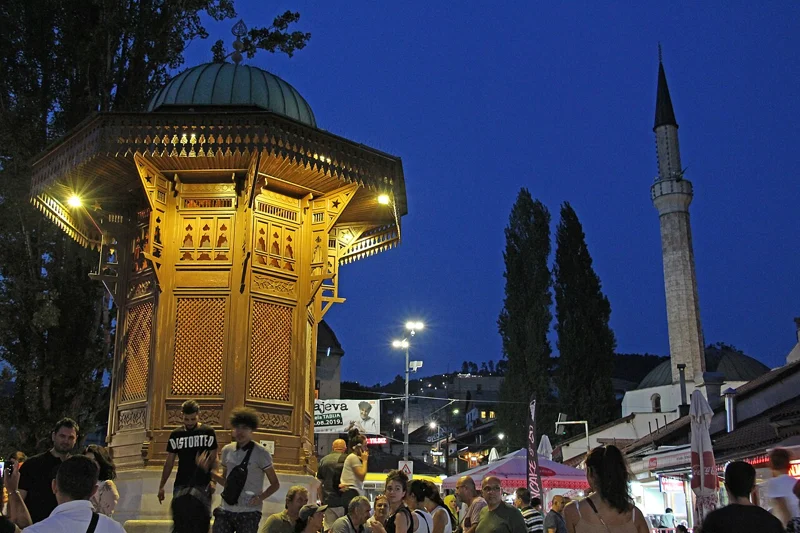
Begin in Baščaršija, using the Sebilj fountain as an orientation point before moving into the surrounding streets. The lanes are best explored slowly, with time to look at the shops and workshops rather than treating every frontage as a photograph. If you want to buy something, ask about its materials and where it was made. A conversation about an object can be more useful than assuming everything sold near a historic landmark was produced locally.
Keep the first morning compact. Choose a café when you are ready to sit down and leave enough time to enjoy the coffee rather than drinking it while checking the next attraction. If you are unfamiliar with the way it is served, ask. The visit does not need a performance of local expertise; curiosity and patience are more useful. Return to the map afterwards and decide which nearby streets you want to follow towards the river.
Religious buildings form part of the centre's living fabric. If you want to visit one, check its own visitor arrangements and follow the guidance on dress, photography and times of access. Do not assume that an open doorway is an invitation to enter during worship. A considerate exterior walk is a valid part of the route when an interior visit is not appropriate or does not fit the day.
City Hall: see the building and read its history
Sarajevo City Hall, Vijećnica, stands beside the Miljacka and makes a natural next stop. Opened in 1896, it later housed the national library, was devastated by fire in 1992 and reopened after reconstruction in 2014. The building's current uses include civic occasions, cultural events and museum displays. It should not be described simply as an untouched nineteenth-century interior or assumed to function today exactly as it did before the war.
Look at the exterior from a suitable public position before deciding on an interior visit. Inside, give the interpretation and displays time alongside the architecture. The restoration is part of the building's story, and the surviving material and reconstructed spaces deserve attention on those terms. Check what is open on your date, since civic events can affect the visitor arrangements.
For this itinerary, allow around an hour as a starting point, with more time if the exhibitions engage you. If you prefer to keep the first day outdoors, take the exterior walk and return another time for the interior. Avoid positioning a tight lunch reservation immediately after admission; the visit is easier to appreciate when you can follow a display without counting the minutes.
Latin Bridge and the river corridor
Continue along the river towards Latin Bridge. The nearby assassination of Archduke Franz Ferdinand and Sophie in 1914 gives this area its international historical significance. A visit is a chance to put the event in its physical setting, while remembering that the outbreak of the First World War had a wider political history. The bridge and surrounding streets can help locate a story, but they cannot explain the entire war by themselves.
Take time to read the interpretation available at the associated historical sites if this is a main interest. Otherwise, keep the river walk short and move towards lunch. Cross at appropriate points and avoid standing in traffic for a photograph. The central river corridor is useful for orientation and for comparing the building styles around you as you move away from the old bazaar streets.
Travellers planning a wider regional journey can compare Kotor’s old town and bay route for a very different setting. Sarajevo is particularly rewarding when you give its museums and urban history enough attention, rather than treating it as a brief transfer stop between coastal destinations. Each city deserves its own arrival, accommodation and travel planning.
Lunch, Ferhadija and a less scheduled afternoon
After the river walk, use lunch as a genuine break. The centre offers different kinds of food businesses, so look at what is being served and choose according to your appetite. A simple meal can fit the day just as well as a longer restaurant visit. Ask about ingredients when you need to, particularly if the menu description is unfamiliar or you have dietary requirements.
Spend the afternoon exploring the central streets around Ferhadija and returning to places you noticed earlier. This gives you a view of Sarajevo beyond a sequence of historical admissions. Allow time for a bookshop, a café or a shop that interests you. A slower afternoon is also useful if City Hall or another morning visit has been more demanding than you expected.
Keep the evening close to your base unless you have a particular restaurant or event booked. Some accommodation above the centre involves a noticeable uphill return, even when the distance looks short. Check that route in daylight if it is unfamiliar. Choosing a convenient base can make a two-day visit more comfortable than adding another attraction to an already full schedule.
Day two: the War Childhood Museum
The War Childhood Museum at Logavina 32 is a strong choice for visitors who want personal accounts to inform their understanding of conflict. Its exhibitions draw on objects and stories associated with childhoods affected by war. Give the material careful attention and avoid treating the visit as a collection of shocking images. Personal objects can carry meaning that takes time to absorb through the accompanying testimony.
Allow roughly one and a half to two hours as an initial plan, then adjust to your pace. Leave some quiet time afterwards, particularly if you are travelling with children or someone for whom the subject is difficult. Check the museum's visitor information and educational guidance before deciding how to approach it as a family. Photography rules should be followed, and visitors' reactions should be respected without assuming that everyone experiences the material in the same way.
If you need accessible entry, contact the museum about the current arrangements before arrival rather than relying on an old general description of facilities. Equipment and routes can change. Our culture and history travel collection includes other trips where a focused museum visit forms a major part of the day. In Sarajevo, selecting one such visit and giving it time is a reasonable choice for a short stay.
Trebević by cable car: an optional change of setting
The Sarajevo cable car provides access towards Trebević from its lower station at Hrvatin. It can make a welcome outdoor contrast to the centre, but include the journey to the station and the time you want above the city. Check the operator's service information, weather and last return before setting off. An advertised ride duration is not the full length of the outing.
At the top, choose a marked public walking route that suits your footwear, conditions and available time. A short walk and a view may be enough after a museum morning. Do not extend onto an unfamiliar trail because it appears to offer a shortcut back to the city. Take an appropriate layer for conditions above the valley, and return in time for the service you intend to use.
If visibility is poor, use the afternoon for another central cultural visit or a longer meal. The cable car is an option, not a condition for a successful two-day trip. You may also reverse the day's order if the operating hours and weather favour an earlier mountain outing. Keep the museum admission arrangements in mind when doing so, rather than assuming all attractions follow the same daily schedule.
Where the Tunnel of Hope fits
The Tunnel of Hope is outside the compact central walking route and should be planned as a separate journey. If visiting it is a priority, replace the Trebević outing or add time to your stay. Check the official visitor information and arrange transport with a clear return plan. Adding it after two museums and a mountain trip would make the day depend on a series of tight connections.
For a guided visit, compare the actual itinerary, transport inclusions and the guide's approach to the history. A longer regional tour can cover very different ground from a focused museum visit. Choose the experience that answers your interests and leaves time to reflect. Our travel-planning guides use this same approach: decide what matters most, then remove competing activities rather than compressing them indefinitely.
Practical arrival and accommodation choices
Stay near the central route if you want to walk between most sights, and check elevation as well as the address. A property described as near Baščaršija may still involve a steep final climb or stairs inside the building. Ask about luggage access and the route from your arrival point. If arriving by bus, identify the exact terminal before arranging a transfer; a city name alone is not enough to plan the final stage.
Walking and local transport can cover the city portion of this itinerary, as with other trips in our car-free travel collection. A car can be more of a parking task than a benefit in the historic centre. Before travelling, verify opening information for your chosen museums and any cable-car or excursion arrangements. Leave enough unscheduled time for coffee and conversation, because those pauses are part of seeing Sarajevo as a present-day city as well as a place with a complex past.
Frequently asked questions
Is two days enough for Sarajevo?
Two full days allow a central walking route, selected historical interiors and one larger outing. Add time if you want the Tunnel of Hope, several museums and longer mountain visits without rushing.
What should you see first in Sarajevo?
Begin around Baščaršija and Sebilj, then connect the old town with City Hall and the river near Latin Bridge. This establishes the centre’s layout before you choose more detailed museum visits.
Can you combine the War Childhood Museum and Trebević?
Yes, if the museum and cable-car schedules fit and you keep the mountain portion modest. Leave time after the museum and check visibility and the last return service. Either can stand as the main activity of the day.
Is the Tunnel of Hope in the old town?
No. Treat it as a separate journey with planned transport. For a two-day itinerary, use it in place of another substantial outing or add another day, rather than inserting it between nearby central sights.
Sources and checks
- Visit Sarajevo: attractions and neighbourhoodsChecked: 23 October 2026
- Sarajevo City Hall: history and visitor informationChecked: 23 October 2026
- Sarajevo City Hall: permanent displaysChecked: 23 October 2026
- War Childhood Museum: visitor informationChecked: 23 October 2026
- Sarajevo Cable Car: operator informationChecked: 23 October 2026
Itineraries are editorial suggestions for independent visits. Check current prices, opening hours and trail conditions with official providers.