At a glance
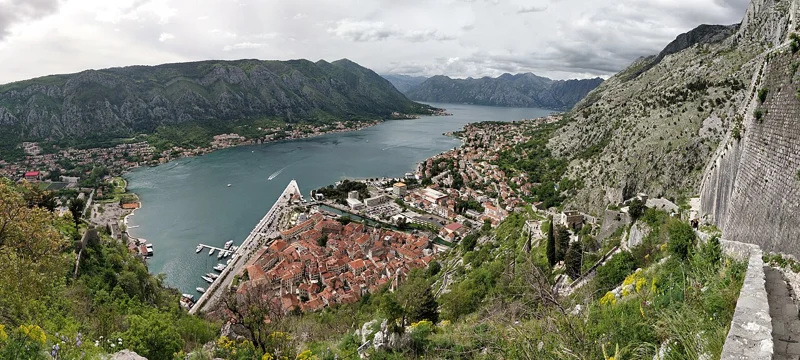
Spend one day in Kotor’s old town, choosing between St Tryphon’s Cathedral and the Maritime Museum before a waterfront walk. On the second day, choose either the strenuous fortress ascent with a relaxed afternoon or a half-day trip to Perast. The Kotor Cable Car starts separately at Dub and does not take you to the old-town fortress.
Choose your second day before filling the first
Kotor's old town is small, but the surrounding bay makes it tempting to plan far more than two days can comfortably hold. A useful first visit combines time inside the walls with one larger outing. The key choice is whether you want to climb towards the fortress above the town or explore farther along the bay. Both can be rewarding, but putting a demanding ascent, Perast and a cable-car excursion into the same day leaves little room for the place itself.
This route gives the first day to the old town and uses the second for a deliberate choice. The table offers suggested planning blocks, not guaranteed journey times. In warm weather, an energetic traveller could move the fortress climb to an early first morning and keep Perast for day two. If you take that option, reduce the remaining first-day programme and leave a proper recovery break after the descent.
| When | Plan | Allow |
|---|---|---|
| Day 1 morning | Old-town lanes and one cultural interior | 3 hours |
| Day 1 afternoon | Waterfront and optional shorter Dobrota walk | 2–3 hours |
| Day 2 option A | Fortress ascent, descent and relaxed afternoon | A flexible day |
| Day 2 option B | Perast visit with transport and optional museum or boat | Half a day or longer |
An old-town loop with useful reference points
For your first circuit, enter through the Sea Gate into the Square of Arms and locate the clock tower. Continue towards St Tryphon’s Cathedral, then turn through the inner lanes towards the Maritime Museum and the area around St Luke’s and St Nicholas’s churches. Finish towards the northern River Gate before returning along a public route towards the waterfront. Allow roughly 60–90 minutes with exterior stops and map-reading; admission to a church or museum is additional. This suggested sequence gives you several recognisable landmarks if the lanes become confusing. Keep the fortress entrance as a separate route decision, so the first walk does not accidentally become an uphill excursion without water or suitable shoes.
Day one morning: enter the old town and get your bearings
Begin at one of the signed entrances to the walled town and make a slow circuit through its squares and lanes. Kotor is easier to enjoy once you have located a few reference points: the main entrance, the cathedral area and the routes back towards the waterfront. Do not worry about covering every lane in a fixed order. Returning to a square from a different direction is part of understanding how the old town fits together.
Look beyond the shopfronts towards the palaces, churches and fortifications that shape the streets. The Port of Kotor's visitor information highlights St Tryphon's Cathedral and the Maritime Museum among the principal cultural visits. Choose one as the morning's main interior. With a small centre, it is easy to assume every visit will be brief, but reading displays and waiting at entrances still takes time.
If you want to photograph the streets with fewer people around, use an early walk or return at another point in the day. Cruise arrivals and other groups can change how busy the central lanes feel. A crowded hour does not have to determine your whole impression of Kotor: an overnight stay gives you another chance to see the same area at a different pace. Avoid blocking residential doors while stopping for photographs.
Cathedral or Maritime Museum?
St Tryphon's Cathedral suits visitors particularly interested in religious heritage and historic architecture. Check the visitor entrance, admission arrangements and any restrictions connected with worship. Allow enough time to look at the spaces open to visitors rather than stepping inside only to say you have been. Dress and behave appropriately for the building, and follow the posted rules for photography.
The Maritime Museum is the stronger choice if you want the bay's seafaring history to give context to the rest of the trip. A museum visit can help you see the surrounding palaces and waterfront as parts of a trading and maritime landscape. Check the current displays and access information before you decide how long to stay. If the subject interests you, leave space for it instead of scheduling the next attraction immediately afterwards.
You can include both over two days, particularly if you choose a shorter waterfront afternoon. For this itinerary, one substantial interior is enough before lunch. Travellers planning more historic Adriatic towns can compare Dubrovnik over two days, where walls and the old town also shape the visit. Give each destination its own time rather than expecting a transfer between them to count as a sightseeing day.
Day one afternoon: the waterfront and a manageable Dobrota walk
After lunch, leave the narrow lanes for a waterfront walk. This makes a useful change after the enclosed squares and helps you understand the position of the town at the edge of the bay. Choose a route and turning point that match the weather and your energy. A short, relaxed walk is enough; you do not need to trace every waterfront settlement to make the afternoon worthwhile.
Dobrota can be a direction for an extended walk, but check your exact route and expect the character of the waterfront to change along the way. Do not assume a continuous broad promenade with identical access conditions throughout. Keep an eye on traffic where walking routes meet roads, and turn back when the route stops suiting your group. If you are staying outside the old town, this is also a chance to understand the evening journey back to your accommodation.
Return for an unhurried dinner or choose somewhere along your route after checking the menu. A bay view is pleasant, but it should not be the only consideration when comparing places to eat. Leave the evening flexible enough to revisit the old town once the day's busiest period has passed. Two days in Kotor work best when there is room for these repeated, shorter walks.
Option A for day two: the fortress ascent
The ascent towards Kotor's fortress is a substantial uphill outing. Montenegro's national tourism site describes roughly 1,400 steps and a fortress around 300 metres above sea level. Treat those figures as a warning about the effort involved, not as a promise that everyone can finish in a particular time. Include the descent, pauses and time to look at the view when deciding whether it fits your day.
Choose suitable footwear, take water and avoid committing to the climb at the hottest part of a warm day. Use the official visitor route and current entrance arrangements. If the surface is wet, visibility poor or the ascent feels beyond your group, shorten or skip it. There is no need to reach the highest point to justify your visit to Kotor. People who need a step-free outing should choose the old-town and waterfront alternatives instead.
Keep the afternoon light after a full ascent. A meal, a museum you missed or a short waterfront walk is a more realistic partner than several distant excursions. If you are leaving Kotor that day, allow time to return for luggage and reach your departure point. The short horizontal distance on the map can hide how much energy the climb and descent require.
Option B for day two: a half-day in Perast
Perast is a good alternative when you want to see another bay settlement without making the fortress climb the centre of the day. Arrange the transport and return plan before leaving Kotor, using current local information rather than an old timetable. Give the visit a half-day block so the road journey, lunch or coffee and a waterfront walk do not compete for the same hour.
The Perast Museum adds context to the town's maritime past. Its collections include ship models, navigation instruments, charts and portraits associated with the town and its families. Choose it if you want to understand the buildings and waterfront beyond their appearance. You could spend the visit walking and eating instead, but the museum is a useful anchor when the weather is less suitable for a long outdoor afternoon.
Our Lady of the Rocks is a possible boat outing from the Perast area. Before booking, confirm the actual landing, visit length and whether the church or museum admission is included. Seeing an island from a boat, landing on it and entering a building are different products. Keep the trip dependent on operating conditions and leave enough time to return to Kotor without a tight onward connection.
Where the Kotor Cable Car fits
The Kotor Cable Car is a separate excursion starting at Dub, with its upper station at Kuk. It does not depart from the old-town lanes and does not carry you to the fortress above them. That distinction is essential when choosing between activities. Include the transfer to the lower station, the ride and time at the top; the journey is not simply a quick substitute for the fortress steps.
If the cable car is your priority, use it instead of the Perast outing or the main fortress climb. Check the operator's live service information and the return arrangements for your dates. Mountain visibility can differ from conditions beside the bay, so a clear-looking waterfront morning does not guarantee the panorama you have seen online. Avoid buying a one-way product unless you have a clear, practical onward plan from the other station.
For visitors whose interests lean more towards urban history than viewpoints, Sarajevo’s two-day itinerary offers a different Balkan stop with museums and a compact historic centre. Plan the transfer between destinations separately; their relationship on a regional map does not make them a convenient same-day combination.
Accommodation, arrival and choosing a comfortable pace
Staying inside the walls makes early and late old-town walks easy, but ask about stairs, luggage access and evening noise. A waterfront base outside the old town may give more space, while changing the journey to dinner and the main sights. Look at the route to the exact property rather than assuming that every address labelled Kotor is a short, level walk from the gates.
If arriving by car, settle parking and unloading arrangements with the accommodation before entering the area. For bus or airport arrivals, identify the precise drop-off and final transfer. Traffic around the bay can affect journey time, so avoid planning a major paid excursion immediately after arrival. The central part of this itinerary fits a car-free travel approach, with transport arranged only for the optional outing.
Kotor belongs naturally among our coastal and island guides, but a bay stay is not automatically a beach holiday. Choose it for the old town, maritime setting and landscape, then add swimming or farther coastal travel only when you have researched the particular place. With two full days, one well-chosen outing and time to return to the streets will give you a more complete visit than a packed circuit of distant photo stops.
Frequently asked questions
Is two days enough in Kotor?
Two full days are enough for the old town and one larger outing, such as the fortress ascent or a visit to Perast. Add more time if you want the cable car and several places around the bay as well.
How demanding is the Kotor fortress walk?
The national tourism site describes about 1,400 steps and a fortress around 300 metres above sea level. It is a strenuous ascent with a descent afterwards. Plan for weather, water, footwear and your own ability rather than relying on a fixed completion time.
Does the Kotor Cable Car go to the fortress?
No. The cable car runs between Dub and Kuk and requires a separate journey to its lower station. The fortress above the old town is reached by a different walking route.
Should you choose Perast or the fortress?
Choose the fortress if you want a demanding uphill walk and the view above Kotor. Choose Perast for another bay settlement, a waterfront visit and optional maritime museum or boat outing. Both need time beyond the headline attraction.
Sources and checks
- Port of Kotor: visitor informationChecked: 23 October 2026
- National Tourism Organisation of Montenegro: fortressesChecked: 23 October 2026
- Kotor Municipal Museums: Perast MuseumChecked: 23 October 2026
- Kotor Cable Car: stations and locationChecked: 23 October 2026
- Port of Kotor: old-town visitor brochureChecked: 23 October 2026
Itineraries are editorial suggestions for independent visits. Check current prices, opening hours and trail conditions with official providers.