At a glance
Spend three full days in Paris on the Seine and the Eiffel Tower area, one substantial museum visit with a nearby walk, and Montmartre plus a second neighbourhood. Choose between the Louvre and Musée d'Orsay as your main collection unless art is the central purpose of the trip. Arrange the days around closure calendars and actual reservations, leaving enough time for meals and cross-city journeys.
Choose a Paris trip you can actually enjoy
Paris offers far more than a three-day visit can contain. The city's official tourism portal highlights the Eiffel Tower, Louvre and Montmartre as short-stay possibilities, but their inclusion on one page does not mean they belong in one afternoon. Start with your personal priority: a major art collection, an iconic view or time in neighbourhood streets. That choice should determine where you spend the longest part of the day.
Our outline has three different rhythms. The first day introduces the river and a landmark area, the second centres on a collection, and the third gives more freedom for streets and cafés. Reverse them when the weather or reservations suggest it. Do not reserve several major interiors before checking whether they are open on the relevant weekday. A short stay benefits from a selective route more than from an impressive but impractical list.
| Day | Main focus | Flexible continuation | Check before booking |
|---|---|---|---|
| One | Seine and Eiffel Tower area | A riverside section and dinner nearby | Tower product, entrance and selected time if going up |
| Two | Louvre or Musée d'Orsay | A nearby garden or Left Bank walk | Louvre closes Tuesdays; Orsay closes Mondays |
| Three | Montmartre | A second neighbourhood selected for your interests | Gradients, transport and any independent interior booking |
Day one: use the river to understand Paris
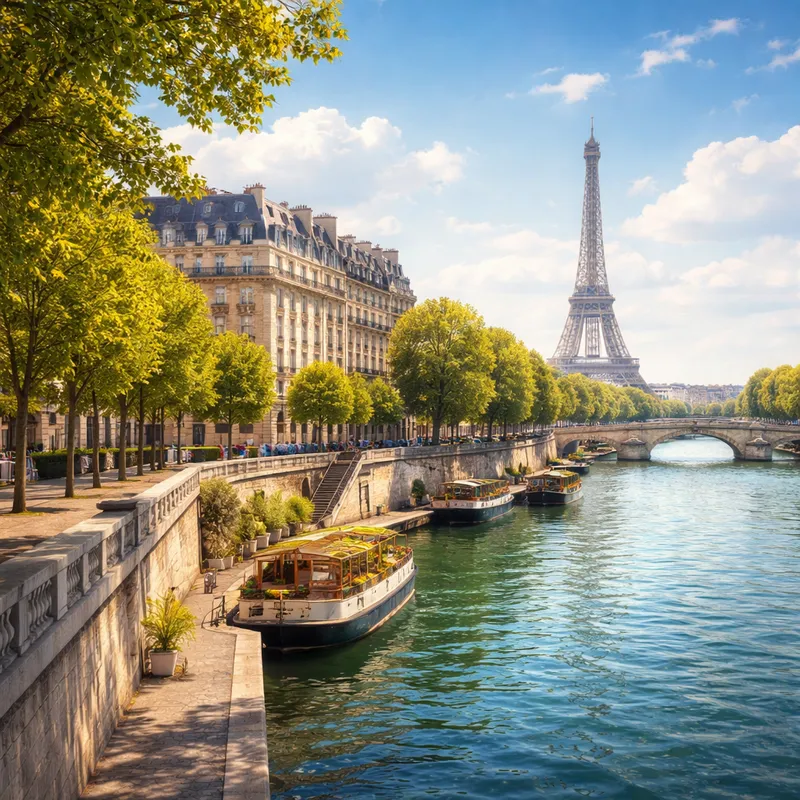
Begin with a river-level walk that has a clear endpoint. You do not need to follow the Seine for its entire central length to appreciate it. Choose a stretch that fits your starting point, the weather and any booking, then leave room to pause. Look at the changing relationship between bridges, waterside paths and surrounding streets instead of repeatedly leaving the river to tick off another distant landmark.
Decide whether the Eiffel Tower will be an exterior stop or a booked ascent. Those are different experiences, with very different time demands. If going up matters to you, check the official ticket product, access method and entry instructions for your reservation. An exterior viewpoint can otherwise serve as the day's main landmark, giving you more freedom for a meal and the surrounding area rather than another queue.
If a Seine cruise interests you, compare its departure point, duration, language and inclusions before deciding. A sightseeing sailing and a dinner cruise create different evenings. Do not buy a second river experience only because the first photograph looks attractive. A walk and one boat trip can work well together, but the boat should fit your route, especially if boarding is far from where the walk ends.
Give the first evening a simple endpoint
Choose a dinner area that keeps the return journey manageable. Check the menu and any reservation terms, then let the meal become part of the visit rather than a quick interruption between attractions. A table with a famous view is not automatically the right choice for your budget or group. Think about what you want from the evening: a longer conversation, a quiet meal or a particular cuisine.
If you arrived that morning, reduce the plan substantially. Luggage storage, airport travel and tiredness can make a nominally full day much shorter. Keep one walk and a meal, then move the booked landmark to a proper sightseeing day. Our London three-day itinerary makes a similarly clear distinction between arrival logistics and usable city time, which helps when planning a trip that includes both capitals.
Day two: choose the Louvre or Musée d'Orsay
The Louvre and Musée d'Orsay deserve separate consideration. Select the Louvre for a broad collection in a large former palace, or Orsay if its collection and setting are the stronger personal draw. The point is to choose a museum deliberately. Seeing both is possible on an art-focused trip, but attempting two major collections simply because they are famous can make the visit feel like moving between entrances rather than looking at works.
The Louvre's checked opening information lists Tuesday closure, with different evening arrangements on other weekdays. Its ticket information recommends a reserved time, including for visitors eligible for free entry. Check your own eligibility and the current price category instead of assuming that a figure quoted for another visitor applies to you. A pass or free-entry entitlement still requires attention to the museum's reservation arrangements.
Musée d'Orsay's visitor information lists Monday closure and a later opening on Thursday. Check the current calendar and the final entry arrangements before relying on an evening visit. Choose a handful of collection priorities before you arrive. A focused visit leaves time to look carefully, read relevant interpretation and take a break. You do not need to cover every room to have made worthwhile use of the admission.
Keep the museum afternoon nearby
After the Louvre, consider a shorter garden or river section rather than an immediate journey to the opposite end of Paris. After Orsay, a Left Bank continuation can serve a similar purpose. Pick the exact walk according to where you leave the museum and where you plan to eat. The aim is a smooth transition from looking at art to enjoying the surrounding city, with a reasonable route home.
If you book a second small collection, check its separate opening calendar and allow for a late finish at the first. Otherwise leave this afternoon free. A major museum visit can be more tiring than its scheduled duration suggests, especially with children or a group whose interests differ. Agree beforehand on the main works or rooms and a meeting point, so no one feels obliged to hurry or remain beyond their attention span.
Our Vienna two-day guide uses the same principle of selecting a collection rather than entering every institution along the route. It is useful when comparing cultural breaks, but each city's booking and closure rules must be checked independently. In Paris, the weekday is particularly important: a beautifully arranged museum day fails if it has been assigned to the institution's regular closure.
Day three: Montmartre and one further neighbourhood
Give Montmartre a morning when you have energy for its gradients. Paris's tourism portal describes steps, cobbled streets and the Sacré-Cœur skyline as defining features of the former village. Choose a route that fits your mobility rather than assuming every atmospheric lane is equally easy to walk. Leave time to stop away from the busiest flow, and avoid arranging a tight appointment immediately after a long climb.
Treat the area as a neighbourhood as well as a destination. Be respectful around religious spaces, residential entrances and people going about their day. A panorama is a useful focal point, but it should not become a reason to obstruct a stairway or photograph strangers without consideration. Check the current conditions separately if you plan an interior visit, a guided walk or a particular ascent beyond the ordinary street route.
For the afternoon, select one contrasting area, such as a Left Bank section or the Marais, according to your interests and route back. Do not try to fit both into an already busy day. A second neighbourhood is most rewarding when there is room for a café, a small shop or a chosen interior. If the morning takes longer than expected, shorten the afternoon rather than rushing between widely separated places.
Accommodation and a budget built from choices
Compare hotels using the door-to-door journeys for these three days. Check the nearest usable station, lift arrangements and luggage storage. A property described as central may still be inconvenient for your actual route, while a well-connected area can make the days easier. Do not let one postcard view determine where you stay without checking what it means for early bookings and the trip back after dinner.
Budget separately for accommodation, arrival travel, city transport, admissions and meals. Compare any museum pass against the specific collections you want, including reservations and exclusions. For wet weather, make the booked museum the day's anchor and shorten the exposed walk; for heat, reduce long unshaded sections. Our culture and history collection offers further city ideas if you are still choosing where to spend the longest part of a European trip.
Frequently asked questions
Is three days enough for a first Paris visit?
Three full days can introduce the Seine, a landmark area, one major collection and a few neighbourhoods. They will not cover every famous museum or a full set of out-of-city excursions. Choose your strongest personal priority first. If arrival and departure reduce the time, keep that experience and shorten the surrounding walks rather than adding tighter reservations.
Should I visit both the Louvre and Musée d'Orsay?
Choose both only if art is a main purpose of the trip and you can give each enough time. Otherwise select the collection that interests you most, then use the remaining day for neighbourhoods. Each museum has its own ticket and opening arrangements. The Louvre's regular closure is Tuesday; Orsay's is Monday under the information checked here.
Do free-entry visitors need a Louvre reservation?
The Louvre recommends time-slot reservations, including for visitors eligible for free admission. Check your eligibility, required proof and current reservation process with the museum before planning the day. Free admission does not automatically remove entry procedures or guarantee access at any time, and a booked slot still needs a realistic journey to the correct entrance.
Can this itinerary work in rainy weather?
Yes, with adjustments. Give the wettest part of the day to your selected museum or another genuinely wanted interior, subject to availability. Shorten the river walk and use a suitable transport connection between areas. Avoid booking an unfamiliar attraction purely as shelter if it creates another deadline. Keep an indoor meal or café break as part of the plan.
Sources and checks
- Paris Tourism: short-stay areas and sightsChecked: 7 October 2026
- Paris Tourism: Montmartre streets and stepsChecked: 7 October 2026
- Louvre: current hours, ticket categories and reservationsChecked: 7 October 2026
- Musée d'Orsay: visitor hours and accessChecked: 7 October 2026
Itineraries are editorial suggestions for independent visits. Check current prices, opening hours and trail conditions with official providers.