At a glance
The best way to visit Strasbourg’s Christmas markets is to explore several squares, see the cathedral area early in your visit and keep your route flexible. Arriving by train makes a walking visit straightforward once you have dropped your luggage. A full day allows for a selective look around; an overnight stay gives you time to browse, rest and return for the lights. Check Visit Strasbourg’s current Christmas information before travelling, as market locations, opening arrangements and access rules can change.
How should you plan an Advent visit?
Think of Strasbourg as a city with markets spread through its centre. The cathedral is an obvious starting point, but using it as the turning point for every walk can send you through the same crowded streets repeatedly. Choose a few priorities and join them into a broad loop.
An overnight stay makes this easier. You can browse, have a proper break and go out again without keeping one eye on your return train. For a day trip, decide which areas matter most and leave some time unallocated.
If you also want museums and other sights, use the Strasbourg two-day itinerary to shape the wider visit. Keep the market day fairly loose: short distances can take longer when people are browsing, queuing and stopping for photographs.
Agree on the kind of visit you want before booking. A shopping trip, a family outing and a weekend focused on architecture need different amounts of standing, browsing and indoor time.
Where should you start around the cathedral?
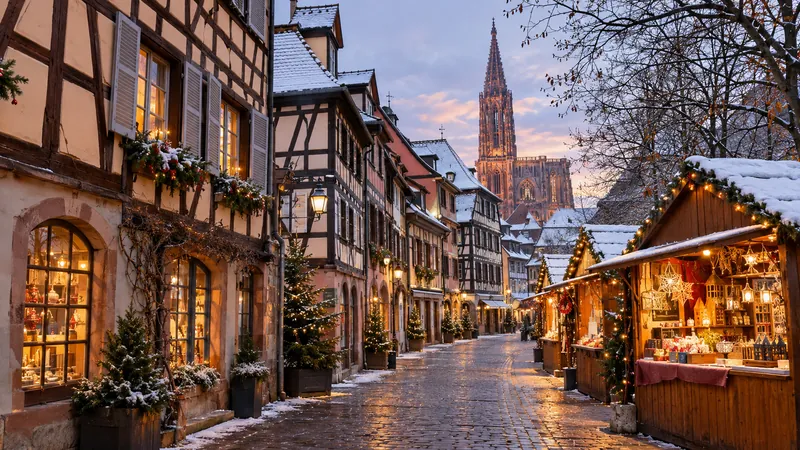
Visit the cathedral surroundings before your evening circuit, while you have energy for narrow streets and frequent stops. Give yourself a moment to look at the building before turning to the stalls. The architecture is part of what makes a market visit here distinctive.
Place de la Cathédrale and nearby Place du Château are useful landmarks. Check the current official map to see what is operating around them. Photographs from previous seasons can suggest the atmosphere, but they cannot confirm this year’s entrances, stalls or walking routes.
If you want to go inside the cathedral, check its visiting arrangements separately. Services and other activities can affect sightseeing access. Allow enough flexibility to return, rather than making an interior visit the tightly timed stop before lunch or departure.
When the surrounding streets feel uncomfortable, move on to another area. There is little pleasure in waiting indefinitely for a clear photograph, and plenty to see elsewhere.
Which other areas help you vary the walk?
Place Broglie and Place Kléber give your walk destinations beyond the cathedral. Consult the current programme for market arrangements and seasonal displays, then decide how much time to spend at each. You do not need to inspect every chalet to enjoy the setting.
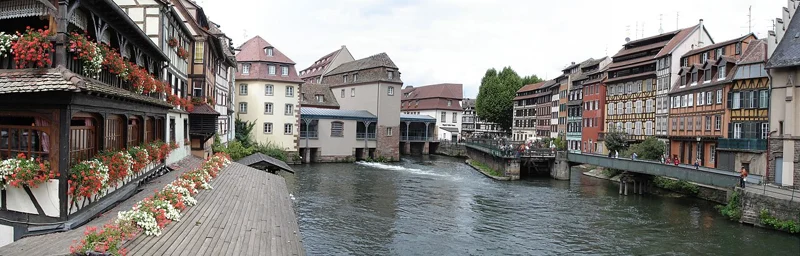
Petite France adds waterways and historic streets to the day. It can be busy too, so treat it as a change of scenery rather than a reliable refuge from crowds. Allow time to pause somewhere without blocking a bridge or narrow pavement.
Use the framework below alongside the official seasonal map. It suggests how to organise the day, without assuming that every year’s market layout is identical.
Start wherever suits your accommodation and arrival point. If one approach is congested, reverse part of the loop rather than forcing your way through.
| Area or stage | Reason to include it | Practical approach |
|---|---|---|
| Railway station | Get organised on arrival | Drop luggage before browsing |
| Cathedral area | Architecture and an initial market stop | Visit before your evening circuit |
| Place du Château | Explore the cathedral surroundings | Check current access and stall locations |
| Place Broglie | Give the walk another destination | Browse selectively before moving on |
| Place Kléber | Spend time in a major central square | Stop clear of pedestrian flows |
| Petite France | Enjoy waterways and historic streets | Allow for slow walking and photographs |
| Indoor break | Rest and warm up | Find a seat before everyone is exhausted |
What does a realistic walking day look like?
After arriving, sort out luggage and step aside from the station exit to check your bearings. Save an offline map and mark your accommodation, first destination and route back. This is simpler before you are juggling shopping and a phone with cold hands.
Make the cathedral area your first substantial stop, then head towards Broglie or Kléber according to the current layout. Browse with a little purpose: perhaps you are interested in decorations, regional food or a particular craft. Comparing every stall can swallow the afternoon.
Have lunch before hunger makes the decision for you. Afterwards, walk towards Petite France or another part of the centre for a different setting. Include a seated break if you intend to stay out after dark; a hot drink taken standing up does little for tired feet.
In the evening, return to one chosen area. You will have more time to enjoy it if you are not attempting the whole circuit again before catching a train.
Set a sensible point at which to finish browsing and begin your return. Allow room for collecting bags, finding your platform and any slower progress through the centre.
How can you make crowds easier to manage?
If your dates are flexible, consider a weekday and spread your priorities across the day. Neither choice guarantees quiet streets. A useful plan gives you somewhere else to go when an area feels too full.
Before browsing, agree on a meeting place with your companions. Pick a recognisable spot away from queues and narrow junctions, and make sure everyone can find it. With children, explain what to do if separated before the distractions begin.
Keep bags compact and purchases manageable. Bulky backpacks make turning awkward, and fragile decorations need protecting through the rest of the day. If you buy something substantial, a return to your accommodation may be worth the detour.
Wheelchair users and travellers with mobility aids or pushchairs should check current accessibility information before settling on a route. Historic paving, standing crowds and temporary layouts can affect progress. Choose an accessible indoor break in advance, and allow enough time to reach it comfortably.
What should you eat, and when should you sit down?
The markets suit tasting, but give at least one meal a proper seat. Foods you may encounter include tarte flambée, choucroute, pretzels and bredele, the seasonal Alsatian biscuits. Choose from what traders and restaurants actually offer, rather than spending the day chasing a food checklist.
Read menus before joining queues, especially if you have dietary requirements. Ask about meat, stock, dairy, nuts or alcohol where relevant. A familiar dish name does not establish every ingredient, and toppings alone will not tell you how something was prepared.
For mulled wine or another hot drink, check the displayed serving arrangements, including any cup deposit. Step clear of the walking route before drinking, and carry water as well. Eating and drinking are easier when you have somewhere comfortable to stop.
If a particular restaurant matters to you, check its booking arrangements ahead of time. Otherwise, be flexible about mealtimes and prepared to walk beyond the busiest market frontage for a restorative pause.
Before buying edible gifts, ask how they should be stored and how well they travel. Consider what will survive a warm hotel room or a long journey home.
How should you organise trains and accommodation?
When comparing trains, look at the whole journey into Strasbourg’s main station. Check interchange stations, connection margins and what happens if the first service is delayed. Take particular care with separate tickets, whose conditions may differ.
Use SNCF Connect to check current journeys, fares and disruption information, then confirm any services run by other operators with them. Recheck close to departure. Avoid relying on an old journey time or assuming that a previously advertised direct service still runs.
Accommodation near the station can simplify luggage handling and departure. A central address may make an afternoon rest easier. Compare the actual walking route, luggage storage and check-in arrangements; during Advent, the last stretch to a hotel can be slow.
For a longer French trip, allow separate time for other cities. The Paris three-day itinerary and Lyon three-day itinerary can help shape those stays. Confirm the transport before fitting either around your Strasbourg booking, particularly if you have a fixed onward departure.
What should you check before leaving?
Use Visit Strasbourg for the current Christmas programme, market map, opening arrangements and visitor access information. France.fr provides broader official destination context, while Météo-France is the source to consult for forecasts and weather warnings. Recheck seasonal details close to travel.
Pack footwear you can walk in for hours, warm layers and rain protection. Gloves that let you handle tickets are useful, as is a charged phone. Keep essential travel details available offline so a weak connection does not complicate your return.
Have an indoor alternative for a wet afternoon, checking the attraction’s own arrangements before committing. The Strasbourg destination guide is a useful starting point for planning time beyond the markets.
Colmar can be an additional outing if you have enough time. Decide after checking its own seasonal information, current transport and how much travelling you want. Combining both places in one already full day leaves little room for delays or a leisurely meal.
In short
Choose a varied walking loop, make time for a seated meal and return to one favourite area for the evening. Check the official seasonal arrangements before travelling, and leave enough room to change direction when crowds or weather slow you down.
Frequently asked questions
Is one day enough for Strasbourg’s Christmas markets?
Yes, for a selective visit to several areas. Include an indoor break and choose one evening destination. An overnight stay gives you more freedom to rest and return.
Can I walk from the railway station to the markets?
Walking is practical for many visitors. Check the route to your first square, allow for luggage and crowds, and confirm current pedestrian access arrangements before travelling.
Do I need to see every market site?
No. Choose several areas with different settings and browse at a comfortable pace. Leave time to enjoy the streets between them rather than rushing to complete the map.
Should I combine Strasbourg and Colmar in one day?
Only if you are happy with a limited visit to each. For a relaxed Strasbourg market day, give Colmar separate time and check transport before making plans.
Sources and checks
- Visit StrasbourgChecked: 15 November 2026
- France.fr, official tourism siteChecked: 15 November 2026
- Météo-FranceChecked: 15 November 2026
- SNCF ConnectChecked: 15 November 2026
Itineraries are editorial suggestions for independent visits. Check current prices, opening hours and trail conditions with official providers.