At a glance
Use your first Brussels day for Grand Place, the central lanes and the upper town, with one museum or cultural interior if it interests you. Give the second day a separate trip to the Atomium, then return for a different neighbourhood or a relaxed meal. Two full days provide a coherent first visit when you avoid treating every chocolate shop, museum and outlying landmark as compulsory.
Build a Brussels route around two different areas
Brussels combines a compact historic centre with attractions that require a deliberate journey. Grand Place belongs to a walking day; the Atomium belongs to a transport day. Grouping them this way prevents the familiar mistake of crossing the city repeatedly for short stops. Decide whether the Atomium interior is a priority before buying tickets, because an exterior look and a full visit use different amounts of time.
A base near the central railway area can be convenient for arrivals and the old town, while a stay elsewhere may suit visitors who prefer a quieter evening. Check the actual station and street location rather than assuming every hotel described as central is equally close to Grand Place. Brussels has several major stations, and the one on your train ticket should guide your arrival plan. Leave luggage drop-off time outside the sightseeing schedule.
| Day | Main area | Main decision | Useful flexibility |
|---|---|---|---|
| One | Grand Place and upper town | Select one cultural interior | Central lanes and a café pause |
| Two | Heysel and a return neighbourhood | Atomium interior or exterior | Design Museum or a shorter city return |
Day one morning: Grand Place without rushing through it
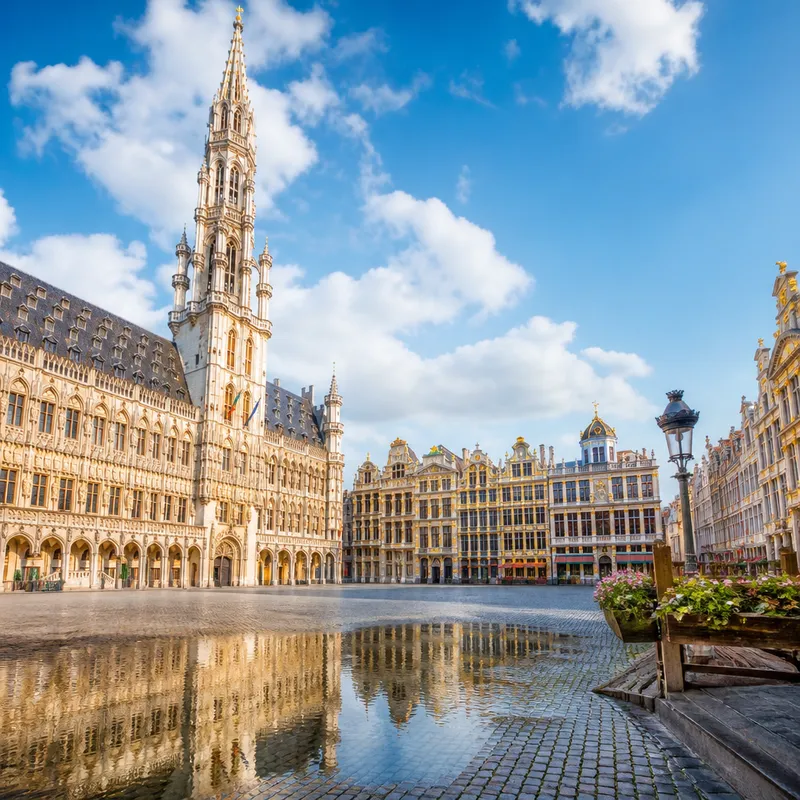
Begin at Grand Place, then move around the square slowly enough to compare its buildings. The town hall and ornate facades create a concentrated architectural setting that changes with light and street activity. You do not need to enter every building to appreciate the space. Stand clear of passage routes and give yourself time to look upwards before moving into the neighbouring streets. An early start often makes an unhurried circuit easier.
For a compact centre continuation, make the Galeries Royales Saint-Hubert your next named destination, then return toward the Grand Place side before choosing a brief Manneken Pis detour. Save the stops and follow the public connecting streets. The galleries are a covered architectural setting; individual shops have their own trading hours and prices. Browsing does not require buying chocolates at every stop, and a shop visit should not determine the route unless it is a personal priority.
Manneken Pis can be a brief stop on this central loop. Keep expectations proportional to the size of the landmark and continue with the rest of the neighbourhood. A first visit works better when the smaller curiosities punctuate a walk rather than consume its whole morning. Choose lunch before you climb towards the upper town, especially if you want a seated meal rather than eating while checking directions on your phone.
Day one afternoon: upper town and one focused interior
Walk towards Mont des Arts for a change in level and perspective. The slope matters if you are travelling with luggage, a pushchair or someone who finds stairs difficult; choose the approach that fits your mobility needs. Use the view as a transition into the upper town. This part of the route can include public squares and the park area without requiring several back-to-back museum tickets.
For an art or music afternoon, choose a Royal Museums of Fine Arts collection or the Musical Instruments Museum in the upper-town area, then check that institution’s actual opening calendar and ticket. The nearby institutions do not share one admission product by default. Alternatively, use the Sablon route around Notre-Dame du Sablon, the Petit Sablon square and Egmont Park for a largely outdoor continuation. The tourism board’s Sablon walk identifies these places as a connected neighbourhood area.
Allow the visit to shape the rest of the afternoon. If you stay longer inside, shorten the outdoor loop. If you prefer architecture and walking, use the same block for the upper streets and return towards the centre at an easy pace. Our Paris itinerary offers a useful comparison for visitors planning another art-focused city stay, with its own separate reservation priorities.
Finish with dinner in an area that is convenient for your accommodation. You can return to Grand Place after dark for another look, but check your evening journey before choosing a distant restaurant. Brussels’ central squares and its everyday neighbourhood streets provide different experiences. Giving each some time is more useful than repeatedly returning to the same landmark whenever the schedule leaves a gap.
Day two morning: a deliberate trip to the Atomium
Use a confirmed public-transport journey to the Heysel area for the Atomium. Visit Brussels identifies metro line 6 and Heysel station among the approaches; check STIB/MIVB for the live connection from your accommodation and the final walk. Do not interpret the station name as the attraction entrance. Decide before travelling whether you want an exterior view, the Atomium interior or the nearby Design Museum, then arrange that specific product.
The operator publishes opening details and occasional exceptions. Check your travel date rather than relying on a general statement that the attraction opens daily. Allow extra time for entry and movement inside, especially during busy holiday periods. Buying online can simplify the ticket purchase, but it does not guarantee that every queue disappears. Keep your ticket available throughout the visit and follow the indicated route through the building.
The standard Atomium offering is described by Visit Brussels as including entry to the nearby Design Museum Brussels. Check the current ticket conditions and the museum’s opening calendar before building a second visit into the same morning. An included admission is an opportunity, not an obligation. Visitors who prefer a single attraction can use the remaining time for a proper lunch and a calm journey back to the centre.
Do not add every nearby ticketed attraction simply because you have already travelled to Heysel. A two-day trip has limited time, and one substantial visit is usually a stronger choice than several hurried entries. If the weather is poor, the indoor options can take more of the day. If clear skies make the exterior setting especially appealing, leave room for a short outdoor pause before returning.
Day two afternoon: choose a different Brussels mood
After Heysel, return to a neighbourhood that suits your interests. The Sablon area can fit an afternoon of architecture, browsing and food; another option is to stay closer to your accommodation and explore the streets you passed on arrival. Choose one area rather than linking several districts with repeated transport changes. This keeps the second day distinct from the first while still leaving room for the practical business of departure.
Brussels also works as a base for a separate Belgian city stay, but do not reduce your two city days by silently adding an entire excursion. Our Ghent itinerary and Bruges itinerary each describe a different destination and deserve their own allocation of time. A train connection makes a journey possible; it does not make two full itineraries fit into the same afternoon.
If you have an evening train or flight, use this block for a shorter walk near the luggage collection point. Build the journey to the actual departure station or airport into the schedule. Ending beside a convenient café with time in hand is preferable to adding a final attraction that forces you to rush back across Brussels. Check disruptions and platform information shortly before travelling.
Food, costs and wet-weather choices
Separate food experiences from a checklist of famous products. A waffle or chocolate purchase can be a pleasant pause, but allow at least one meal that gives you a comfortable seat and time to rest. Compare menus for the dishes you actually want and notice whether a restaurant is operating at your planned hour. Keep a flexible meal option near Grand Place and another near your return route on day two.
Budget for your main interior visit, the Atomium if selected, local transport and accommodation before considering a pass. Much of the central walking route can be enjoyed without an admission ticket. In rain, keep the galleries and your chosen museum close together rather than travelling between distant indoor alternatives. The itinerary already has room to shorten its outdoor sections; it does not require replacing every wet hour with another paid attraction.
Choose Sablon or Marolles, and avoid an undefined second afternoon
If you keep the second afternoon in the centre, use Grand Sablon as its named anchor and take a short route through Petit Sablon and Egmont Park. If your interest is the Marolles side instead, investigate a route toward Place Poelaert and the lower neighbourhood, with the change in level treated deliberately. Visit Brussels presents these as part of a wider Sablon–Marolles walk; you do not need to complete every stop after Heysel.
Allow a full morning block for the Atomium outing including city transport and the chosen visit, rather than borrowing a tower-only duration for the whole excursion. Keep the afternoon flexible until the return is clear. With an early departure, finish near your luggage or station instead. On day one, a central street walk and one interior are sufficient; the upper-town museum and an extensive neighbourhood route can otherwise compete for the same hours.
Frequently asked questions
Is two days enough to see Brussels?
Two full days cover the central historic areas and a considered Atomium outing, with time for one cultural interior. Add days if you want several museums or excursions to other Belgian cities.
Can I walk from Grand Place to the Atomium?
Use suitable public transport for this itinerary. The two areas are separated enough that walking between them would take time away from the visits and meals you came to enjoy.
Does an Atomium ticket include another museum?
The standard offering is described as including Design Museum Brussels. Check your exact ticket and the current museum calendar before relying on that inclusion.
Should I visit Bruges during these two days?
Keep these two days for Brussels if this is your first visit. Bruges can be a separate stay or an explicitly substituted day, rather than an extra full itinerary added to the same schedule.
Sources and checks
- Visit Brussels: city sightsChecked: 8 October 2026
- Visit Brussels: AtomiumChecked: 8 October 2026
- Atomium: visit rulesChecked: 8 October 2026
- Visit Brussels — Heysel transport approachesChecked: 8 October 2026
- Visit Brussels — Sablon and Marolles walkChecked: 8 October 2026
Itineraries are editorial suggestions for independent visits. Check current prices, opening hours and trail conditions with official providers.