At a glance
Spend two days in Ghent with Graslei, Korenlei and the surrounding historic streets, then a selected art or heritage visit. St Bavo's Cathedral and the Ghent Altarpiece visitor programme are distinct access decisions. Restoration can affect which panels are present and where they are viewed. Give the artwork a proper block, keep a boat outing optional and use Patershol or another connected area for a slower neighbourhood afternoon.
Give Ghent its own place in a Belgian trip
Ghent deserves an itinerary built around its riverfront and cultural interests rather than a shorter copy of a Bruges route. Choose what matters most: the historic quays, the Ghent Altarpiece, another collection or time in the city's streets. They can be combined over two days without treating every monument as a compulsory entrance. A first visit should leave room for the contemporary city around the heritage.
The central areas support connected walking, but the precise route still matters. Identify where you will begin, the main indoor priority and a comfortable place for lunch. If you are arriving and leaving on the same day, reduce the programme honestly. The two-day route below assumes two meaningful sightseeing blocks, not simply a night between two transport journeys.
Day one: Graslei and Korenlei as the main setting
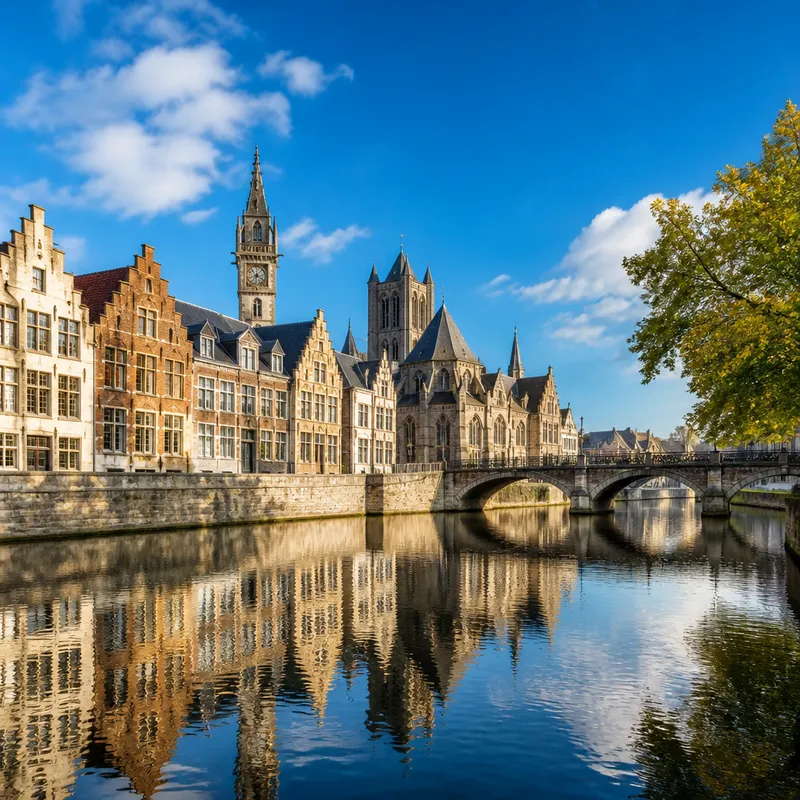
Start with Graslei and Korenlei, the quays on either side of the water in the historic centre. Visit Gent describes their role in the city's trading past. Look at the façades and how the public space relates to the river rather than treating the area only as a place to reproduce one familiar photograph. Cross at a convenient bridge and give both sides attention within a coherent route.
Use St Michael’s Bridge as the first viewpoint, then visit the Graslei and Korenlei quays below before continuing toward Korenmarkt. Visit Gent describes the bridge’s view of St Nicholas’ Church, the Belfry and St Bavo’s Cathedral together. Those three towers provide a useful orientation for the later walk toward the cathedral area. This is a compact connected route, rather than a promise to find a quiet photography position at a particular hour.
A boat outing can be an optional way to change perspective. Check the current operator, departure point, route and conditions before booking. This guide does not promise a specific sailing, duration or queue. Let the outing replace part of the walking programme instead of automatically extending it. Enjoying the riverfront does not require buying a separate water experience.
Korenmarkt and a chosen historic route
Continue around Korenmarkt and the connected central streets. Use the square as an organising point rather than another isolated attraction. The surrounding architecture and nearby church setting can be appreciated from a public route, with a selected interior added if it interests you. Check visitor access and any religious use before deciding to enter.
Gravensteen may be a heritage priority for some visitors, but it should be researched as a specific visit rather than assumed to be a quick addition. Verify the current product, route and mobility demands directly. An impressive castle exterior does not tell you the time needed inside or whether every area suits the party. If it is your main interest, give it the day's principal indoor block.
For a longer heritage version, continue toward the Gravensteen area and decide whether to enter the castle. Otherwise, keep that exterior as the endpoint before a meal and a shorter return. The castle visit needs its own current product and access check, while the street route remains a separate outdoor block. Do not place a substantial castle interior in the spare minutes between a canal cruise and a cathedral reservation.
For a wider trip, our Bruges itinerary gives that city's canals and quieter southern spaces their own programme. Ghent and Bruges can complement one another, but each deserves actual time rather than being reduced to a combined photographic circuit.
Day two: St Bavo's Cathedral and the Altarpiece
Make the Ghent Altarpiece a substantial priority if it is your main cultural interest. Read the current visitor-centre product and access instructions before choosing the time. Seeing the cathedral and attending a particular artwork-viewing programme are different decisions. Do not assume that entering a religious building automatically includes every associated museum or visitor experience.
The visitor-centre information checked on 8 October 2026 describes restoration affecting the upper register of the inner panels, with related viewing opportunities at the Museum of Fine Arts. That means the experience should be researched for your actual date. Avoid promising that every panel is in one place or in an unchanged arrangement simply because an older photograph shows the complete work.
Choose how much interpretation you want and give it time. The operator describes different visitor options, including augmented-reality interpretation and an alternative for people unable to use the glasses. Check the exact product and current access if that matters to you. Art viewing is more satisfying when the programme fits your interests and needs rather than the assumption that the most elaborate option is automatically best.
Restoration is part of the planning, not a minor footnote
If the artwork is the main reason for your trip, check the current restoration and viewing notices before fixing the daily order. A restored panel, a panel undergoing work and a digital interpretation are different experiences. The information should help you decide what to expect, not be hidden behind a broad promise that the attraction is simply open.
A separate Museum of Fine Arts visit may interest someone who wants to understand the restoration context or see another collection. Give it a meaningful block and confirm its own calendar. Do not attach it as an effortless extra after a long cathedral programme. Travel between venues, reading time and the scale of a collection all belong in the practical plan.
For a traveller less interested in detailed art interpretation, use a shorter selected heritage visit and keep more time for the neighbourhood route. That choice is not a lesser visit. The itinerary should reflect the reason you came to Ghent rather than impose the same cultural programme on every reader.
Patershol or another connected neighbourhood
For the final neighbourhood block, use Kraanlei as a connecting waterfront reference and choose a few Patershol streets before finishing around Vrijdagmarkt. The official city map locates these areas in the same northern part of the historic centre. This gives the walk a named endpoint for a meal or return journey. A listed restaurant street is not a promise about current opening hours; choose the actual place and menu separately.
Choose a meal by its current menu, location and seating rather than an unverified superlative. This guide does not claim firsthand testing of restaurants. A comfortable lunch or dinner can be the main social activity of the afternoon, with a walk around it. Leave enough room to return to a riverfront spot you enjoyed without treating that return as a need to repeat the whole morning's circuit.
An evening walk can provide a different impression of the centre, but check conditions and the practical return route. Architectural lighting and a special festival are not the same thing; do not assume a named event occurs on your dates. A normal city evening is a worthwhile experience without promising a particular show or organised programme.
A two-day structure with an art choice
Use the table to distinguish the riverfront day from the main cultural visit. Exchange the order around your confirmed entry and any selected museum calendar. With only one full day, choose whether the artwork or a broader street route is the priority, and shorten the other accordingly. A third day can deepen art interests or support a separately planned destination.
| Day | Main focus | Anchor | Flexible time |
|---|---|---|---|
| One | Riverfront and historic streets | Graslei, Korenlei and Korenmarkt | Selected interior or boat outing |
| Two | Art and a neighbourhood | Cathedral visitor programme or another collection | Patershol and a relaxed meal |
| Extra time | More detailed art or another destination | Separately researched visit | Restoration notices and onward transport |
Accommodation and the final practical checks
Choose accommodation by the actual route from your arrival point and the evening environment you want. Central convenience and quiet sleep may lead to different addresses. Check entrance and lift details directly if access matters, and keep a saved map for the luggage journey. A broad claim of being in Ghent is less useful than a practical connection to the route you have selected.
Our Amsterdam itinerary and culture and history collection provide other cultural city breaks for comparison. Budget for the specific interiors and transport you will actually use, rather than a theoretical pass itinerary. Visit Gent information was checked on 8 October 2026. Reconfirm artwork restoration notices, ticket inclusions and individual venue calendars for your dates. This editorial plan gives Ghent a distinct riverfront-and-art focus without claiming personal experience or guaranteed access.
Keep the cathedral day distinct from the riverfront circuit
On the art-focused morning, go to the visitor entrance for your selected St Bavo’s programme and allow enough time for its interpretation. The general cathedral visit, the Altarpiece programme and a separate Museum of Fine Arts visit are different blocks. If restoration viewing is the priority, confirm where the panels you want to see are currently located before choosing the order. Do not describe a digital or augmented-reality interpretation as equivalent to every original panel being present.
For the street-focused version, spend roughly two to three hours between St Michael’s Bridge, the quays and Korenmarkt, with lunch and any castle admission added separately. On the second day, the Patershol–Vrijdagmarkt route can remain a short afternoon rather than another full historic circuit. These allowances are editorial pacing choices. The official map supports the named neighbourhood relationships; it does not establish current entrance arrangements at all the attractions along the way.
Frequently asked questions
Are two days enough for Ghent?
Two full days allow the historic riverfront, a selected cultural visit and neighbourhood time. Add time for several substantial collections or another Belgian destination.
Does cathedral entry automatically include the Ghent Altarpiece visitor programme?
Do not assume that. Check the exact visitor-centre product and inclusions; cathedral access and a particular artwork-viewing experience are separate decisions.
Can restoration affect which Altarpiece panels I see?
Yes. Current information checked on 8 October 2026 describes restoration and related viewing arrangements. Confirm the latest notice for your dates rather than expecting an unchanged complete display.
Should I visit Bruges as an extra on the second afternoon?
Treat it as a separate destination with its own transport and time. Add another day or replace a meaningful part of Ghent's programme instead of attaching it to an already full afternoon.
Sources and checks
- Visit Gent: St Bavo's CathedralChecked: 8 October 2026
- Visit Gent: cathedral visitor centre and restorationChecked: 8 October 2026
- Visit Gent: Graslei and KorenleiChecked: 8 October 2026
- Visit Gent — KorenmarktChecked: 8 October 2026
- Visit Gent — St Michael’s Bridge and three-tower viewChecked: 8 October 2026
- Visit Gent — PatersholChecked: 8 October 2026
- Visit Gent — official city walking mapChecked: 8 October 2026
Itineraries are editorial suggestions for independent visits. Check current prices, opening hours and trail conditions with official providers.