At a glance
Use two days in Bruges for Markt, a selected heritage interior and canal-side walking, followed by the Beguinage, Minnewater and a quieter route. The Belfry climb involves 366 steps and needs a deliberate mobility decision. Check dated maintenance notices before booking. Keep a canal boat optional and distinguish a peaceful residential or religious site from a general photographic setting. Two days allow more than a quick central circuit.
Give the city time beyond its famous view
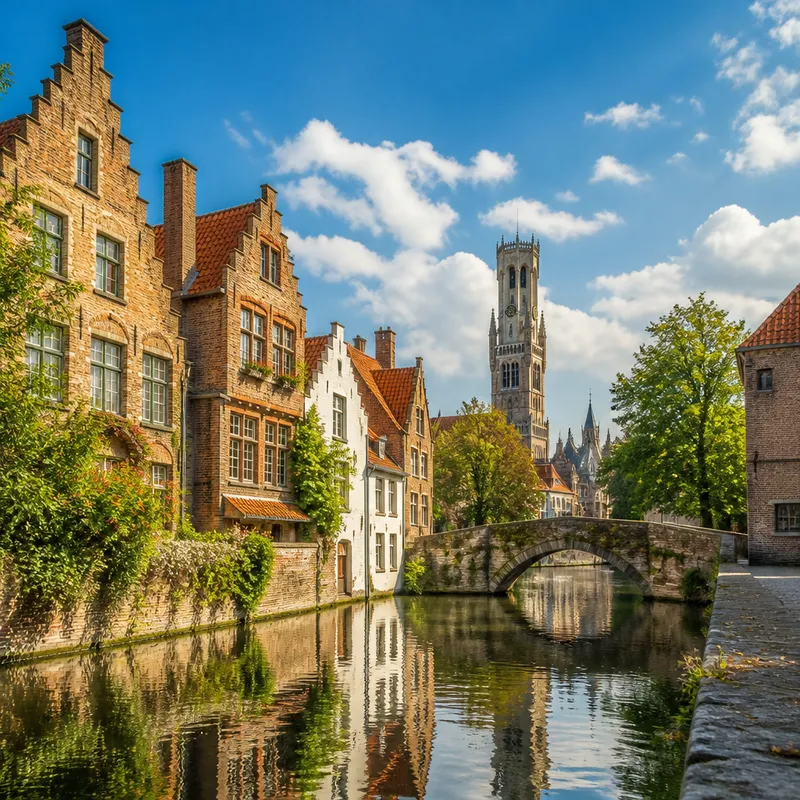
Bruges is often imagined through one canal photograph, but a useful first visit needs a route with more than a succession of viewpoints. The central squares, heritage interiors, waterside streets and quiet southern spaces provide different experiences. Two full days allow time to notice those differences without making every block dependent on a reservation.
Start by deciding whether you want a substantial museum, a tower climb or mainly an outdoor heritage programme. They demand different kinds of attention and movement. An art enthusiast may replace part of a walk with a collection; another visitor may choose a shorter interior and longer canal route. The same city framework can support both without requiring every famous entrance.
Day one: Markt and a selected heritage visit
Begin at Markt and use the central setting to get your bearings. Look at the surrounding architecture and the relationship between the square and nearby streets before choosing the day's interior. The Belfry is a prominent option, but seeing it from below and completing the climb are different experiences. Decide according to your interests and mobility, not the assumption that every visitor must reach the top.
Musea Brugge states that the Belfry climb involves 366 stairs. Consider the ascent, confined sections and the return when deciding whether it suits your group. A view from a tower is not a necessary condition for appreciating the city. If some people climb and others do not, agree on a meeting point and leave enough time rather than imposing a tight deadline on the visit.
Check the current dated notices too. The museum information read on 8 October 2026 identifies a maintenance closure from 19 to 22 October 2026. That is a specific practical limitation near the research date, not a permanent annual rule. Confirm the notice for your own dates before purchasing and keep another meaningful heritage choice available if the desired visit cannot happen.
Follow the canals with a connected walking route
After Markt, continue to Burg, then use Vismarkt and Huidenvettersplein as connecting points toward Rozenhoedkaai. Follow the canal-side route along Dijver before deciding whether to turn back to the centre or continue toward a booked collection. These places appear in the official first-visit walking guide, but our two-day split is editorial. Keep Rozenhoedkaai as a brief view, not the whole purpose of the afternoon; narrow public space still needs to remain clear for other people.
A boat outing is an optional alternative, not an automatic requirement. Compare the current operator, departure point, format and conditions before booking. The experience can give a different perspective, but this guide does not promise a particular sailing, duration or queue. Choose it because the water-based visit interests you, and let it replace a portion of the walking programme.
Keep lunch or a café near the day's area. A canal-side table can be appealing, but compare the actual menu, seating and price rather than assuming the location guarantees a particular quality. This itinerary does not claim firsthand testing of restaurants or boat companies. A comfortable meal can improve the day more than another hurried stop added immediately after the tower.
For another city where canal scenery and heritage need careful pacing, our Venice itinerary has a different two-day framework. Similar visual themes do not make the cities' transport, luggage or admission arrangements interchangeable.
Day two: the Beguinage with respect for its setting
For the southern day, use the Church of Our Lady and St John’s Hospital area as a starting anchor, then continue through Walplein toward the Beguinage. Visit Bruges groups these points in its first-visit walk. Choose a museum admission here only if it is your priority, then enter the Beguinage’s public setting quietly and follow the signs. The walk past an attraction and admission inside it are separate experiences, especially in a residential or religious place.
The site can be appreciated through its public setting without treating it as a rapid photography task. Slow down, observe the arrangement of buildings and green space, and keep voices and group movement considerate. A quiet visit is a different experience from the busier central squares. It should not be marketed as another empty "hidden gem" while disregarding the people who use it.
If you want a specific interior, check current access rather than assuming everything within the ensemble is open. The overall site and individual buildings have different practical conditions. For visitors with mobility needs, research the precise public route and surfaces. An attractive photograph of a courtyard does not establish that every entrance is accessible.
Minnewater and a slower southern route
Continue from the Beguinage toward Minnewater and its park, then decide whether to finish here or follow the town-side return toward ’t Zand. The official route also identifies the city ramparts and Koning Albert I Park, which can help orient a return toward the station area. Save the exact station approach if you are departing; do not assume an attractive park path is always the shortest connection with luggage. A shorter southern route is enough after a substantial museum visit.
The afternoon can be another selected heritage or art experience, a longer researched walk or a return to central streets that interested you on day one. Pick one meaningful focus. A list of every possible museum is less helpful than knowing why you would choose a particular collection. Check its calendar, admission product and location before committing.
If departure takes part of the day, make the final block easy to shorten and keep the luggage route in view. Include the journey to the actual station or onward connection, not just its advertised departure time. Two days work well because they create room for the quieter programme, not because they let you complete the same central loop repeatedly at a slower speed.
Bruges or Ghent in a larger Belgian trip?
Bruges and Ghent provide different city experiences and deserve separate decisions. Do not turn this itinerary into an automatic day of commuting to another destination just because both are part of a Belgian route. Our Ghent itinerary gives that city's riverfront and art interests their own structure. Add time or replace a substantial programme if you want both.
When planning a combined trip, check current connections and accommodation arrangements separately. A short-looking railway journey still involves reaching the station, waiting, luggage and arrival at the next base. Giving each city meaningful time often creates a more useful visit than trying to photograph their central landmarks in one rushed day.
The two-day framework
Use the table to keep the busier centre and quieter southern spaces distinct. Exchange days if a selected museum's calendar requires it. With only one full day, retain the main heritage choice and a shortened canal-and-Beguinage route rather than assuming both complete programmes can be performed at double speed.
| Day | Main setting | Priority | Flexible time |
|---|---|---|---|
| One | Markt and central canals | Belfry or selected interior | Canal walk or boat outing |
| Two | Beguinage and Minnewater | Respectful heritage walk | Another collection or quieter route |
| Extra time | A specific art interest or another city | Separately planned programme | Calendar and onward connection |
Stay and spend according to your programme
Choose accommodation by the actual street, route with luggage and evening environment. Central convenience and quiet sleep may point to different locations. Verify entrance and lift details directly if access matters. Keep meals near the day's main area, and check current kitchen hours for the date you intend to visit rather than relying on a general listing.
Budget separately for the selected tower or collection, any boat experience, meals and transport. Do not buy a combination simply to justify entering places you would otherwise skip. Outdoor heritage walks provide substance without an entrance for every block. Our weekend breaks collection can help compare other destinations by pace and priorities.
Musea Brugge and Visit Bruges information was checked on 8 October 2026. Confirm the Belfry's dated notices and any selected interior's access for your trip. This editorial route does not promise empty streets, queue-free entry or personal experience of businesses. Its purpose is a considered first visit that includes both the celebrated centre and the spaces where a quieter approach matters.
How to divide the official walking area over two days
The official first-visit route links the centre and southern sights in a broader walk. Splitting it here gives Markt and Burg their own day, with the Beguinage and Minnewater on the second. Allow roughly two to three hours for each selected outdoor block with pauses, and add the actual time for the interior you choose. These are editorial allowances, not the duration of every official route variant.
A Belfry reservation should govern the first day’s starting order. The climb’s 366 steps and the dated maintenance notice deserve more attention than a promise about an empty morning queue. If you skip the climb, use its exterior as a landmark and spend longer along Dijver or in a selected collection. A canal boat replaces part of the walking block; its boarding point, operating conditions and return must be checked with the chosen operator.
Frequently asked questions
Are two days enough for Bruges?
Two full days allow a central heritage visit, canal time and the quieter Beguinage-and-Minnewater programme. Add time for several substantial art collections or another city.
How demanding is the Belfry climb?
Musea Brugge states that the climb involves 366 stairs. Choose it according to your mobility and comfort, and check current access and maintenance notices.
Is a canal boat essential?
No. It is an optional perspective on the city. Compare the current service and let it replace part of the walking programme if it interests you.
Should I treat the Beguinage like any other busy attraction?
Use a quieter, respectful approach. It has residential and religious significance; follow signs, keep public routes clear and do not enter private spaces for photographs.
Sources and checks
- Musea Brugge: Belfry visitor informationChecked: 8 October 2026
- Visit Bruges: Belfry heritageChecked: 8 October 2026
- Visit Bruges: BeguinageChecked: 8 October 2026
- Visit Bruges: MinnewaterparkChecked: 8 October 2026
- Visit Bruges — official first-visit walking routeChecked: 8 October 2026
- Visit Bruges — RozenhoedkaaiChecked: 8 October 2026
Itineraries are editorial suggestions for independent visits. Check current prices, opening hours and trail conditions with official providers.