At a glance
Spend your first day between Trieste’s waterfront, Canal Grande and the old town, with San Giusto as the main uphill visit. Give Miramare its own half-day on the second day, then return for the coast or a café-led afternoon. A central base works without a car. Keep the exposed waterfront flexible and choose the transport to Miramare for the date and season of your trip.
Two days that separate the city from Miramare
Trieste's first impression often comes from the sea-facing square, but a useful short visit also reaches the streets behind it and the hill above them. Give those central areas one full day. Miramare stands beyond the main city circuit, so treating it as a quick extra between central sights creates unnecessary travel. A separate morning leaves space for the castle, the grounds and the return journey.
Start by deciding whether the second day is about a historic interior or time by the water. You can visit the Miramare grounds without assuming you will also enter every part of the estate. Likewise, on day one a San Giusto castle visit takes longer than a walk up to the hilltop surroundings. The table gives suggested time blocks with pauses; it is not a timetable of measured walking times.
Trieste can sit within a longer journey between Italy and Slovenia, but keep any cross-border transfer outside these sightseeing blocks. Our Ljubljana old-town walk makes a useful companion if you want another city where a river or waterfront helps organise the visit.
| Block | Area | Decision |
|---|---|---|
| Day one morning | Canal Grande, waterfront and Piazza Unità | Short pier walk if conditions suit |
| Day one afternoon | Cavana and San Giusto | Castle, cathedral or shorter hill visit |
| Day two morning | Miramare | Castle interior and selected park paths |
| Day two afternoon | Barcola or central Trieste | Coastal pause or sheltered café time |
Begin at Canal Grande and the waterfront
From a base near Trieste Centrale, the Canal Grande is a natural first destination. Walk along the canal towards Piazza Sant'Antonio, then turn back through the surrounding streets towards the seafront. The grid of the Borgo Teresiano is a useful contrast to the older lanes you will see later. Pause to look down the length of the canal rather than viewing it only from a road crossing.
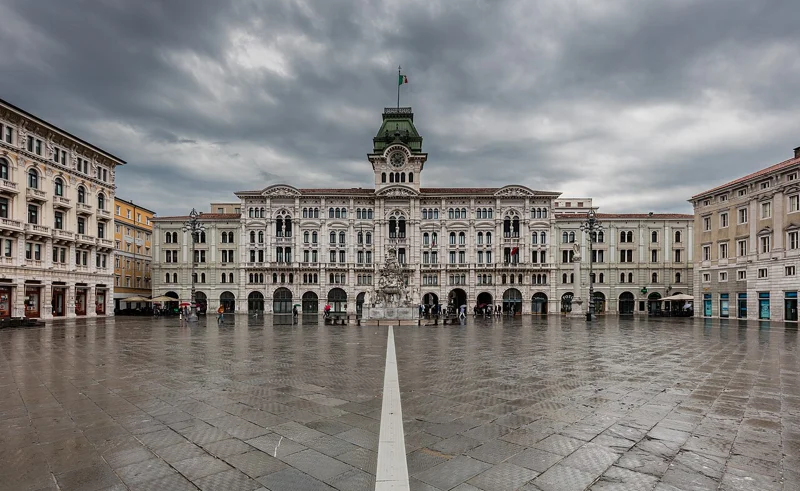
Continue along the waterfront towards Piazza Unità d'Italia. The square opens directly towards the gulf, with civic and commercial buildings enclosing the other sides. Walk into its centre and then towards the water so you see both the architectural setting and the opening to the sea. It is a place to spend time, not just a route between two indoor attractions.
Molo Audace extends the waterfront experience when conditions are comfortable. In strong wind or rough weather, stay back and choose the sheltered streets instead. There is no need to make an exposed pier a mandatory stop. If you arrive early, this section also works as an orientation walk before checking into your room; keep your luggage plan separate from any castle or museum visit later in the day.
Explore Cavana before climbing San Giusto
Behind Piazza Unità, the old-town streets around Cavana change the scale of the city. Choose a short circuit through the pedestrian lanes and return towards the area below San Giusto. This is a sensible place for lunch before the climb. Look for a menu and a seat that suit your plans rather than trying to fit a full meal into the few minutes left before a ticketed visit.
The Roman Theatre lies at the foot of the hill, making it a useful reference point as you move between the lower city and the older settlement above. An exterior look can fit naturally into the walk. Do not assume that every archaeological area is freely entered simply because it is visible from a public street. Follow the route and access points provided on site.
Keep the hill visit together as one block. Repeatedly descending for lunch and climbing back for a reservation wastes effort, particularly in warm weather. Travellers who prefer a mostly level day can remain around Cavana and the waterfront, then reach the hill using suitable local transport. If you have been following the Venice itinerary, Trieste offers a different relationship between a working port, broad streets and older urban layers.
Choose your San Giusto visit
The San Giusto area brings the city's older history into focus. The cathedral and castle are separate destinations, and their entry arrangements should be checked separately. Allow time to walk around the hilltop surroundings before deciding how much of the interior programme you want. The climb itself does not commit you to buying every available ticket.
At the castle, the visitor route can include the ramparts, the arms collection and the Lapidario Tergestino. Choose it if you want the building and displays as well as a higher perspective over the city. Museum information describes an accessibility arrangement using a lift on request; contact the operator in advance if you need that route, rather than discovering the requirements at the top of a steep approach.
The cathedral remains a place of worship. Leave room for services and avoid making an interior visit the only reason to go uphill. For the descent, pick a route that returns towards the part of the centre where you want dinner. If you have already spent a long time in the castle, a café and a short evening walk will usually be enough. A second major museum can wait for another visit.
Give Miramare a generous half-day
Miramare lies on the Grignano promontory outside the central walking circuit. Plan the outward journey and the last part of the approach together. A station or bus stop with the right name does not necessarily put you directly at the castle entrance. The museum's directions are useful for comparing train, bus and any seasonal boat connection, including the walking section at the end.
Once there, decide whether to begin with your booked castle visit or with the grounds. The historic residence and its furnishings are the reason to buy an interior ticket; the surrounding park provides a different experience of the coastal setting. A park walk can be shortened or extended without turning it into a race through every path. Select a manageable circuit that leaves time to return to your transport.
Miramare deserves at least a generous morning allowance when combined with travel from central Trieste. That is a planning suggestion, not the museum's required visit duration. Travellers interested in every interior or a temporary exhibition may want longer. Keep lunch flexible and take water with you. An attractive café location is useful only if it is serving when you arrive; it should not be the sole food plan for a longer outing.
Return along the coast or choose a sheltered afternoon
After Miramare, consider a stop along Barcola if the weather and your transport make it convenient. The seafront gives the second day a more local rhythm than returning immediately to another museum. Choose a section with an easy onward connection, and keep the distance to your accommodation in mind before setting off on a long walk beside the water.
The gulf is part of the appeal, but exposed paths are less pleasant in strong wind. A central afternoon with a café, bookshop or chosen interior is a complete alternative. You do not need to drive up to the karst plateau or add a cave excursion simply to fill the remaining hours. Those outings involve their own travel, conditions and entry arrangements and are better planned separately.
For a coast-and-city comparison on a longer European trip, our Nice itinerary follows a different stretch of waterfront with its own hills and neighbourhoods. In Trieste, keep the final afternoon close enough to retrieve luggage comfortably. If your return train is early, shorten the grounds visit at Miramare instead of relying on a tight connection back to the station.
Make time for Trieste's café culture
A café stop fits the city best when it is part of the day rather than an item squeezed between monuments. Choose whether you want a brief standing coffee or time at a table. Read the menu and ask if you are unsure about the local terminology; ordering clearly is more useful than memorising a list of words without understanding the drink they describe.
The cafés around the central squares can provide a good break after the San Giusto climb. A less prominent street may suit a quieter pause or a different budget. For lunch or dinner, compare the menu with what you actually want to eat, including portion sizes and whether a dish is a starter or a main course. The city's position near several culinary traditions does not mean every restaurant serves the same range.
Avoid booking an ambitious sequence of tastings immediately after a long museum morning. One unhurried meal can give the day a better shape. If food is your main interest, reduce a paid interior and use the time for a longer lunch followed by a short walk. The car-free travel collection includes other cities where this slower rhythm works without hiring a vehicle.
Choose a central base and keep the route manageable
For two days, accommodation between the station, Canal Grande and the old town gives you a practical relationship to the route. Compare the actual street and entrance as well as the distance on a map. A room uphill may have appealing views but add effort each time you return. If you arrive late, check the simplest connection from the station and where you can eat nearby.
Use a small day bag for San Giusto and Miramare, with rain protection or a wind-resistant layer appropriate to the forecast. A city visit and a coastal park outing can feel quite different on the same day. Travellers with limited mobility should ask about the exact path and entrance they intend to use; the broad waterfront does not imply that every hilltop or park route is equally straightforward.
With only one day, keep the central waterfront, Cavana and one San Giusto visit. With three days, you can investigate an additional museum or an excursion beyond the city after checking its transport. Two full days already provide a balanced introduction: the first explains Trieste through its squares and hill, while the second gives the gulf and Miramare the time they deserve.
Frequently asked questions
Can I visit Trieste without a car?
Yes. A central base suits the first-day walking route, and Miramare can be approached using public transport. Check the final walk from the chosen stop and the return service for your date.
How much time should I allow for Miramare?
Set aside a generous half-day including travel from central Trieste. Allow longer if you want a detailed castle visit, an exhibition and an extended park walk.
Is San Giusto a difficult walk?
It is an uphill visit from the lower city. Choose transport assistance if needed and ask the castle about its accessible entrance arrangements before travelling.
What can I do if the waterfront is very windy?
Stay in the central streets for a café or selected indoor visit, and shorten exposed pier or coastal walks. The route does not depend on completing every outdoor section.
Sources and checks
- Italia.it — Trieste neighbourhoods and waterfrontChecked: 23 October 2026
- Discover Trieste — Piazza Unità d’ItaliaChecked: 23 October 2026
- Trieste municipality — San Giusto castleChecked: 23 October 2026
- Miramare museum — visits and parkChecked: 23 October 2026
- CoopCulture — Miramare access and transportChecked: 23 October 2026
Itineraries are editorial suggestions for independent visits. Check current prices, opening hours and trail conditions with official providers.