At a glance
Spend the first day walking between Strasbourg Cathedral and Petite France, with one chosen cathedral experience or museum. On day two, explore the Neustadt around Place de la République, then choose a boat trip, an art collection or a longer walk towards the European quarter. This two-day itinerary uses a central base and keeps trips to other Alsatian towns for a separate day.
Give the old island and Neustadt different days
Strasbourg becomes easier to understand when you separate its compact old centre from the broader streets beyond it. The Grande Île contains the cathedral and much of the first-day route. The Neustadt provides a different architectural setting for the second morning. Trying to combine both with a full excursion to Colmar leaves little time for either, so keep this visit focused on Strasbourg itself.
Choose your main paid experience before arranging the rest of the day. A cathedral platform climb, the astronomical-clock presentation, a museum and a boat trip each need their own time. The central streets connect them easily, but their entry arrangements do not necessarily fit back-to-back. Keep one flexible block each day so you can stop for lunch or spend longer somewhere that interests you.
The table gives an editorial division of the two days, not a set of compulsory appointment times. If your museum is available on only one of them, swap the corresponding half-days. For another French city where a short visit benefits from distinct neighbourhood walks, compare our Lyon itinerary before choosing how many places to include in a longer journey.
| Block | Route | Possible addition |
|---|---|---|
| First morning | Cathedral and nearby lanes | Clock presentation or platform |
| First afternoon | Saint-Thomas, Petite France and Barrage Vauban | One museum |
| Second morning | Place de la République and Neustadt | Longer walk towards Orangerie |
| Second afternoon | Return to the centre | Boat trip or selected collection |
Start at the cathedral, then choose how to experience it
Approach Notre-Dame through the surrounding lanes and allow time to see the façade from the square. The pink sandstone, sculpted portals and single spire reward a look before you enter. Inside, give yourself a few subjects to follow, such as the stained glass and the astronomical clock, instead of hurrying towards the next landmark. Worship and tourist visiting share the building, so follow the visitor route provided on the day.
The cathedral interior, the clock presentation and the platform climb are separate experiences. Decide which matters most. A platform visit involves a substantial staircase; a view from above may be less appealing to someone who would rather spend time in the interior. The clock presentation has its own schedule and ticket procedure, so check it directly before setting the morning's order.
If you choose the clock, keep the preceding part of the walk close to the cathedral rather than crossing the island first. If you choose the platform, leave room for a seated break afterwards. Families can split these choices if necessary, agreeing on a meeting point in the square. Seeing the exterior and interior thoughtfully is already a substantial visit without adding every available option.
Walk from the cathedral towards Petite France
From the cathedral area, continue towards Place Gutenberg and the streets leading to Saint-Thomas. This gives the first walk a clear direction towards the western side of the old centre. Rather than choosing the quickest route at every junction, allow a little time for the small squares and river crossings along the way. Keep lunch flexible enough to stop when the group is hungry.
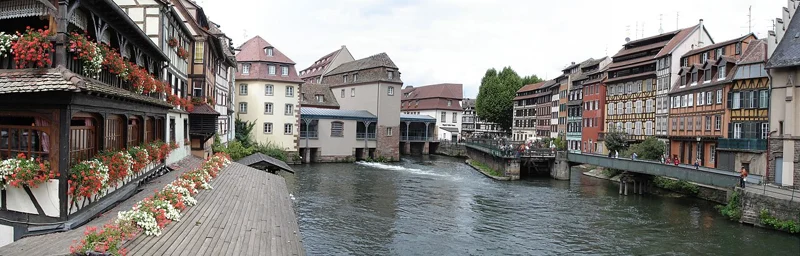
In Petite France, use Place Benjamin Zix as a place to pause and look across the water. Continue along Rue du Bain-aux-Plantes, where the half-timbered houses create a different setting from the stone façades around the cathedral. The neighbourhood's waterways and bridges are the point of the walk. You do not need to turn each bridge into a separate scheduled stop.
Around the Pont du Faisan, allow space for other pedestrians and any bridge operation. Continue towards the Ponts Couverts and the Barrage Vauban to see how the river channels fit together. This westward sequence avoids repeatedly returning to the cathedral between short visits. If you enjoy this sort of walk, our Ghent itinerary offers another compact city shaped by waterways and old commercial streets.
Choose a museum that adds something to the walk
A museum visit is most rewarding when it gives context to what you have already seen outside. Around the cathedral, the Palais Rohan's collections and the Musée de l'Œuvre Notre-Dame provide different subjects, so choose by interest rather than proximity alone. The former includes separate museum collections; the latter relates closely to the artistic setting of the cathedral. Check the collection and entrance you mean to visit before buying a ticket.
If modern and contemporary art is the stronger interest, the museum near the Barrage Vauban fits naturally at the western end of the walk. Give it the afternoon and shorten the earlier indoor programme. Trying to add both a long cathedral visit and several collections on the same day leaves the canals as a hurried connection rather than part of the experience.
For a museum-light visit, retain the exterior route and spend the extra time at the river. You can also return towards the cathedral by a different set of streets, using the water as a guide. A relaxed circuit often reveals more than another admission bought simply because it is nearby. Keep a note of any collection you would like to return for on a longer stay.
Explore the Neustadt around Place de la République
On the second morning, head towards Place de la République. The change in scale from the old island is immediately useful: streets and public spaces become broader, and the buildings present a different chapter of the city's history. Walk around the square before continuing along Avenue de la Liberté towards the university area. This gives you a clear architectural route without needing to identify every building from memory.
Look at the relationship between façades, street width and sightlines. In the old centre, turns and small spaces reveal buildings gradually; here, long views and formal arrangements are part of the design. Give yourself time to sit in a public space and compare the two settings. The contrast is one reason a second day in Strasbourg adds more than simply another list of attractions.
You can end this walk with lunch and return to the centre, or extend it towards the Parc de l'Orangerie and European quarter. The extension needs a larger time allowance and may suit a tram connection in one direction. Do not assume the European institutions are drop-in museums: if an interior visit matters, arrange the particular institution's visitor experience separately.
Decide whether a boat trip is the right afternoon
A sightseeing boat offers a seated perspective on Strasbourg's waterways and can complement the walk through Petite France. Compare the route, duration and boat type for the departure you are considering. A ticket described simply as a city cruise does not tell you which sections it covers or where you will board. Batorama's cathedral departure area is by Place du Marché aux Poissons, close to the cathedral and Palais Rohan.
Use the boat as a substantial activity rather than a spare fifteen minutes between museums. Allow time to reach the correct pier, identify the departure and board. If you have already walked all morning, the seated format can be welcome. If reflections through glass or photography are your priority, consider how the vessel and weather affect the experience before choosing a departure.
A cruise is optional. Travellers who prefer to stay on land can use the same block for the Orangerie extension or a selected collection. Our art and museum travel guides provide alternatives for trips centred on indoor visits. Keep the second afternoon adaptable to your departure time rather than booking the last available boat and hoping the station connection will work.
Eat locally without turning lunch into another itinerary
An Alsatian meal fits comfortably between the morning walk and afternoon visit. A winstub is a useful type of traditional restaurant to look for, but menus and styles vary. Tarte flambée can make a lighter shared meal, while other regional dishes may be more substantial. Ask about ingredients and portion sizes rather than assuming every local dish suits the same appetite or dietary needs.
For the first day, eat near the part of the island you have reached rather than retracing the whole route for a particular address. On the second, lunch around the Neustadt or back in the centre can determine whether you continue towards the Orangerie. Check service times if a sit-down meal is important; a kitchen may not serve continuously just because the premises are open.
Leave space for an ordinary pause with a coffee or pastry. A short trip does not need a booked food activity at every meal. If you do choose a food tour, make it the afternoon's main event and shorten the museum or cruise programme. That allows the tasting to be a real experience instead of something fitted around two other reservations.
Stay centrally and plan the station connection
For this route, compare a base on the Grande Île with accommodation near the station or a convenient tram stop. Staying on the island reduces evening walking; staying near the station can simplify an early departure. Check whether your street is quiet enough for the kind of stay you want and how you will reach the entrance with luggage.
The old-centre route can be explored on foot, with trams useful for longer extensions. Keep track of the stop you need rather than memorising a line number from an old itinerary. Routes and works can change over time, while the relationship between the station, old island and Neustadt remains a useful way to plan. Our car-free travel guides collect other trips organised around that approach.
With one day, stay on the Grande Île and choose one cathedral or museum experience. With three days, add another Strasbourg neighbourhood or plan a separate Alsace excursion with its own transport. In two days, the cathedral-to-canals walk and the Neustadt provide enough variety to make the city feel coherent without turning the visit into a sequence of departures.
Frequently asked questions
Is two days enough for Strasbourg?
Two full days cover the old island, Petite France and a Neustadt walk, with time for selected museums or a boat trip. Keep excursions elsewhere in Alsace for an additional day.
Are the cathedral, clock and platform one visit?
They have different visitor arrangements. Choose the interior, astronomical-clock presentation and platform climb separately, checking the relevant entry and schedule before travelling.
Do I need a car in Strasbourg?
No. The central itinerary is walkable, with trams useful for the station and longer extensions towards the European quarter.
Should I add Colmar to a two-day stay?
That would reduce the time available in Strasbourg substantially. For this route, keep both days in the city and add Colmar as a separate excursion if you have another day.
Sources and checks
- Strasbourg tourism — Petite France walking landmarksChecked: 23 October 2026
- Strasbourg tourism — city itinerary and districtsChecked: 23 October 2026
- Strasbourg Cathedral — astronomical clock visitor informationChecked: 23 October 2026
- City of Strasbourg — cathedral history and featuresChecked: 23 October 2026
- Batorama — boarding locationsChecked: 23 October 2026
- Visit Strasbourg: Palais Rohan museumsChecked: 23 October 2026
Itineraries are editorial suggestions for independent visits. Check current prices, opening hours and trail conditions with official providers.