At a glance
Spend the first Gdańsk day around the Main Town, Royal Route and Motława waterfront. Give the second a substantial visit to the European Solidarity Centre or the Museum of the Second World War, then keep the remaining hours for a shorter walk. Two full days work well when you choose your history focus instead of rushing through both major exhibitions. Their calendars differ: the war museum closes on Monday, while the Solidarity exhibition closes on Tuesday during October–April.
Keep the Main Town and the history museums distinct
Gdańsk has a compact visitor core, but its substantial museums deserve more time than the distance on a map might suggest. This route pairs an architectural walking day with a focused history day. The streets, riverside and exhibitions offer different perspectives rather than interchangeable stops. Choose which museum most interests you before arranging the sequence, especially for an autumn or winter visit when seasonal closure rules matter.
A stay near the Main Town makes the evening waterfront convenient. Accommodation nearer the main railway station may simplify a train arrival and access to the wider city. Compare the actual walk and street setting rather than assuming a hotel’s use of Old Town identifies the precise neighbourhood you want. The visitor core commonly called the old town includes the Main Town’s principal sights, but the historical areas are not all the same place.
| Day | Main area | Anchor | Important check |
|---|---|---|---|
| One | Main Town and Motława | Royal Route and waterfront | Interior access is separate from the street walk |
| Two | Shipyard or northern centre | Solidarity Centre or Second World War Museum | Seasonal Tuesday closure or regular Monday closure |
Day one morning: a coherent Royal Route walk
Use the Golden Gate as the named western start, then follow Długa into Długi Targ, passing the Main Town Hall and Neptune Fountain area before reaching the Green Gate. This gives the morning a simple west-to-river direction. Choose one cultural interior here if it matters, with its actual ticket and opening checked separately. A sequence of façades and squares can be enjoyed without treating every named building as compulsory admission.
The Main Town Hall, Artus Court and Neptune Fountain belong to this central setting. Choose an interior only if its subject interests you and its current calendar suits the day. The presence of a museum behind a historic facade does not mean admission is included in a city walking route. One well-chosen visit is enough before lunch; you can appreciate the remaining buildings from the public streets without buying a ticket for each.
Continue towards the Green Gate and the river. This makes a useful end point for the morning rather than turning immediately back along the same street. Choose lunch in the area you have reached and check the menu before committing. A waterfront table can be pleasant, but compare the meal and price with nearby side streets. Location alone does not tell you whether a restaurant provides the experience you want.
Day one afternoon: Motława and smaller streets
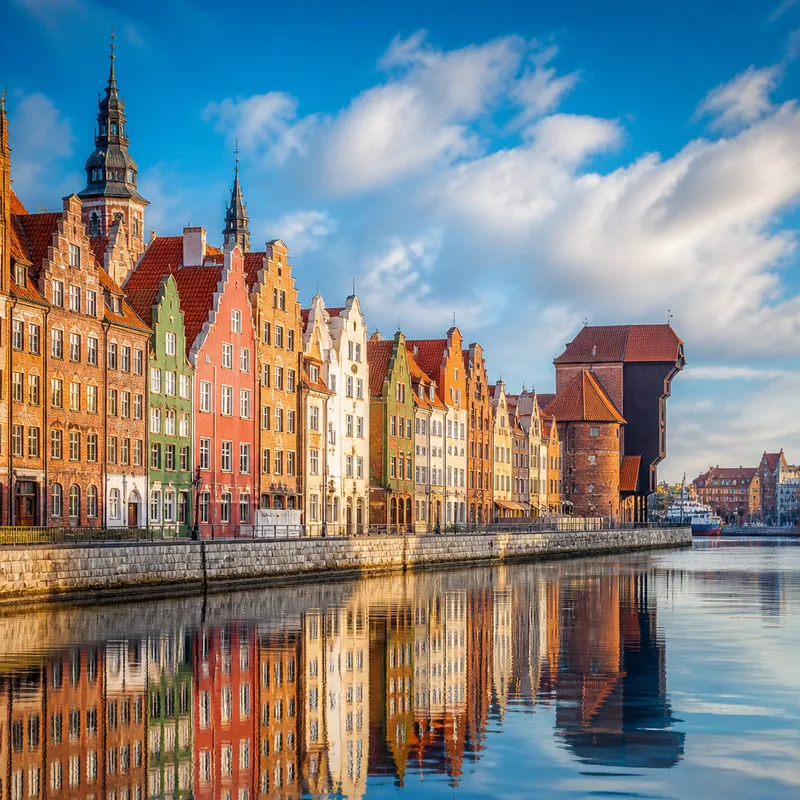
Walk along the Motława waterfront, using the river to understand the merchant city’s layout. The harbour crane and narrow building frontages create a very different setting from a broad modern seafront. Take the view from public paths and crossings rather than assuming you can enter every historic structure beside the water. Museums along the river have their own tickets, visiting hours and occasional access changes.
From the Green Gate, follow the public waterfront toward the Crane, then use the Mariacka street area for a return through the Main Town toward St Mary’s. The official city guide identifies the Crane as a separate maritime museum branch, so an exterior stop is different from entering its exhibition. Keep that visit separate from your selected second-day history museum, and investigate the actual entrance and access if you choose to go inside.
St Mary’s can be an optional church visit if access allows. A tower climb is a separate decision from entering the church, especially when stairs or a long ascent would affect your group. Check the current visitor arrangements rather than assuming the tower remains available whenever the church opens. You can finish the afternoon with a ground-level street circuit and still have a complete first day.
For another Polish city with a different scale, our Kraków itinerary provides a separate plan. Keep its museums and excursions in their own stay rather than borrowing them as alternatives here. Gdańsk’s waterfront and shipyard history are sufficiently distinctive to justify giving this short visit a clear local focus.
Day two option one: the European Solidarity Centre
Choose the European Solidarity Centre if you want to understand the movement associated with the Gdańsk shipyard and its wider significance. Give the exhibition a substantial morning or afternoon. The industrial setting and nearby memorial area provide context, but an exterior look cannot replace the interpretation inside. Read the visit options and allow time to follow the material at a pace that suits you.
The seasonal calendar is important. During October–April, the exhibition closes on Tuesdays for maintenance; building access follows a different schedule. An open entrance or public area therefore does not prove that the paid exhibition is available. Check the exact part of the centre you plan to visit and arrange your two days accordingly. Summer schedules differ, so do not carry an autumn rule into a later trip without rechecking.
After the exhibition, leave time for the surrounding shipyard area and a pause. Follow public routes and signs: active or restricted industrial spaces should not be treated as an open sightseeing playground. A shorter walk is a sensible finish after a long museum visit. If you want evening food or music in a converted industrial setting, verify the particular venue’s current programme and return journey rather than assuming every former hall is open.
For the Solidarity version, keep the centre’s exhibition and nearby shipyard memorial setting together as one historical block. Use the actual ECS entrance and the memorial area near the historic shipyard gate for orientation. Do not assume a visitor-centre ticket permits unrestricted access to every industrial property nearby. A longer shipyard walk should follow a clearly public route and current notices rather than an old industrial map.
Day two option two: the Museum of the Second World War
The Museum of the Second World War is another substantial history choice. Use it as the day’s principal interior, not a short additional stop after completing the Solidarity exhibition. The subjects require attention and can be emotionally demanding. Arrive early enough for the main exhibition, read the current visitor information and leave the afternoon flexible. A meal and a quiet walk can be more valuable afterwards than another ticketed attraction.
The museum’s regular closure is Monday, with other dated exceptions possible. Check your exact date and the last-entry conditions when arranging a ticket. If the only available day is unsuitable, move this visit to day one and use the Main Town loop on the other day. The route’s labels are flexible; the museum calendar is the practical constraint. Do not assume the two major institutions share a closure day.
Visitors with a strong interest in both exhibitions should add time or deliberately reduce the walking programme. Seeing both in one long day may be possible for some travellers, but this first-visit route does not depend on it. The Warsaw itinerary offers a different arrangement for museum-heavy days, while our culture and history guides help compare destinations by subject.
Transport, meals and the temptation to add Sopot
Walking suits the main central areas, but use appropriate public transport when the accommodation or a chosen district makes that more practical. Check the current ticket rules for your actual journey and distinguish local services from regional rail. An airport transfer and a journey to another Tricity destination are separate from the central walking plan. Save the stop nearest the attraction’s entrance rather than relying only on a large area label.
Sopot and the wider coast can be worthwhile on a longer visit, but keep this two-day route focused on Gdańsk. A train connection makes an excursion accessible without making its travel and sightseeing time disappear. If the beach is your priority, substitute a clearly defined block and accept that one museum may remain for another trip. Avoid promising the full city route, two major exhibitions and a coastal outing in the same weekend.
Before you arrive
Confirm the chosen museum’s seasonal calendar, the specific exhibition ticket and any church or tower access you want. Budget first for accommodation, meals, transport and that principal cultural visit. The Main Town and river walks help balance paid entries. For wet weather, shorten the outdoor loop and keep a café break near your current area. If your departure falls on day two, leave the last optional walk close to luggage collection and allow the full station or airport journey.
Choose one history day and one compact return walk
The Museum of the Second World War and the European Solidarity Centre have different subjects and calendars. Select one for the main second-day visit, then use a shorter walk near that institution rather than attempting both exhibitions with a quick lunch between them. In the war-museum version, leave room after the demanding subject for a quiet meal and an easy return toward the river or your accommodation.
Allow roughly two to three hours for the Golden Gate–Green Gate–Crane–Mariacka outdoor route with pauses, excluding a long lunch and admissions. On day two, the exhibition should occupy a substantial block. These are editorial allowances. Sopot, Westerplatte or another coast outing changes the transport and geography; place it on an additional day or replace one of these main blocks deliberately.
Frequently asked questions
Is two days enough for Gdańsk?
Two full days cover the Main Town, waterfront and one substantial history museum comfortably. Add time for both major exhibitions or a separate Sopot and coastal outing.
Which museum closure should I check?
The Second World War Museum normally closes Monday. The European Solidarity Centre exhibition closes Tuesday during October–April, while building access can follow a different schedule.
Should I visit both major history museums in one day?
Choose one as the principal visit for this route. Both require considerable time and attention; add a day or deliberately reduce other sightseeing if you want to experience both fully.
Is the historic visitor area entirely the Old Town?
Many principal sights are in the Main Town, including the Royal Route and Motława waterfront. Check exact addresses rather than assuming every use of Old Town identifies the same historical area.
Sources and checks
- Visit Gdańsk — Royal RouteChecked: 8 October 2026
- European Solidarity Centre: seasonal openingChecked: 8 October 2026
- Museum of the Second World War: openingChecked: 8 October 2026
- Visit Gdańsk — official city heritage guideChecked: 8 October 2026
Itineraries are editorial suggestions for independent visits. Check current prices, opening hours and trail conditions with official providers.