At a glance
Give Hiroshima two days: one centred on the Peace Memorial Museum, park and Atomic Bomb Dome, and one for Shukkeien and the contemporary city. Reserve the museum slot that suits your visit and leave unhurried time afterwards. Miyajima works best as an additional day, using the train to Miyajimaguchi and a ferry, rather than as a rushed stop after the museum.
Give the museum day room to stand on its own
Hiroshima's Peace Memorial Museum and park deserve time that is not squeezed between a train arrival and an island ferry. Two full city days let you place the museum, memorials and river walk together, then see Shukkeien and the present-day city separately. The order also gives you flexibility if the museum slot available to you falls on the second day.
This is an editorial itinerary based on Hiroshima's official visitor information and the relevant institutions. It is designed for an overnight city stay, with arrival and departure travel considered separately. Someone with only one full day should prioritise the memorial area. Someone also wanting Miyajima should consider a third day, particularly if this is a first visit to both places.
The Japan collection connects this visit with other Japanese destinations. A city guide provides context for one stop on a larger route; it does not establish that widely separated places fit into the same afternoon.
| Part of the visit | Main focus | How to use the time | Reservation or condition |
|---|---|---|---|
| City day one | Peace Memorial Museum and park | Museum, meal or pause, then memorial walk | Select a suitable museum admission slot |
| City day two | Shukkeien and central Hiroshima | Garden and one further city interest | Garden calendar and your preferred pace |
| Optional extra day | Miyajima | Train, ferry, shrine area and return | Ferry operations, tide and shrine hours |
Book the Peace Memorial Museum before arranging the rest
Choose the museum admission arrangement that suits your date. The city and prefectural visitor information recommend advance online purchase, and certain time slots require reservations. Use the museum's own current booking instructions to determine which product you need. A screenshot of a general opening-hours panel may omit those slot restrictions.
Allow a substantial morning or afternoon for the museum. There is no single correct duration for visitors with different interests and responses to the material. Avoid promising a companion that the visit will be finished in a precise short interval. Place your next fixed booking well away from the museum slot, or leave the remainder of the day unreserved.
The museum presents the atomic bombing and its human consequences. Read the institution's visitor guidance and prepare children in a way suited to their age. Some families may want a shorter visit with time to talk afterwards. Do not assume that seeing every display is necessary for a serious visit, or that a museum suitable for public admission will feel emotionally easy for every visitor.
A considered walk through the Peace Memorial Park
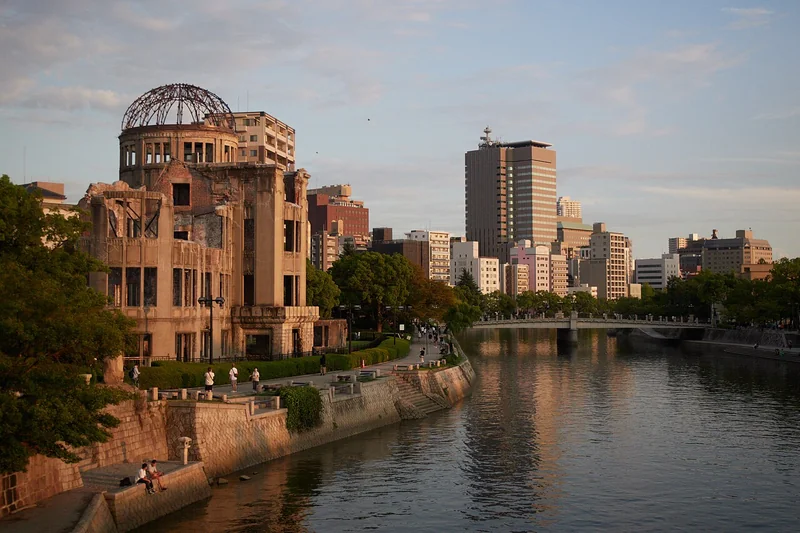
Use the park map to understand the relationship between the museum, the Cenotaph and the Atomic Bomb Dome. Hiroshima's official tourism information identifies these as parts of the wider memorial landscape. Their proximity makes walking practical, but each is a place of remembrance. Keep conversations, photography and movement appropriate to visitors who may be commemorating a personal or family history.
After the museum, take a meal or seated break before deciding how far to walk. You can approach the Dome beside the Motoyasu River and return through the park without adding a separate district. Follow the paths and any instructions around memorials. A photograph taken from a public riverbank does not imply access inside the preserved building.
Keep the evening close and practical
A central meal after the memorial visit gives the day a gentle practical finish. If you would like to try Hiroshima-style okonomiyaki, choose a currently operating restaurant and ask about the ingredients that matter to you. The name of a regional dish does not specify every filling or guarantee suitability for an allergy or dietary restriction.
Work out the return to your accommodation before leaving the memorial area. Hiroshima Station, the museum and different central shopping streets are distinct points. Check the actual local transport journey or walking route, particularly if your group has already spent several hours standing. Do not choose a hotel solely because it appears centrally placed on a small regional map.
For a station-based stay, allow separate transfer time to the museum. For a central stay, establish how you will reach the station with luggage on departure day. This small decision can matter more than adding one further attraction. Save the accommodation address and arrival instructions offline so you can use them without needing to find a wireless connection immediately.
Day two: Shukkeien, with time to look closely
Make Shukkeien the second day's main outdoor visit. The garden's own history describes its creation in 1620 and its long relationship with Hiroshima. Use the current garden map to follow the permitted routes and observe the way the planting, pond and small landscape features are arranged. A garden visit benefits from repeated views of the same space as you move around it.
Leave enough time for a seated pause and the parts of the route that interest you. Steps, bridges and changes of surface can affect access. If these are relevant to your group, ask the garden about an appropriate route before arriving. A city-centre location does not make every path easy for every walker or wheelchair user.
Hiroshima Prefectural Art Museum stands beside Shukkeien and is a coherent optional indoor visit afterwards. Its collection and temporary exhibitions have their own calendar, so check what is on display and the admission arrangement you want. Alternatively, return to the central streets for a meal. Our art and museum guides help compare other trips centred on a collection, without treating another city as part of this afternoon.
Where Miyajima fits, and where it does not
Miyajima is a worthwhile extension with a separate journey. JR West's ferry access information directs rail visitors to Miyajimaguchi, followed by the walk to the ferry terminal and a crossing. The ferry operator and Miyajima tourism association describe a crossing of roughly ten minutes. That short sea journey is only one part of getting from a Hiroshima hotel to the shrine area.
Give the island an additional day if you want a relaxed first visit. Choose the shrine and nearby town as the core, then return according to the services operating that day. The appearance of Itsukushima Shrine and the great torii varies with the tide. A photograph of water around the structures is not a promise of identical conditions when your boat arrives.
Do not automatically add Mount Misen or a long walk to a short island outing. A mountain route introduces further access, operating and fitness questions. The shrine's own information should guide the religious-site visit, while the ferry operator governs transport. Different providers' products should not be assumed to share a single ticket or identical opening hours.
Transport tickets and luggage need separate decisions
Check which company operates the train, ferry or other service you intend to use, and whether your particular pass covers it. The existence of a rail pass does not establish coverage for every boat or local vehicle. Read the conditions of the named product. The ferry access guidance also distinguishes passenger entry, IC-card use and transporting a car.
For an island day trip, leave large luggage at your accommodation where an agreed service is available, or use a verified storage option. Check size limits, hours and the collection deadline. Planning to collect a bag after the last accessible service is a problem even if the attraction visit itself finishes on time.
The car-free travel collection includes other visits organised around walking and public transport. In Hiroshima, car-free planning is practical for this route, but it still requires attention to stations, boarding points and the actual services for your date. A route map illustrates connections; it does not include the waiting, walking and luggage handling between them.
Shortening the visit without losing its focus
For one full day, choose the museum and memorial park. Arrange the admission first, then allow the remaining time for the Dome and riverside. Shukkeien can wait for another visit. Trying to complete Hiroshima and Miyajima between two long-distance trains often leaves very little room for the subject that brought you to the city.
With three days, keep the two city days and add the island. If weather or a closure changes the plan, move the outdoor and indoor blocks where the ticket conditions permit. An editorial buffer is not a promise that a dated admission can be changed without charge. Check the relevant operator before purchasing and make a different choice when conditions or your group's needs require it.
Frequently asked questions
Is Hiroshima worth an overnight stay?
An overnight stay supports two separate city days: the museum and memorial park, then Shukkeien and another city interest. It also removes pressure to fit a serious museum visit between long-distance trains. The best length depends on whether you also want Miyajima.
Should I book the Peace Memorial Museum?
Follow the museum's current admission instructions. Official Hiroshima information recommends advance online purchase and notes that some time slots require reservations. Fix that part of the day before arranging a closely timed activity elsewhere, and leave time afterwards for the park.
Is Miyajima part of central Hiroshima?
No. It involves a separate journey to a ferry departure point and a sea crossing. The short ferry time does not include the train, station-to-terminal walk or boarding. We recommend an additional day for the shrine area and a comfortable return.
Does a pass cover every train and ferry in this itinerary?
Coverage depends on the named pass, company and service. Check the conditions for the actual train and ferry you will use, including any separate charges. Do not infer coverage from a general description saying that a destination is reachable by rail and boat.
Sources and checks
- Hiroshima Prefecture official guide: Peace Memorial ParkChecked: 26 October 2026
- Hiroshima Prefecture official guide: Peace Memorial MuseumChecked: 26 October 2026
- City of Hiroshima: museum visitor booking guidanceChecked: 26 October 2026
- Shukkeien: garden historyChecked: 26 October 2026
- JR West Miyajima Ferry: access and boardingChecked: 26 October 2026
- Miyajima Tourist Association: accessChecked: 26 October 2026
- Itsukushima Shrine: official visitor informationChecked: 26 October 2026
- Hiroshima Prefecture official guide: Prefectural Art MuseumChecked: 26 October 2026
Itineraries are editorial suggestions for independent visits. Check current prices, opening hours and trail conditions with official providers.