At a glance
Use the first day in Québec City for Upper Town and Dufferin Terrace, the second for Place-Royale, Petit-Champlain and the Musée de la civilisation, and the third for the fortifications and a possible Lévis ferry crossing. Allow for steep changes of level between the two towns. Seasonal heritage interiors, winter surfaces and the ferry's operating notices can change the route.
Organise the visit around Upper Town and Lower Town
Québec City's historic centre is compact on a map but divided by a substantial change of level. Dufferin Terrace and the streets around Château Frontenac belong to Upper Town. Place-Royale and Petit-Champlain are below. Giving each area a main day avoids repeatedly climbing between them and leaves time to look at the buildings, river and museum collections.
Our three-day plan stays in and near the city. It gives Upper Town a first day, Lower Town a second, and the fortifications with a possible river crossing a third. Montmorency Falls, Île d'Orléans and Wendake are separate choices for a longer trip or replacements for one of these days. They require their own transport arrangements and should not be added as interchangeable spare-hour activities.
Use the Canada destination collection when returning to the guide. The suggested sequence is editorial, based on the local tourism office, Parks Canada and the individual operators. It is not a promise of year-round access to every historic interior.
| Day | Area | Core route | Optional addition |
|---|---|---|---|
| 1 | Upper Town | Dufferin Terrace and old streets | A heritage interior operating on your date |
| 2 | Lower Town | Place-Royale and Petit-Champlain | Musée de la civilisation |
| 3 | Fortifications and river | A selected wall section and open spaces | Québec–Lévis ferry crossing |
Day one: Dufferin Terrace and the Upper Town streets
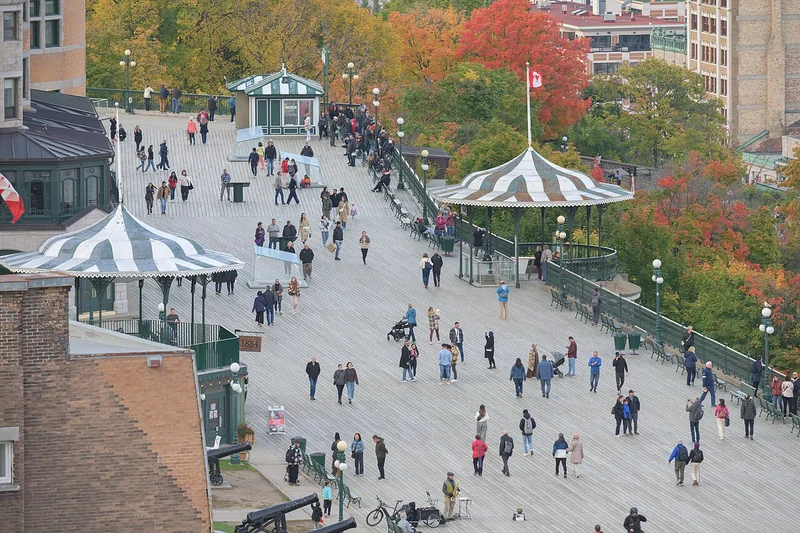
Start at Dufferin Terrace, beside Château Frontenac, to see how the city sits above the St. Lawrence River. The local tourism office identifies it as a long wooden promenade. Take time to look along the waterfront and towards the opposite shore before heading into the streets. The hotel is an architectural landmark; viewing it from the terrace does not require treating its private guest areas as public attractions.
From the terrace, explore the streets around Place d'Armes and the cathedral area, then choose a route towards Rue Saint-Jean. Keep the first walk short enough to pause over a meal or return to a street that interests you. A succession of façades is more rewarding when you can notice doorways, materials and changes of scale than when you are following a list of photo positions.
If a church interior is part of your plan, check visitor access separately from services and ceremonies. Entry to a religious building can change on the day. Continue with the surrounding streets if access is unavailable. The outdoor route still makes sense without a claim that every marked building will be open.
Seasonal heritage sites beneath and around the terrace
Parks Canada describes the archaeological remains of the Saint-Louis Forts and Châteaux beneath Dufferin Terrace. This can add context to the view above, but it has a seasonal visitor programme. The published 2026 itinerary, for example, gives a limited season for the underground site and a different season for the guided fortifications tour. Those dates should not be converted into a year-round promise.
Choose a specific heritage visit from the current programme and place it where its entry time fits. A walking tour may open spaces that are not otherwise available to independent visitors. Read the meeting point and product description rather than assuming that a general site ticket gives the same access as a guided activity.
In colder weather, shorten the exposed terrace time and use an available indoor visit. In warmer weather, keep a longer outdoor pause. The aim is to follow the conditions of your date. A summer itinerary can help identify places, but its boat schedules, guided tours and visitor facilities may not all be operating during another season.
Day two: Place-Royale and Petit-Champlain
Make Lower Town the main area for the second day. Choose your descent according to the available routes and your mobility needs. The change of level matters with a stroller, luggage or a wheelchair; a line connecting two points does not show the effort or barriers between them. Verify the current funicular service if you intend to use it, including boarding and access arrangements.
Begin around Place-Royale, then explore Petit-Champlain at a walking pace. The tourism office connects these streets with the city's early French settlement history. Read interpretation where available rather than relying on broad claims that the whole city is a piece of Europe. The streets also contain working shops and homes, so keep entrances clear and ask before photographing people closely.
Choose a meal in the area before moving towards the museum or waterfront. This makes the day coherent even if an exhibition is unavailable. Avoid repeatedly going back to an Upper Town hotel between nearby Lower Town stops. If a rest at the accommodation is important, plan one clear return instead of treating the incline as a negligible connection.
Make the Musée de la civilisation a deliberate visit
The Musée de la civilisation offers an indoor focus for Lower Town. Look at the current exhibitions before buying admission and decide which subject you want to spend time with. A museum's permanent identity does not establish which temporary show will be present on your travel date. Our October 2026 check found a Tuesday-to-Sunday schedule; confirm the calendar for holidays and your exact visit.
The museum's visitor information describes facilities including lockers, equipment loans and a dining area. These details can help a family or a visitor needing seated pauses plan a manageable afternoon. Ask about availability and arrangements rather than assuming every item can be reserved or collected without notice.
Use a few exhibitions well instead of trying to cover everything before closing. Children may benefit from one chosen subject and a break. Adults with a particular interest can spend longer in a collection and shorten the later shopping walk. The art and museum collection groups other trips where an institution can give the day a clear purpose.
Day three: fortifications and a selected section of the city edge
Parks Canada describes approximately 4.6 kilometres of fortifications, with outdoor access through the year. That figure describes the system, not a requirement to walk a complete circuit. Choose a section from the current site map and understand where it ends before beginning. A short visit to a gate and adjoining streets may suit your group better than a continuous route.
Distinguish a public outdoor walk from paid or seasonal interpretation. Artillery Park, guided tours and other interior spaces have their own calendars. Seeing the walls does not mean those programmes are included or operating. If military history is your main interest, reserve an appropriate visit and give it a substantial part of the day.
For a more open landscape, use part of the Plains of Abraham area as a separate walk. The local tourism office identifies its importance in the city's history and its role as present-day green space. Avoid turning a walk across an extensive site into a quick detour before a fixed ferry departure. Choose the ground you want to cover and allow a return journey.
A Lévis ferry crossing gives the river its own place
The Québec–Lévis ferry is a possible later block, with views back towards the city from the river and opposite shore. The operator's 2026/27 timetable describes an approximate crossing of twelve minutes. Add time for reaching the terminal, buying the appropriate fare, boarding and waiting for a return service. A short crossing is not the total duration of an outing.
At the current check, the operator stated that no reservations are taken for this crossing. Read live service notices and the timetable for your date before heading down to the terminal. Check accessibility for the vessel and terminal arrangements you will use; the general existence of a ferry does not establish that every part of the trip meets a particular access requirement.
Keep a shore-based alternative in mind if wind, disruption or your group's preferences change the decision. The river can also be appreciated from the terrace and waterfront. Our car-free travel collection includes other city stays built around walking and public transport, while leaving room for the actual operating conditions.
Winter, accommodation and a shorter stay
In winter, snow and ice can alter the suitability of paths and steps. Follow local maintenance notices and take advice about the route that day. Make more frequent indoor stops and avoid relying on an uninterrupted wall walk. A sunny seasonal photograph is a record of one moment, not evidence of the surface conditions you will encounter.
With two full days, keep the Upper Town and Lower Town structure, then choose a museum or fortifications visit according to your interests. With four days, add one researched excursion outside the centre. Trying to include the falls, an island drive and Wendake in a spare afternoon reduces time for the places and communities you came to understand.
Frequently asked questions
Do I need a car for this Québec City itinerary?
The plan stays in the historic centre and uses an optional ferry crossing, so a rental car is not required for these activities. Arrange your arrival and departure separately. Trips to surrounding destinations need their own transport research and should not be inferred from this city route.
Is Upper Town to Lower Town an easy flat walk?
No. There is a significant change of level. Choose routes and any funicular use according to your mobility needs and the current service. Winter surfaces and luggage can change what is practical, even when the map distance looks short.
Can I visit the heritage interiors all year?
Some Parks Canada interpretation and guided activities have seasonal programmes. Check the specific site and tour for your dates. Public access to part of the outdoor fortifications does not mean every interior, archaeological space or guided route is also available.
How long does the Lévis ferry outing take?
The operator gives approximately twelve minutes for the crossing itself. You also need terminal access, boarding and a return sailing, plus any time spent in Lévis. Check the current timetable and notices before planning another fixed appointment afterwards.
Sources and checks
- Destination Québec cité: Dufferin TerraceChecked: 26 October 2026
- Destination Québec cité: historic city visitsChecked: 26 October 2026
- Parks Canada: Fortifications of Québec visitor informationChecked: 26 October 2026
- Parks Canada: seasonal Old Québec activitiesChecked: 26 October 2026
- Musée de la civilisation: plan your visitChecked: 26 October 2026
- Société des traversiers du Québec: Québec–Lévis ferryChecked: 26 October 2026
- Société des traversiers du Québec: 2026/27 timetableChecked: 26 October 2026
Itineraries are editorial suggestions for independent visits. Check current prices, opening hours and trail conditions with official providers.