At a glance
Organise three Bangkok days around areas rather than a long attraction list: the Grand Palace and Wat Pho first, Wat Arun and a defined river block second, then Chinatown or another chosen neighbourhood third. Check current ceremonial closures and the Grand Palace’s strict clothing rules before arriving. River services, cross-river ferries and sightseeing boats are different products. Keep enough time for meals, heat breaks and the journey back to accommodation instead of promising every temple and market in one weekend.
Start with geography and one booking priority
Bangkok’s river, rail network and traffic make daily grouping important. A map can show two sights close together while the practical connection still takes time. This route concentrates the historic royal area on one day, a riverside temple on another and a different neighbourhood on the third. Choose the experiences you most want before adding rooftop venues, shopping centres or excursions. The days can change order to match the current visitor calendar.
Choose accommodation with a practical connection to your principal areas and a comfortable evening return. A room beside a rail station can simplify some journeys without placing you close to every river pier. A riverside location can provide a different experience but may still require a walk or separate transfer. Check the actual hotel entrance, stop and airport connection. Allow arrival, luggage and the airport journey outside the three full sightseeing days.
| Day | Main area | Anchor | Key decision |
|---|---|---|---|
| One | Rattanakosin | Grand Palace and Wat Pho | Current opening and permitted clothing |
| Two | Wat Arun and river | Temple plus a defined boat journey | Correct pier and separate service ticket |
| Three | Chinatown or a chosen district | Neighbourhood and food block | Individual business hours and return transport |
Day one morning: the Grand Palace with accurate preparation
Make the Grand Palace the main morning visit and check the live schedule before travelling. Ordinary opening information does not override a ceremonial closure or changed visitor route. Save the current entrance instructions and allow time for ticket and clothing checks. A person directing you away from the site should not replace information from the official visitor channel. Verify any unexpected closure with the operator rather than rearranging the whole day on an unconfirmed claim.
The Grand Palace publishes a strict dress code. Sleeveless, short, transparent, torn and certain tight garments are among the prohibited items. Prepare clothing that complies with the current rules rather than assuming a small cover-up will solve every issue at the gate. Read the operator’s actual list before leaving accommodation. The requirements apply to a place of reverence and can differ from the rules at another temple or an ordinary city attraction.
The visitor ticket includes specified areas such as Wat Phra Kaew and the Queen Sirikit Museum of Textiles under the published offering. Read your exact product and access conditions before buying. An inclusion does not mean every royal room or part of the wider compound is open to tourists. Give the permitted route time and follow staff instructions. Avoid booking another timed visit immediately after the palace, since entry procedures and your own pace can affect the finish.
Day one afternoon: Wat Pho after a proper pause
Take lunch and a break before continuing towards Wat Pho. The nearby location makes it a sensible companion to the royal-area day, but it is a separate attraction with its own admission and visitor rules. Check the current opening and permitted clothing rather than carrying assumptions from the palace. A temple visit includes more than its best-known image, so allow time to understand the wider setting and follow signs around prayer areas.
Choose the length of this second visit according to your energy. Two substantial temple experiences can make a full day in warm conditions. It is acceptable to shorten the outdoor sections or move Wat Pho to another block rather than rushing through both. Keep water and rests in the practical schedule, and plan a comfortable return journey. The itinerary does not need a distant shopping or rooftop visit added to every evening.
For a different Southeast Asian city balance, our Singapore itinerary provides a separate garden and heritage plan. Keep its transport products and attraction conditions distinct from Bangkok’s. A larger journey should allocate travel between the cities rather than treating a flight day as a full sightseeing day at both ends.
Treat the royal-area streets and the Wat Pho entrance as a finite first-day programme. Save the exact entrance and a nearby meal before continuing, rather than asking a driver to deliver you to a generic temple district. A river view around the Tha Tien setting can be a lighter finish if the public route suits the conditions. Crossing to another temple is optional and changes the transport and admission planning.
Day two: Wat Arun and the river at a defined pace
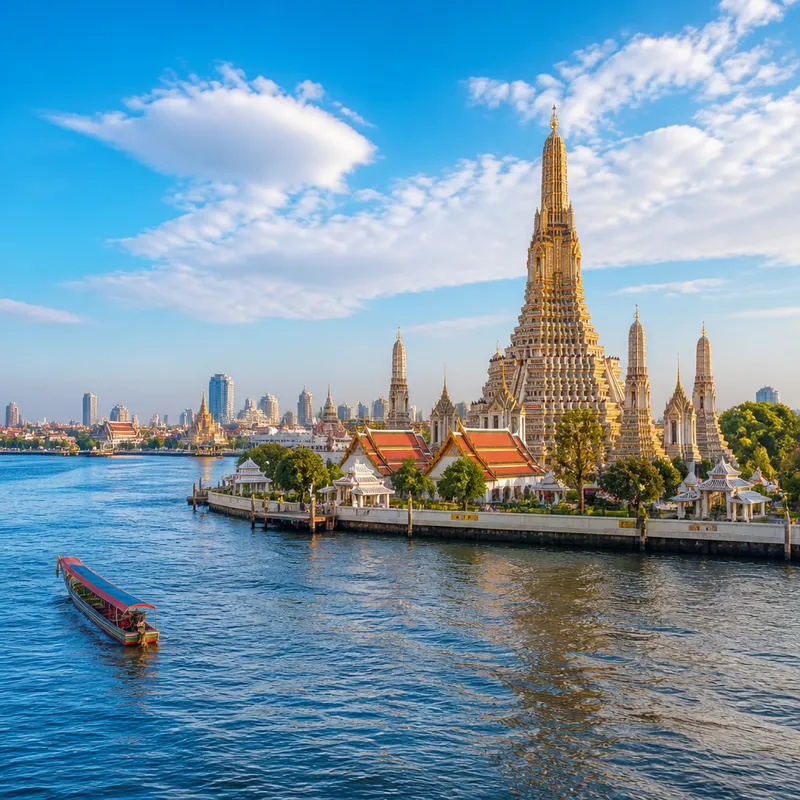
Use the second day for Wat Arun and a selected river experience. Check the temple’s current access and the route from your actual accommodation. A cross-river ferry, an express service and a tourist boat can leave from different piers or use different tickets. Identify the service you intend to take before joining a queue. Do not assume a general boat symbol on a map establishes the correct boarding point or fare.
At the temple, follow visitor signs and choose a route suitable for your group. Steps or restricted areas can change what is practical, and not every part of a photographed structure is necessarily open for climbing. The riverside setting can be enjoyed without attempting every elevated position. Respect worship, dress requirements and photography rules. Leave room for a seated pause afterwards instead of treating the visit as a brief stop before another long journey.
Choose one river block for the rest of the day. A public riverside walk, a defined boat ride or a selected cultural visit can each provide a useful contrast with the first day. Read the duration and endpoint if you choose a cruise. A one-way service can require a separate return plan, while a sightseeing ticket may have its own validity and stop conditions. Save the pier name and the walk from it, not only the attraction name.
Wat Arun is on the Thonburi bank, as the Tourism Authority of Thailand explains. An MRT Itsaraphap-area approach and an actual river-service approach are different route choices to investigate from your base. If using a boat, save the landing and return service you intend to use; the river crossing itself does not include the temple visit. The steep parts of the monument are not a compulsory extension of merely entering the grounds.
Do not confuse transport with an excursion
An ordinary river journey can be an enjoyable way to see the city, but it remains a transport service with operating rules. A canal tour or a longer organised outing is a separate product requiring its own route and time allowance. Choose deliberately rather than buying whatever is offered at the nearest pier. Check the actual departure, inclusions and return arrangements before paying, especially when the afternoon also contains a meal reservation.
Keep lunch and the final street block in a convenient area. Repeatedly switching between rail, boats and road transport can make the day feel busy while leaving little time at each destination. If rain or conditions affect the outdoor plan, shorten it and use a suitable nearby alternative. A temple and one clearly defined river experience already provide a substantial day without adding several distant attractions.
Day three: Chinatown or one different neighbourhood
For Chinatown, make Yaowarat Road the named commercial-area reference and choose a selected public-street section around it. The national visitor guide identifies Yaowarat among Bangkok’s market areas. Choose whether this is a daytime commerce walk or a meal-led evening, since individual businesses have different schedules. Save a usable arrival and return route before adding a restaurant queue, and do not assume the same shops and counters operate continuously all day.
Walk a modest public route and keep time to browse or sit. Markets and food businesses are working places, so leave entrances and aisles clear and ask before photographing people closely. Compare menus, prices and portions before choosing a meal. If a particular dish or business is essential, verify its current hours instead of assuming a recommendation from an earlier visit remains valid. A flexible alternative nearby prevents the meal search from consuming the afternoon.
Visitors who prefer another district can use it as an explicit substitute rather than stacking several neighbourhoods into the same day. A weekend market requires a calendar check and its own journey; it should not be promised on a weekday simply because it is famous. Choose one principal area and allow the return transport. The Hanoi itinerary offers another city plan with a different old-quarter and lake emphasis.
Budget, passes and a calm final journey
Build spending around accommodation, meals, the principal temple admissions and actual transport links. A pass can be useful only when its named services match the route you intend to take. Do not assume one rail ticket or stored-value product covers every operator, ferry and excursion. Read the current fare and payment conditions for each selected journey. Walking within a district can also reduce the need for several short road trips.
Our travel planning guides help organise multi-city stays without merging different ticket systems. Before arriving, recheck the Grand Palace schedule, dress code, temple access and chosen river service. Save the exact entrances and piers. If departure falls on day three, keep the last optional block near luggage collection and allow the complete journey to the correct airport or station. A shorter neighbourhood visit with a comfortable departure margin is preferable to one final distant attraction that turns the end of the trip into a rush.
A temple visit and a river journey need different allowances
The palace and Wat Pho day has two substantive sites, so it can end after the second one and a meal. Day two’s Wat Arun visit gives the river its own space, with one selected journey and a defined endpoint instead of unlimited hopping between piers. Day three changes the subject to a neighbourhood. These purposes are different even when two days both involve the Chao Phraya area.
Allow a substantial morning block for the palace and a separate Wat Pho visit after lunch. A selected neighbourhood walk can take roughly two to three hours with pauses, excluding a long meal and transport. These are editorial allowances rather than timed fieldwork or predictions of traffic. A shopping-led Siam programme can replace Chinatown if that is your actual interest. An Ayutthaya or other substantial excursion needs another day or a clear replacement, rather than being added after a full temple morning.
Frequently asked questions
Is three days enough for Bangkok?
Three full days suit the royal temple area, a considered river day and one different neighbourhood. Add time for several markets, major shopping visits or excursions outside the city.
Can I wear ordinary shorts to the Grand Palace?
The operator’s strict dress code prohibits short garments and several other clothing types. Read the current list and arrive appropriately dressed rather than assuming a cover-up guarantees entry.
Are all Bangkok river boats covered by one ticket?
No. Cross-river ferries, express services, tourist boats and cruises are different products. Check the actual operator, pier, fare and validity before boarding.
Should I add a weekend market on any third day?
Check its real operating calendar and travel requirements first. Use it as a deliberate alternative when available rather than promising a weekend-only experience on a weekday.
Sources and checks
- Grand Palace: visiting rules and dressChecked: 8 October 2026
- Grand Palace: visit FAQChecked: 8 October 2026
- Wat Pho: visit planChecked: 8 October 2026
- Tourism Authority of Thailand: royal palace clothingChecked: 8 October 2026
- Tourism Authority of Thailand — Wat Arun riverbank settingChecked: 8 October 2026
- Tourism Authority of Thailand — Bangkok and Yaowarat contextChecked: 8 October 2026
Itineraries are editorial suggestions for independent visits. Check current prices, opening hours and trail conditions with official providers.