At a glance
Spend your first day in Utrecht between the Oudegracht and Domplein, then choose art in the Museum Quarter or a reserved visit to the Rietveld Schröder House for day two. The centre works well on foot from Utrecht Centraal. A tower climb, an underground history experience and a design house are separate visits, so build the itinerary around the one that interests you most.
How to divide two days in Utrecht
Two full days let you see Utrecht at both canal level and street level, then move beyond the central shopping streets. Start with the old centre on day one. On day two, travel south into the Museum Quarter or east towards the Rietveld Schröder House. These are different directions, so choose a main visit before drawing the route on your map.
The table below suggests a pace rather than fixed appointments. Reserve only the experiences that require a slot, then leave the neighbouring walks flexible. Utrecht's pleasures include stopping beside a canal or finding a small square you had not marked in advance. A timetable filled with successive admissions leaves little room for either.
Utrecht also works as part of a longer rail trip. Our Amsterdam itinerary helps you compare the capital's larger museum choices with Utrecht's more compact centre. Give Utrecht its own overnight stay if you want an evening by the water and a quiet start before day visitors arrive.
| Time | Suggested route | Planning choice |
|---|---|---|
| Day one morning | Station, Vredenburg and Oudegracht | Walk both banks of a short canal section |
| Day one afternoon | Domplein and surrounding lanes | Choose a tower tour or an archaeology visit |
| Day two morning | Museum Quarter or Rietveld Schröder House | Reserve the house before fixing the day |
| Day two afternoon | Canals, lunch and a relaxed return | Leave space before an onward train |
From the station to the Oudegracht
Leave Utrecht Centraal towards the city centre and make your way through the Vredenburg area to the Oudegracht. The station district is a modern introduction, so allow the walk to lead you gradually into the older streets. You do not need a taxi for this central route if the walking distance and your luggage are manageable.
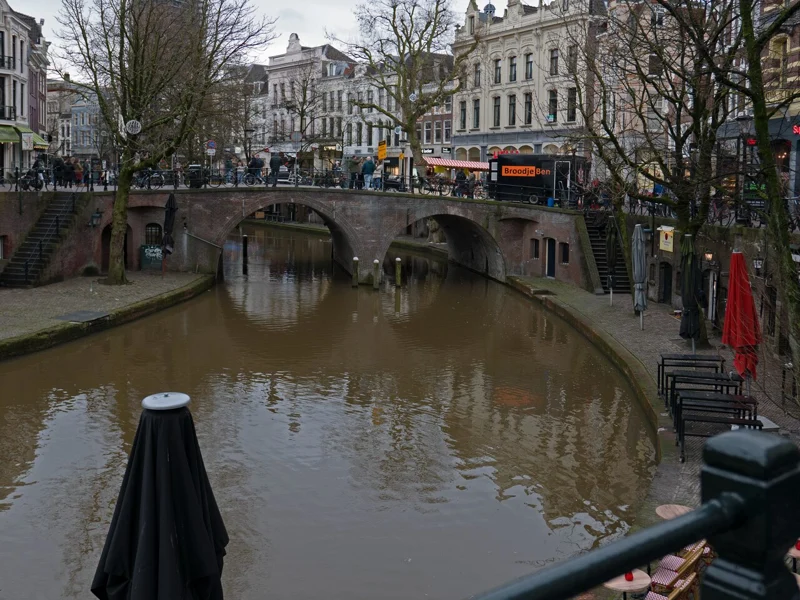
At the canal, stop on a bridge before choosing a bank. Utrecht's distinctive wharves sit below the streets, with cellars opening towards the water. The arrangement developed around the movement and storage of goods. Looking across from street level helps you understand the relationship between houses, cellars, steps and boats more clearly than rushing directly down to a terrace.
Walk a short section on one bank, cross a bridge and return along the other. This simple loop gives changing views without requiring a long march. The lower wharves do not form an uninterrupted, uniformly accessible promenade: use the available connections and return to street level when necessary. If steps are difficult, you can enjoy the canal from the bridges and upper pavements.
Follow the canal towards Domplein
Continue around the Stadhuisbrug and Vismarkt area, using the Dom Tower as a landmark. Small changes of direction are more rewarding here than trying to follow the water for its entire length. Leave the canal briefly for a look into the surrounding lanes, then return when you want an easy reference point.
A waterside lunch is one option, but a table below street level is not essential to the experience. Compare menus and access before settling on a terrace. Travellers with a pushchair or wheelchair may find an upper-level café more convenient. On a wet or windy day, an indoor seat with a view can be a better choice than waiting for a particular outdoor table.
After lunch, walk towards Domplein. The square brings together several layers of the city's history within a small area. Spend a few minutes outside before deciding on an interior visit. The tower, the church and the underground archaeology experience have different visitor arrangements; a ticket for one should not be treated as access to all three.
Choose your Dom experience
The Dom Tower suits visitors who enjoy a physical climb and want to understand the city from above. Its standard guided climb involves many stairs and takes a meaningful part of the afternoon. Check the current tour details and reserve a suitable time, especially if your visit depends on an English-language departure. Leave room to arrive before the start rather than walking up at the exact printed time.
DOMunder offers a different perspective on the square through archaeology beneath it. Choose it because that history interests you, not simply because it is nearby. Trying to fit both experiences between a late lunch and an early dinner can make a relaxed day feel surprisingly constrained. One substantial visit leaves time to explore the square and the adjoining streets afterwards.
The Dom Church is also a place of worship. Tourist access and events need to fit around that use. If an interior visit is part of your plan, check the visitor arrangements for your date. The square remains a useful orientation point whether you climb, go underground or stay outside, and none of these choices is necessary to appreciate the canal walk.
Day two: the Museum Quarter
Use the second morning for the streets south of Domplein and the Museum Quarter. Walk via the quieter canals and residential lanes towards the Centraal Museum area. The change from busy shopping streets to smaller-scale surroundings is part of the reason to stay a second day. Keep the walk unhurried enough to notice doorways, bridges and the changing width of the canals.
For an art-focused visit, look at the Centraal Museum's current collection displays and exhibitions before buying a ticket. A museum's changing programme matters more than a generic promise that every famous object will be on show. Choose a few subjects you want to explore, and leave enough time to read and look rather than using the galleries as a quick indoor detour.
Afterwards, return towards the centre along a different canal route. You can make this a full second day with a long lunch and another neighbourhood walk. Our art and museums guides bring together other city breaks where a carefully chosen collection can shape the itinerary without filling every hour indoors.
Alternative: reserve the Rietveld Schröder House
The Rietveld Schröder House stands east of the old centre, on Prins Hendriklaan. It is a separate outing from the canal circuit. Designed by Gerrit Rietveld in collaboration with Truus Schröder, the house is particularly relevant to visitors interested in De Stijl and the way a domestic space can be arranged. Its reputation rests on the building and its ideas, rather than the scale of a large museum collection.
An advance reservation is required, including for visitors using eligible museum passes. Secure the slot before arranging the rest of day two, then check the arrival instructions. Allow time for the journey from the centre and for finding the visitor entrance. Treat a short scheduled house visit as something to prepare for, rather than expecting to arrive whenever you finish lunch.
You can walk out if the distance suits you, use public transport or cycle if you are comfortable in Dutch cycling traffic. Check the actual route from your accommodation. Combining the house with a long Centraal Museum visit is possible for a focused art day, but most first-time visitors will have a more balanced itinerary by choosing one and keeping the other half-day for the city.
Getting around, staying overnight and eating well
Stay near the old centre if evening walks and quick returns to your room matter most. A hotel closer to Utrecht Centraal can suit an early onward train or travellers carrying heavier luggage. Compare the actual pedestrian route, not just the straight-line distance shown on a booking map. Ask about lifts and room access when choosing a historic canal-side property.
A car adds little to this itinerary. Walking connects the central sights, while a local journey can handle the more distant design-house visit. Cycling is a useful option only if it feels comfortable: narrow streets, junctions and busy cycle routes require attention. Visitors on foot should avoid drifting into cycle lanes while looking at buildings or taking photographs.
Plan one seated meal each day and leave the other flexible. Around the Oudegracht you can choose between a longer restaurant stop and something quicker before a booked visit. The broader car-free travel collection offers more itineraries where arrival points and walking routes matter more than finding parking beside each attraction.
Make the route work in different seasons
In bright weather, give more time to the canal banks and pause on the bridges for wider views. In rain, shorten the outdoor circuit and extend the museum or café stop. The city does not need a completely different itinerary: the same small area offers enough choices to exchange a long walk for an indoor afternoon.
For a family trip, decide early whether the main visit suits the children's ages and attention spans. A tower climb, a guided house visit and a large museum require different kinds of patience. Avoid booking two demanding experiences simply because the map puts them in the same city. An open afternoon by the canals can provide the contrast that makes the structured visit enjoyable.
If you have a third day, add another part of the region or continue to a second Dutch city. Our Delft itinerary pairs canals with pottery and Vermeer-related history. Keep that as a separate stay or excursion rather than reducing Utrecht's second day to a quick photograph before boarding another train.
Frequently asked questions
Is two days enough for Utrecht?
Two full days are enough for the central canals, Domplein and one substantial art or design visit. Add time if you want several museums, a tower tour and trips beyond the city.
Do you need a car in Utrecht?
This itinerary works without a car. Walk from Utrecht Centraal into the old centre and use walking, cycling or local transport for the Rietveld Schröder House.
Do you need to book the Rietveld Schröder House?
Yes. Reserve a time slot in advance, including when using an eligible museum pass, and follow the house’s arrival instructions.
Can you walk beside the Oudegracht without using steps?
You can see the canal from street-level pavements and bridges. The lower wharves have varying access and connections, so check a suitable route if you need step-free travel.
Sources and checks
- Visit Utrecht Region: OudegrachtChecked: 23 October 2026
- Visit Utrecht Region: canal walkChecked: 23 October 2026
- Visit Utrecht Region: Dom TowerChecked: 23 October 2026
- Rietveld Schröder House: visitor informationChecked: 23 October 2026
- Rietveld Schröder House: ticketsChecked: 23 October 2026
- Centraal MuseumChecked: 23 October 2026
Itineraries are editorial suggestions for independent visits. Check current prices, opening hours and trail conditions with official providers.