At a glance
Use your first day in Delft for the Markt, historic churches and canals around the old centre. Spend the second on Delft Blue pottery at Royal Delft, then walk back through the southern side of the city. The Vermeer Centrum explains the painter through reproductions; seeing original Vermeer paintings requires a separate museum visit elsewhere.
Why give Delft two days?
Delft is compact enough for a short visit, but two days allow you to explore its different subjects without treating the city as a stop between trains. The central squares explain one side of Delft; the canals, pottery tradition and places associated with Vermeer explain others. Staying overnight also gives you an evening after the busiest sightseeing period.
Keep day one within the historic centre. On day two, make Royal Delft the main outing, with a return walk that brings you past the southern waterways. You can reverse the days to suit an admission slot or the weather. The plan works best when one indoor visit receives proper time and the surrounding walks remain flexible.
For a broader Dutch trip, compare Delft with our Utrecht itinerary. Both have canals and a centre suited to walking, but Delft puts pottery and Vermeer-related history at the heart of a short stay. Choose by what you want to spend time doing, rather than assuming every canal city offers the same experience.
| Time | Area | Main decision |
|---|---|---|
| Day one morning | Markt and Oude Delft | Choose a church interior or tower experience |
| Day one afternoon | Voldersgracht and central canals | Visit the Vermeer Centrum for interpretation |
| Day two morning | Royal Delft | Reserve any separate workshop in advance |
| Day two afternoon | Hooikade and optional Oostpoort loop | Allow time to return for luggage and trains |
Start at the Markt
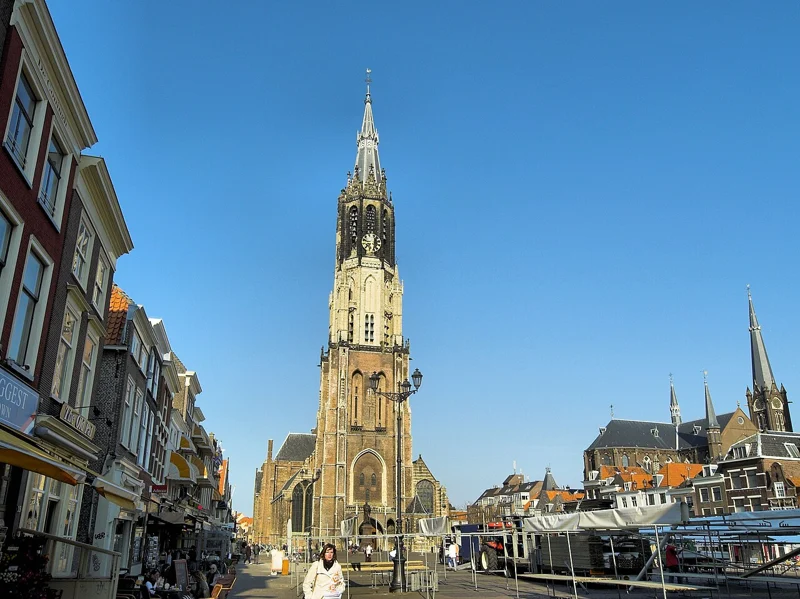
From Delft station, walk towards the centre and the Markt. The square gives you an immediate sense of the town's scale, with the Nieuwe Kerk at one end and the town hall at the other. Cross the square before settling on a café so that you see the relationship between the buildings from more than one angle.
The Nieuwe Kerk can be the first substantial visit if church architecture and Dutch royal history interest you. A church visit and a tower climb are different commitments: check what your ticket includes and whether the climb suits everyone in the group. You can enjoy the square and the tower's exterior without making a climb part of the day.
Leave the surrounding shops for a later circuit if you have a morning reservation. The centre is small enough to return easily, and it is better to browse without watching the time. On a market day, the character of the square changes with the stalls; on other days, the open space makes the façades easier to see. Neither version needs to be treated as the only worthwhile time to visit.
Walk from the Markt to the Oude Delft
Continue towards the Oude Kerk and the Oude Delft canal. The church's leaning tower is a useful landmark, but the approach through the surrounding streets is part of the experience. Slow down at the bridges and look along the canal before crossing. Reflections, doors and the spacing of the houses reward a shorter walk with more stops.
If you want to enter both major churches, compare the current admission arrangements before purchasing separate tickets. If you are interested mainly in the streetscape, choose one interior and leave more time outside. A two-day trip does not need a paid stop every time you reach a notable building.
The Oude Kerk has an association with Vermeer through his burial. That connection is worth understanding in context, rather than expecting a gallery of his paintings inside. Use the visit to connect the artist to the city in which he lived, then follow the canals back towards the small streets behind the Markt for lunch.
Understand what the Vermeer Centrum offers
The Vermeer Centrum on Voldersgracht is an information and interpretation centre. It presents Vermeer's work through full-size digital reproductions and explains his life, techniques and relationship with Delft. There are no original Vermeer paintings in this centre. Knowing that before you book helps you decide whether its approach matches your interests.
For a first encounter with the artist, seeing the works discussed together can be useful preparation for viewing originals elsewhere. You can compare compositions, light and recurring interiors without assuming that the reproduced surface has the qualities of the original painting. Let the visit sharpen your looking rather than treating it as a substitute for every other Vermeer experience.
If original paintings are your main reason for travelling, plan a separate visit to the Mauritshuis in The Hague or the Rijksmuseum in Amsterdam, checking the display information for your dates. Our Amsterdam guide helps place a major museum visit within a longer city stay. Adding that excursion to Delft's first afternoon would leave less time for the canals you came to explore.
Spend the evening beside the canals
After the centre's main visits, return to a canal section you liked earlier. The advantage of staying overnight is the chance to revisit without having to keep moving towards the station. Choose a restaurant by its menu and the sort of evening you want: a long dinner and a quick meal lead to different kinds of walk afterwards.
For a shorter evening, stay around the central canals and make a simple loop back to your accommodation. The water is an orientation aid, but not every bank offers an uninterrupted pavement. Use bridges and public paths, keep clear of cycling traffic and avoid stepping into the road for a photograph.
The small streets are also residential. Look at the architecture from public space and leave doorways and windows unobstructed. A quiet canal scene does not need people leaning into private entrances to photograph it. This is especially relevant if you follow a Vermeer-themed walk into streets whose daily purpose is still to provide homes.
Day two: make time for Royal Delft
Royal Delft is on Rotterdamseweg, south of the historic centre. Build the morning around the visit rather than expecting it to sit directly beside the Markt. Walk if the distance suits you, or check a local transport connection from where you are staying. Allow extra time if you are carrying luggage or need an accessible entrance route.
The site connects Delft Blue pottery with its production and history. Royal Delft dates to 1653 and continues the hand-painted tradition associated with the city. Look at how decoration, shape and firing contribute to the finished object, rather than using the museum only as a prelude to the shop. The exact demonstrations and activities available can vary, so check the visitor programme if a particular experience matters to you.
A workshop is an additional activity, not something to assume is included in every museum ticket. If you want to make or paint an item, examine the booking terms and any collection or delivery arrangements. This matters on a short trip: an object may need further processing after your visit, and you should know how it will reach you before choosing the activity.
Return via the southern waterways
After Royal Delft, make your way back towards the city and the Hooikade area. This side of Delft is associated with the viewpoint of Vermeer's View of Delft. Treat it as a place to compare the city's relationship with water and skyline, rather than expecting the modern scene to reproduce the painting unchanged.
Continue towards the Oostpoort if you want a longer walk before returning to the centre. The gate and adjoining water provide a different setting from the Markt. Check the route on a current map and choose public paths; the aim is an enjoyable loop, not a compulsory sequence of photographic positions.
If the weather turns, shorten this circuit and return for lunch or another indoor visit. The day already has a clear centre of interest at Royal Delft. You do not need to complete every suggested street to make it worthwhile. Our art and museums collection includes other trips where one well-chosen cultural visit provides enough structure for the day.
Buying Delft Blue and choosing where to stay
When shopping for pottery, ask what the object is, where it was made and whether it was hand-painted. A souvenir, a modern design object and a piece from a named historic maker can all be enjoyable purchases, but they are different products. Compare the description and price on that basis rather than assuming that every blue-and-white item has the same origin.
Think about transport before buying a fragile or bulky piece. Ask about packing and delivery, and check the total cost if it will be shipped. A small object you can carry safely may suit a rail trip better than something that creates a luggage problem for the rest of the journey. Keep any provenance or maker information with the purchase.
For accommodation, the historic centre suits evening walks while a location near the station can simplify arrival and departure. Check the entrance and stairs when booking an older building. The city's compact size makes small differences in location less important than whether the room, access and noise level match your needs.
Keep the final half-day flexible
Two days can mean two full sightseeing days or a late arrival followed by one full day and an early departure. If your time is shorter, prioritise the Markt and canals, then choose between Royal Delft and the Vermeer Centrum. Trying to compress every visit into the remaining hours can turn a manageable city into an unnecessarily hurried stop.
For travellers continuing by train, finish near your accommodation or a convenient luggage collection point. Check the journey before leaving for the station and leave room for an ordinary delay. There is little benefit in adding one more church interior if it means rushing back across the centre with bags.
You do not need a car for the route described here. Central walks and one longer southern outing provide a complete short stay. The car-free travel guides offer more ideas for combining smaller cities with rail journeys while keeping enough time to enjoy each place on foot.
Frequently asked questions
Is Delft worth staying in for two days?
Yes, if you want time for the canals, historic centre and a substantial pottery or Vermeer-related visit. A shorter trip can cover the centre, but an overnight stay gives you a quieter evening and more flexibility.
Are there original Vermeer paintings at the Vermeer Centrum?
No. The centre uses full-size digital reproductions to explain Vermeer’s work and life. Plan a separate museum visit in The Hague or Amsterdam if seeing originals is your priority.
Is Royal Delft in the old town?
Royal Delft is on Rotterdamseweg, south of the historic centre. Allow a separate travel block for the visit rather than treating it as a stop beside the Markt.
Can you visit Delft without a car?
Yes. The central itinerary works on foot from Delft station. For Royal Delft, choose walking or a suitable local transport connection according to your mobility and luggage.
Sources and checks
- In Delft: first-time visitor guideChecked: 23 October 2026
- Vermeer Centrum: visitor informationChecked: 23 October 2026
- In Delft: Royal DelftChecked: 23 October 2026
- In Delft: Vermeer locationsChecked: 23 October 2026
- In Delft: tickets and attractionsChecked: 23 October 2026
Itineraries are editorial suggestions for independent visits. Check current prices, opening hours and trail conditions with official providers.