At a glance
For a first Alfama walk, start at Lisbon’s Sé cathedral, continue uphill to Santa Luzia and Portas do Sol, then descend through the neighbourhood toward Largo do Chafariz de Dentro and the Fado Museum. Allow half a day with pauses and one indoor visit. Treat Castelo de São Jorge as a separate addition, and use transport to shorten the uphill approach if needed. This is a neighbourhood walk, rather than an itinerary for all of Lisbon.
The route at a glance: one climb, viewpoints and a lower finish
Alfama is easiest to appreciate when the route has a direction. This plan climbs from the cathedral to the viewpoints, then returns toward the lower streets and the Fado Museum. You will still encounter slopes and potentially steps, but the structure avoids repeatedly climbing from the waterfront to the same ridge. Save the named stops on your map before walking; phone navigation is more useful when you know which place you are trying to reach.
Allow roughly three to four hours with short pauses and a selected indoor visit, then additional time if you include the castle, a long lunch or an evening performance. That allowance is editorial, not a measured walking time. The narrow streets invite detours, and the appropriate pace varies substantially with heat, crowds and mobility. If you only have an hour, focus on the two viewpoints instead of claiming to have completed the full neighbourhood route.
| Stage | Named stop | How to use it |
|---|---|---|
| 1 | Sé cathedral | Begin here; decide whether to visit inside |
| 2 | Miradouro de Santa Luzia | Pause for the terrace and its setting |
| 3 | Largo das Portas do Sol | Take the second viewpoint without adding another climb |
| 4 | Lower Alfama streets | Descend toward Largo do Chafariz de Dentro |
| 5 | Fado Museum | Choose a cultural visit or finish the outdoor walk |
| Optional | Castelo de São Jorge | Add a separate block near the upper section |
Begin at the Sé and establish the pace of the walk
The Sé provides a recognizable starting point above the Baixa area. Decide before entering whether the cathedral interior is part of your visit or simply your meeting landmark. An indoor visit changes the timing, so consult the current visitor arrangements rather than assuming access is included in a street walk. Keep the castle decision separate; buying one attraction’s ticket does not arrange admission elsewhere.
From the cathedral area, continue toward Santa Luzia using the public streets and the named destination on your map. This is the main uphill portion of the suggested route. Take it slowly enough that the first viewpoint feels like a pause rather than a finish line. If someone is already struggling with the gradient, shorten the route or use a suitable transport option before committing to further lanes.
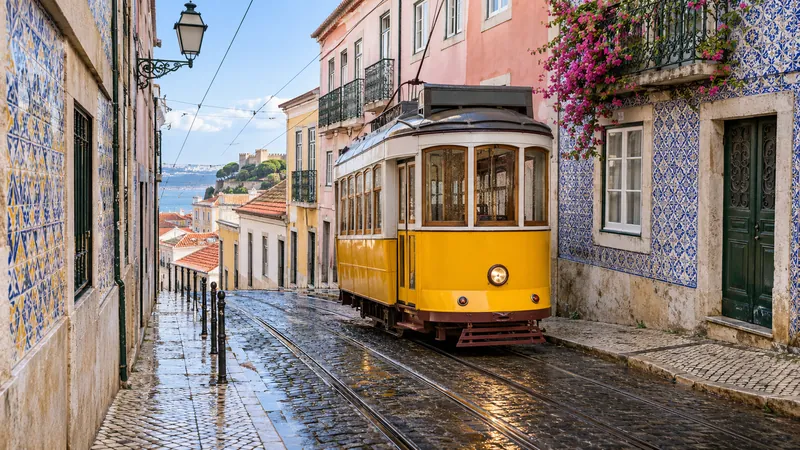
Watch the actual street around you while navigating. Lisbon’s tram tracks, traffic and pedestrian space are not arranged solely for sightseeing. Stop in a place where you can safely consult the map and let other people pass. The attraction of this walk is the neighbourhood itself; you do not need to reproduce a photograph taken from the middle of a working street.
Santa Luzia: spend time with the terrace before moving on
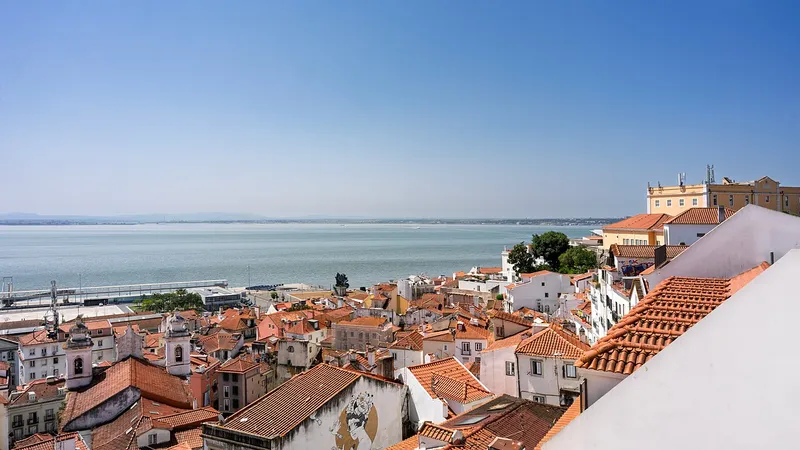
Visit Lisboa identifies Santa Luzia as one of the viewpoints associated with Alfama. Use it for a proper pause: look across the roofs toward the river, then notice how the terrace relates to the church and the surrounding streets. The view helps explain the route you will take downhill later. A photograph is useful, but so is orienting yourself before entering a less obvious network of lanes.
Do not assume the entire terrace will be quiet because you have chosen a morning visit. This is a well-known stop. Wait for a space without pressing into other visitors or blocking access. If the terrace is busy, keep the stop short and spend more time on the lower part of the route rather than standing in one place until the view empties.
Choose Santa Luzia and Portas do Sol as a pair because they belong to the same upper section of this walk. Adding more distant viewpoints, including those in Graça, changes the distance and the number of climbs. That can be a good separate outing, but it should not be hidden inside the promise of an easy Alfama half-day.
Portas do Sol: the last planned viewpoint before descending
Continue to Largo das Portas do Sol for another view over Alfama. The point of this second stop is the different angle on the neighbourhood, not the accumulation of another sightseeing tick. Identify the direction of the river and the lower streets where the walk will finish. This also gives you a clear moment to decide whether the castle belongs in the day.
If the castle is your priority, turn the upper section into a longer visit and reduce something later. Check the castle’s own ticket and access information, then allow a separate time block for its grounds. Do not place an unverified castle queue into the same allowance as a brief viewpoint stop. Travellers who prefer the outdoor neighbourhood can continue downhill and keep the museum as their one indoor visit.
Choose any refreshments here according to the menu and the rest you need. A table with a view may be worthwhile, but the view does not establish the price or value of the meal. For a shorter budget break, compare the options on the route rather than assuming every restaurant away from the viewpoint is automatically cheaper or more authentic.
Descend through Alfama toward Largo do Chafariz de Dentro
Make Largo do Chafariz de Dentro your next named destination. The purpose of the lower section is to spend time with streets and small public spaces, while gradually returning toward the river side of the neighbourhood. Follow an actual public route shown on your map. A tempting staircase can lead in a different direction, and the straight line between two pins does not reveal the easiest path.
Keep room for a short detour when a street interests you, but keep checking the destination so that the walk stays coherent. This is a residential neighbourhood as well as a visitor area. Avoid photographing through people’s windows, obstructing doorways or treating laundry and daily routines as objects arranged for tourists. Quiet behaviour matters just as much in the afternoon as during an early start.
Choose lunch either before the descent or near the lower finish, depending on your energy and the museum’s arrangements. Read the menu, check any cover or extra items before ordering and leave enough time to sit. This guide gives a route rather than a restaurant endorsement: it does not claim a meal has been personally tested or that a named place is still operating.
Use the Fado Museum to give the neighbourhood’s music context
Visit Lisboa lists the Fado Museum at Largo do Chafariz de Dentro, making it a natural lower endpoint for this walk. The museum provides context for fado through its displays rather than requiring you to book a live performance. That makes it useful for visitors who want to understand the music but prefer an afternoon cultural stop to a late meal.
The official tourism listing showed a Monday closure when reviewed. Arrange the museum on another day or treat the square as the outdoor finish when it is closed. Recheck the actual opening and ticket arrangements before relying on the visit. A published museum schedule does not establish the timing of a concert elsewhere in Alfama.
If you also want to hear fado that evening, choose the venue as a separate booking. Confirm the format, whether dinner is required, when the music begins and the total expected charge. Ask about the return journey to your accommodation as well. Finishing the walk here does not mean staying in the area until a performance is the only sensible way to end the day.
Where tram 28E fits, and where it does not
Carris’s published 28E route includes Sé, Limoeiro, Miradouro de Santa Luzia and Largo das Portas do Sol among its stops. Those names can help connect the walking route to transport. The route as a whole runs between Martim Moniz and Campo de Ourique, so riding its full length is a different activity from using a short relevant section for Alfama.
Check the operator’s current service notices before depending on a particular departure or through journey. Construction and operational changes can affect a familiar route. This guide does not promise that a normal tram pattern, a seat or an empty carriage will be available on your date. Have the named walking stops saved so you can adapt if the service you expected is unavailable.
For mobility requirements, investigate the exact vehicle and stop rather than assuming a historic tram solves the slopes. Similarly, a taxi to an upper destination can reduce the approach but does not remove cobbles, gradients or steps from the remaining walk. Ask about the route that fits your equipment and stamina; this guide has not certified a continuous step-free Alfama circuit.
Adapt the walk for heat, rain and a shorter visit
In hot conditions, reduce the exposed walking and place proper rests between the upper and lower sections. Carry water and choose shoes that work on the actual surfaces. Starting earlier may help with your own comfort, but it is not a guarantee about either crowd levels or temperature. Use a shorter plan if the group is tired rather than adding one more viewpoint simply because it is nearby.
In rain, be especially deliberate on sloping cobbles and stairs. A museum visit can provide an indoor block if it is open, but you still need to reach it. If conditions are unsuitable for the longer walk, keep the visit to one area and arrange transport accordingly. Do not label the route easy without considering the surface and the person taking it.
With children, agree on a manageable upper section and a reliable pause before starting. For a visitor who wants fewer gradients, focus on a confirmed transport approach to one viewpoint or on the lower museum area instead of forcing the complete route. These are adaptations of the itinerary, not an assertion that every alternative has accessible facilities.
Keep Alfama separate from Lisbon’s other full outings
Belém, Sintra and a longer tour of central Lisbon deserve their own time. Adding them to this walk can turn a useful neighbourhood plan into a transfer-heavy list. Use this article for the Alfama part of the trip, then decide how many additional days you need for your other priorities. If a castle ticket is booked, work backward from that commitment instead of moving the whole walk to satisfy an arbitrary order.
For a separate Portugal city break, our Porto travel articles can help with the next destination. Travellers pairing the mainland with an island holiday can use the Madeira first-visit guide; that trip needs additional flights and days, rather than being an extension of this walking afternoon.
Before heading back, identify where you are finishing and how you will reach your accommodation. The lower endpoint differs from the Sé starting point, so the return may be easier by a different route. For another compact capital walk, see our Ljubljana old-town route. The useful comparison is how each route connects named stops, rather than expecting Lisbon’s slopes to feel like Ljubljana’s riverfront.
Frequently asked questions
How long should I allow for this Alfama walk?
Allow approximately three to four hours with pauses and one selected indoor visit. The castle, a long lunch and an evening fado performance require separate time. This is an editorial allowance rather than a measured walking duration.
Do I need to ride all of tram 28E to visit Alfama?
No. The operator’s route includes stops relevant to this walk, but the full Martim Moniz–Campo de Ourique journey is a different outing. Check current service notices and choose the section or alternative transport that fits your plan.
Is the Fado Museum open every day?
The official tourism listing showed a Monday closure at the research check. Verify the museum’s current visitor arrangements for your date. The outdoor route can finish at Largo do Chafariz de Dentro even when you do not visit inside.
Is this Alfama route step-free?
This guide does not certify a step-free circuit. Alfama includes slopes, cobbles and stairs, and a transport approach does not remove all of them. Investigate the exact streets, entrance and vehicle that suit your mobility requirements before choosing the route.
Sources and checks
- Visit Lisboa — AlfamaChecked: 8 October 2026
- Visit Lisboa — Fado MuseumChecked: 8 October 2026
- Visit Lisboa — Fado routeChecked: 8 October 2026
- Carris — route 28EChecked: 8 October 2026
Itineraries are editorial suggestions for independent visits. Check current prices, opening hours and trail conditions with official providers.