At a glance
Seville suits a winter city break built around walking, monuments and time in neighbourhood cafés. Sunshine can make daytime walks pleasant, but shaded lanes, rain and chilly evenings call for layers and flexible plans. Orange trees add colour, though you should not expect the city's famous blossom in winter. Book your priority sights through official channels, then leave room for outdoor walks when conditions suit.
What does Seville feel like in winter?
The difference between sunshine and shade can shape your day. A sunny lunchtime table may feel comfortable, while a narrow street nearby has you reaching for another layer. After sunset, the warmth you enjoyed earlier can disappear quickly. Travellers arriving from Central Europe may welcome the change without finding it warm enough to leave their winter clothes behind.
Walking can feel less demanding than during summer heat. You can linger over a façade, take a detour or sit in a square without organising every outing around somewhere to cool down.
Winter guarantees neither sunshine nor quiet streets. Major sights still attract visitors, and holiday periods need separate planning. Check AEMET's forecast and warnings before departure and during your stay.
How should you organise a winter walking day?
Give each day one fixed visit and one flexible outdoor stretch. A morning palace booking could leave the afternoon free for Santa Cruz or the river. If the forecast favours an early walk, put the indoor visit later where availability allows.
Leave more space between bookings than the map suggests. Finding an entrance, passing security and stopping for lunch all take time. A break at your accommodation before dinner can also make an evening out more enjoyable.
The Seville three-day itinerary offers a framework for arranging the main sights. In winter, use the brighter part of the day for places where you want to linger outdoors.
Use these choices as alternatives. Shortening a walk leaves time to sit somewhere you like; you do not need to replace every cancelled stretch with another attraction.
| Conditions | Walking choice | Practical adjustment |
|---|---|---|
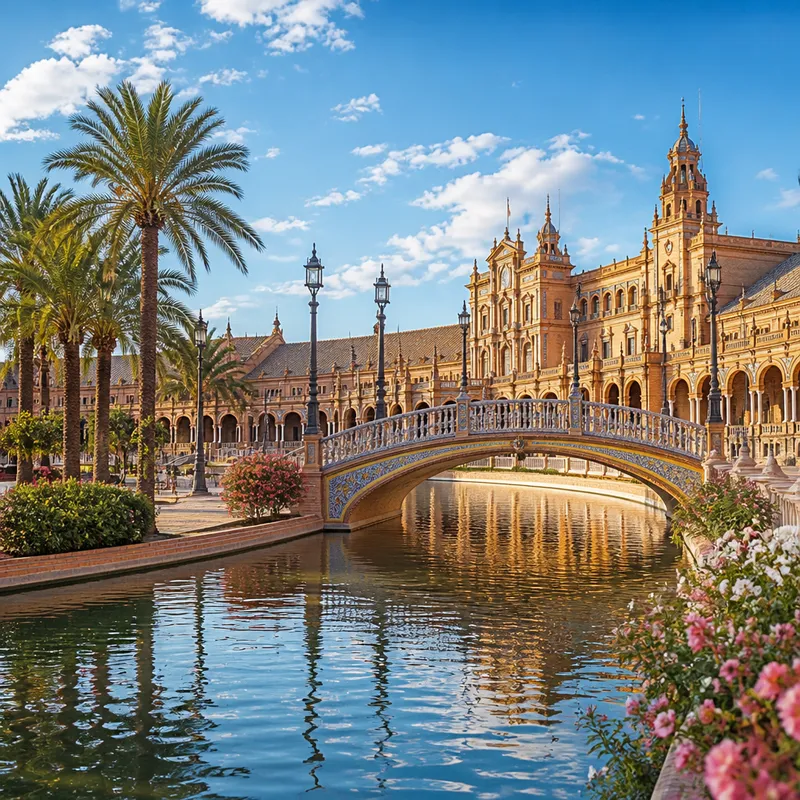
| Clear, mild spell | Riverfront or Plaza de España | Give these the brighter daylight |
| Cool, shaded morning | Short central loop | Pause indoors before walking further |
| Showers approaching | Streets near your booked sight | Keep the next stretch optional |
| Persistent rain | Museum or gallery | Confirm current access before setting off |
| Chilly evening | Dinner near your accommodation | Bring an extra layer |
| Tired legs | Stay within one neighbourhood | Drop the cross-city return walk |
Where can you walk at an unhurried pace?
Santa Cruz fits naturally around a visit to the cathedral or Alcázar. Allow yourself a few turns away from the busiest route, but keep a map handy when a timed entrance is approaching. Being in the right neighbourhood does not mean you have found the correct door.
From the cathedral area, head towards the Guadalquivir for a more open walk. Crossing to Triana gives the outing a different focus, with neighbourhood streets and places to eat beyond the monumental centre.
Treat Plaza de España and María Luisa Park as a proper outing. Give them a clear weather window, especially if you enjoy photography or want time on a bench. Leaving them until after several other visits risks arriving tired or losing the light.
For a mixed-pace group, agree on a stopping point and an easy return route before setting off.
What should you know about the orange trees?
The orange trees are part of everyday Seville: along streets, around squares and beside buildings you may already be visiting. Winter fruit adds colour to those walks, so there is little need to organise a separate search for a particular tree.
Fruit and blossom are different seasonal experiences. Do not book a winter trip expecting streets filled with the scent of flowers. If blossom is your main reason for visiting, check seasonal guidance through the official tourism sources. Flowering cannot be guaranteed for particular travel dates.
Street oranges are generally bitter varieties. Leave them on the trees and buy eating oranges from a shop or market. Watch your footing around fallen fruit, particularly when pavements are wet.
Which monuments should you book ahead?
Start with the Real Alcázar and the cathedral, including the Giralda if you want to visit it. Once your dates are settled, check admission availability before building your stay around an assumed slot. Winter alone is no reason to expect your preferred entry time to be available.
Use the official city tourism information to find each attraction's own booking channel. Read what admission includes, where to enter and whether identification is required. Check cancellation conditions, especially if your journey involves connections.
Historic sites may involve uneven ground, steps, standing and outdoor sections. Anyone needing step-free access or a gentler route should verify the specific arrangements before booking.
Save confirmations where you can open them offline. Check current opening arrangements and closures directly with the attraction, particularly around holidays or religious use.
What makes a useful rainy-day alternative?
Choose an indoor option before you need it. The Museum of Fine Arts may suit travellers interested in painting; another collection or exhibition might work better for your companions. Consult the official tourism listings, then confirm the venue's current arrangements.
A palace visit can still include gardens, open courtyards and exposed walks between rooms. Consider the whole route, including the journey there, before deciding that a booked attraction solves a wet afternoon.
For passing showers, a longer lunch or café stop may be enough. With persistent rain or weather warnings, simplify the day and follow official advice. Pick one convenient alternative instead of crossing the centre to investigate several possibilities.
Where should you stay for comfortable winter evenings?
Choose a base around the journeys you will make repeatedly. Staying convenient for the historic centre can simplify monument visits, while accommodation across the river may suit evenings in Triana. Look at the actual streets between your room and likely dinner spots.
Heating deserves attention in winter. Check the accommodation description and recent reviews for comments about room temperature, hot water and noise. A beautiful courtyard tells you little about how the bedroom will feel after dark.
Ask about luggage storage if you arrive before check-in or leave after checkout. Keep your first timed visit comfortably clear of your expected arrival. The Seville destination guide can help you place accommodation options within the city.
What should you pack for walking and evenings out?
Bring clothes you can add and remove easily. A light layer that felt unnecessary at lunch may be welcome inside a shaded building or beside the river later. Choose your outer layer using the forecast, including protection from rain if needed.
Comfortable shoes with reliable grip matter on paving, through narrow streets and during long monument visits. Avoid relying on a new pair you have barely worn.
Keep your day bag light enough to carry comfortably. A small umbrella, a spare layer and accessible booking details cover common needs. Leave room to put away clothing when the sun comes out. If rain is forecast, allow shoes and outerwear time to dry between outings.
How does winter differ from a spring-fair visit?
A winter stay centres on the permanent city: monuments, neighbourhoods, food and cultural visits. A trip for the April Fair needs separate planning, with the event influencing where you go and how you arrange your days.
Do not carry expectations of blossom, fairground dress and warm evenings into a winter booking. Quieter-season travel does not automatically mean low accommodation prices or easy availability either. Compare your actual dates and consult the official city events calendar.
If the fair is your priority, check official dates and arrangements specifically for that visit. Spain.info provides broader destination context, while the city tourism site is useful for local planning.
Can you combine Seville with other Andalusian cities?
Yes, but give Seville enough time first. An excursion can take the clearest day of a short stay and leave your main visits squeezed into awkward gaps. Consider an additional overnight stop if you want time to explore elsewhere.
The Córdoba two-day itinerary helps you judge how much space to give that city. Before committing, check Renfe's current services and ticket conditions, including the return journey for a day trip.
Granada deserves separate planning. Use the Granada two-day itinerary to assess your priorities, then check its weather and monument availability independently. Conditions in Seville should not determine what you pack for another city.
Compare the complete journey, including transfers and onward connections. Leave a sensible buffer between separately booked services, especially before a fixed monument visit.
In short
Winter Seville rewards a flexible walking plan. Reserve the sights you most want to see, give outdoor places the clearer daylight and choose a base that makes evenings easy. Comfortable shoes, layers and room to change your plans will serve you well.
Frequently asked questions
Is Seville warm enough for outdoor lunches in winter?
Sometimes, especially in a sunny, sheltered spot. Choose according to conditions that day and keep an indoor option available. Shade and wind can make a nearby table feel quite different.
Do you need a winter coat?
Bring an outer layer suitable for chilly evenings, with lighter layers underneath. Check the forecast before leaving and consider how long you expect to spend outside after sunset.
Can you visit the main sights without booking?
Availability varies. Reserve your priority monuments through official channels if particular visits matter to you. Check current admission arrangements rather than assuming winter guarantees entry on arrival.
Are the orange trees in blossom during winter?
Do not plan a winter visit around blossom. Fruit and evergreen foliage are the more useful expectation. Flowering is a separate seasonal experience, and its timing varies.
Sources and checks
- Turismo de Sevilla, official city siteChecked: 15 November 2026
- Spain.info, official tourism siteChecked: 15 November 2026
- AEMET, Spanish weather serviceChecked: 15 November 2026
- RenfeChecked: 15 November 2026
Itineraries are editorial suggestions for independent visits. Check current prices, opening hours and trail conditions with official providers.