At a glance
Give your first day in Córdoba, Spain, to the Mosque-Cathedral, the Judería and the Roman Bridge. Spend the second exploring the courtyards of Palacio de Viana and a different part of the historic centre. Book the Mosque-Cathedral as the main anchor, keep longer outdoor walks for comfortable temperatures and check which patios welcome visitors on your dates.
How to divide two days in Córdoba
Córdoba is worth an overnight stay because its most famous monument is only part of the visit. The streets around the Mosque-Cathedral, the river and the city's courtyards benefit from time beyond a single excursion. Use the first day for the southern historic centre and the second for Viana and the streets around it. This keeps the route manageable and gives each major visit room to stand on its own.
The table below suggests time blocks rather than a fixed schedule. In warm conditions, put the longest outdoor sections earlier or later in the day and leave the middle for an interior, lunch or a break at your accommodation. Choose your Mosque-Cathedral entry time first, then arrange the surrounding streets around it. A second major booking immediately afterwards can make you rush through the very place that brought you to Córdoba.
| When | Plan | Allow |
|---|---|---|
| Day 1 morning | Mosque-Cathedral and immediate surroundings | 3 hours |
| Day 1 afternoon | Lunch, Judería and a rest if needed | A flexible afternoon |
| Day 1 late afternoon | Roman Bridge and river views | 1–2 hours |
| Day 2 | Viana, surrounding streets and optional confirmed patio visit | A full day |
Keep the two days in different parts of the centre
A useful southern-centre sequence is Puerta de Almodóvar, Calle Judíos, the streets of the Judería, the Mosque-Cathedral area and the Roman Bridge. Reverse the first part if your monument booking comes early. Allow approximately 30–45 minutes for the connecting walk with brief pauses, before any interior visit; narrow streets and heat can make the pace slower. Day two moves north-east towards Palacio de Viana in Santa Marina. Keep lunch and the next walk in that area rather than automatically returning to the river. If you book a San Basilio patio route, remember it is back towards the south-western historic centre: put the travel between the two areas into the schedule.
Day one morning: the Mosque-Cathedral
The Mosque-Cathedral is the natural anchor of a first visit. Give yourself time to understand the scale of the interior and the different architectural spaces rather than moving from one photograph to the next. A guided visit can be useful if you want a structured historical explanation; an independent visit suits travellers who prefer to set their own pace. Compare what is actually included in either option before paying.
Use the official ticket page to select your date and visit type. The main monument, bell tower and special visits have distinct admission arrangements, so do not assume a general ticket covers every experience mentioned on the site. Read the entry instructions and allow time to find the correct access point. Check the current rules for bags, photography and visiting a religious space before arriving.
For the main interior, reserve roughly two hours in your day as a starting point, including some time around the arrival process. Visitors with a strong architectural interest may want longer. Keep the first portion attentive: look at how the spaces relate to one another before concentrating on details. If you choose a guided product, make sure its language, duration and meeting point suit the rest of the day.
The bell tower is a separate decision
Consider the bell tower only if you want an additional viewpoint and the route suits your mobility. It should be a deliberate extra rather than something discovered after you have committed the rest of the morning. Check the current ticket conditions and access requirements with the monument. A tower slot may place a firmer limit on your time than the main visit, so arrange the order carefully.
If you skip the tower, use that time for the surrounding streets or a slower lunch. You will still have the river views later in the day. Visitors combining several Andalusian cities can compare our Seville three-day itinerary, where major monuments also benefit from careful booking. Give each city a clear main visit rather than filling consecutive days with every available tower and palace admission.
Lunch and the Judería
After the monument, use the surrounding Judería streets for a short walk and lunch. Salmorejo is a useful local starting point: a cold, thick preparation based on tomato, bread and olive oil. It contains bread, so it is not automatically suitable for a gluten-free diet; ask about the preparation and toppings when ordering. A flamenquín is a more substantial choice, commonly made with pork loin and Serrano ham, rolled and fried. Compare portions before ordering both, particularly if the afternoon includes a longer walk.
Treat the quarter as a lived-in part of the city. Keep residential entrances clear and ask before photographing people at close range. A courtyard glimpsed through an open doorway is not automatically a public attraction. If a particular historic interior interests you, check its own visitor information and make space for it. The route works equally well with a thoughtful street walk and one major morning admission.
In hotter weather, shorten the midday walk and return later. You can revisit a street when the light or temperature changes rather than insisting on completing it at the first opportunity. Two days give you that flexibility. Our culture and history city breaks include other destinations where leaving time between major monuments makes the trip easier to absorb.
Day one late afternoon: the Roman Bridge and the river
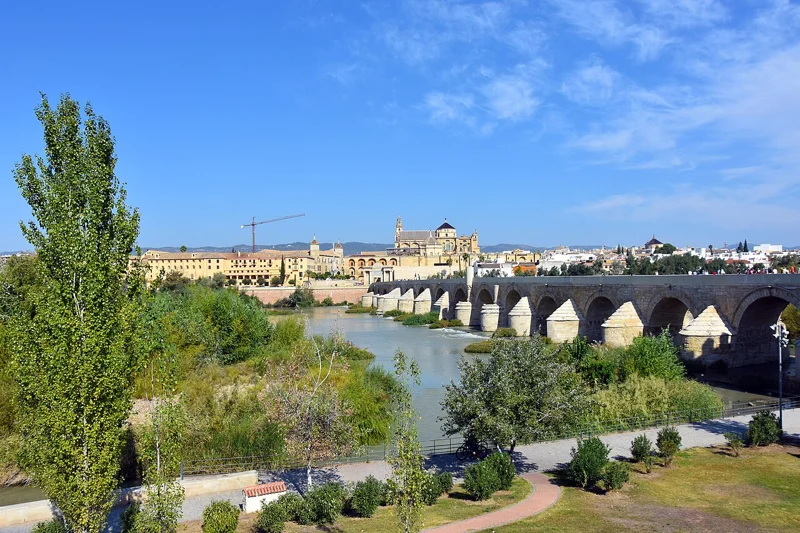
Use the river as the final outdoor focus of the first day. The Roman Bridge gives a view back towards the Mosque-Cathedral and a useful change of scale after the enclosed streets. Walk far enough to appreciate the relationship between the bridge, the river and the city, then pause before returning. Choose a comfortable time for the conditions, and keep the outing shorter if the day has already involved substantial walking.
Despite its name and Roman origins, the bridge you see is the result of repeated rebuilding. Córdoba's tourism authority describes much of its present form as medieval, with later alterations. That history makes it more interesting than the simple claim that every visible stone is ancient Roman. Look at the structure as a monument used and changed over many centuries, rather than expecting an untouched survival from one period.
This is a good place to slow down before dinner. You can take the view without adding another paid attraction at the far end. If you want a museum or viewpoint there, check its admission details and give it separate time. Otherwise, return to your chosen dinner area and let the first day finish with a meal rather than another queue.
Day two morning: Palacio de Viana and its courtyards
Palacio de Viana gives the second day a different focus. In the Santa Marina area, the palace is known for twelve courtyards and a garden, with spaces that developed through different periods of the building's history. The appeal is in moving between them and noticing differences in scale, planting and the way rooms open onto outdoor space. Give the visit more attention than a series of flower photographs.
Check which admission option covers the parts you want to see. A visit centred on the patios may differ from a fuller house-and-collections experience, and guided elements can have their own schedule. Read the current official offer before buying rather than assuming all tickets are interchangeable. Plan roughly two hours as an initial block, allowing longer if you choose a more extensive visit or want time with the collections.
After Viana, stay in this part of the centre for a walk and lunch instead of immediately retracing day one's route. The change of neighbourhood helps the visit feel broader than a repeated circuit around the Mosque-Cathedral. Keep enough time to sit down and notice ordinary street life between cultural stops. If you are leaving later that day, build the luggage collection into the route before adding another admission.
Can you see Córdoba’s patios outside the festival?
Yes, but the practical distinction is between specific visitor options and unrestricted access to every residential patio. The tourism authority lists ways to visit courtyards beyond the annual festival, including Viana and organised experiences. Use the current information to choose a visit for your actual dates. A photograph from the festival does not prove that the same private courtyard can be entered at any time of year.
If you want a San Basilio patio visit, check the operator or residents' association route, its season and the exact inclusions. Some experiences are guided, and access can depend on a programme. Respect the household setting and the instructions given on arrival. Ask before photographing people or areas beyond the visitor route, and avoid assuming that a public festival removes the need for privacy at other times.
Choose Viana plus a shorter neighbourhood walk if you want the simplest two-day plan. Add an organised patio route if courtyard culture is a main reason for your trip, replacing another activity rather than fitting it into an unrealistic gap. For another Spanish city where a major historic site needs its own planning, see our Granada two-day itinerary.
What to do with the remaining afternoon
Use the second afternoon to return to a favourite area, follow a confirmed patio route or choose an additional interior that interests you. Keep the choice close to the time you genuinely have. If your train leaves early, a lunch and a final short walk may be the right amount. If staying another night, you can give a neighbourhood or museum more attention without watching a departure deadline.
Medina Azahara is outside this central itinerary and deserves a separate excursion plan. If it is essential to your trip, replace a substantial part of day two or add another day, then check the official access and transport arrangements. It is not a quick extra to insert after Viana, a patio route and several hours in the historic centre. Travellers building a wider Spanish journey can use Madrid’s three-day route as another distinct stop, with transfer time accounted for separately.
Arrival, accommodation and the best rhythm for your stay
For a first visit, staying within convenient reach of the historic centre makes it easier to return during the warmer part of the day. Check the exact approach with luggage and whether the property has stairs. If arriving by rail, plan the connection from the station to the accommodation before fixing a tight entry slot. A central location and an easy arrival route are related but different considerations.
The sights in this guide suit walking, with local transport used when needed to shorten an arrival or departure journey. If driving, check parking and historic-centre access arrangements with your accommodation before entering narrow streets. Keeping the car out of the sightseeing portion makes it easier to follow a compact route and change direction when you want a rest.
Budget first for the Mosque-Cathedral and the Viana visit you want, then decide whether a tower or organised patio experience adds enough interest. Outdoor street and bridge walks can fill the remaining time. Recheck official opening information and ticket details before travel, especially around holidays and religious events. The two-day structure remains useful without depending on a temporary price, one festival date or a promise that every courtyard will be open.
Frequently asked questions
Is this Córdoba itinerary for Spain?
Yes. It covers Córdoba in Andalusia, Spain, including the Mosque-Cathedral, Judería, Roman Bridge and Palacio de Viana. It does not describe Córdoba in Argentina or another city with the same name.
Is two days enough for Córdoba?
Two full days give time for the Mosque-Cathedral, historic streets, Roman Bridge and Viana, with relaxed meals. Add time or replace part of the route if Medina Azahara or several guided patio visits are priorities.
Does a Mosque-Cathedral ticket include the bell tower?
Do not assume so. The official site lists the main monument, bell tower and special visits with their own arrangements. Check the exact ticket inclusions and access requirements before booking.
Can you visit Córdoba’s patios outside May?
Yes, through specific places and organised visitor options, including Palacio de Viana. Check current schedules and inclusions. Private courtyards opened during the annual festival are not automatically open throughout the year.
Sources and checks
- Mosque-Cathedral of Córdoba: official ticketsChecked: 23 October 2026
- Córdoba Tourism: Roman BridgeChecked: 23 October 2026
- Palacio de Viana: official visitor informationChecked: 23 October 2026
- Córdoba Film Office: Viana and patiosChecked: 23 October 2026
- Córdoba Tourism: courtyards throughout the yearChecked: 23 October 2026
- Córdoba Tourism: local gastronomy referenceChecked: 23 October 2026
Itineraries are editorial suggestions for independent visits. Check current prices, opening hours and trail conditions with official providers.