At a glance
Québec City is rewarding in winter when you plan short walks, wear suitable boots and leave time for indoor breaks. Snow gives the old town much of its appeal, but slippery surfaces and steep connections can make sightseeing slower than the map suggests. Build each outing around a few nearby sights and somewhere warm to stop. Check official forecasts, transport information and seasonal attraction arrangements before longer trips.
What does winter change about a visit to Québec City?
Winter changes the pace of exploring. You might linger along a sheltered street, then spend only a few minutes at an exposed viewpoint. Allowing for both makes the day more comfortable and leaves room to enjoy the architecture.
Conditions underfoot matter as much as the view outside your window. Fresh snow can cover uneven surfaces, while compacted snow and refrozen patches need careful footing. A clear pavement beside your hotel does not tell you what the next slope will be like.
For travellers used to Central European city breaks, the main adjustment may be accepting a smaller walking area each day. Choose one outdoor priority and a worthwhile indoor alternative. Leave the rest open until you know how the morning feels.
How does snow clearance affect getting around?
Snow clearance keeps the city moving, but it does not make every pavement equally easy to use. Snowbanks can narrow walking space, complicate crossings and hide the edge of the kerb. Give yourself time to find a comfortable place to cross.
Keep clear of maintenance vehicles and follow temporary pedestrian directions. If you step around a snowbank, check that drivers can see you. Stop for photographs where others can pass without moving into the road.
If you are driving, read current street signs and ask your accommodation about parking and snow-clearance arrangements. For an arrival by taxi or transfer, check where you can be dropped off and whether the final approach involves steps or a slope.
Which old town walks need the most care?
The connections between Upper Town and Lower Town deserve particular attention. A short route may include stairs or a steep gradient, making a longer alternative more manageable. Look at the surface before committing, especially if you must return the same way.
Walk at a pace that suits your footing. Short steps and free hands help when surfaces are uncertain. Put your phone away while moving, and step aside somewhere secure to check directions or take a photograph.
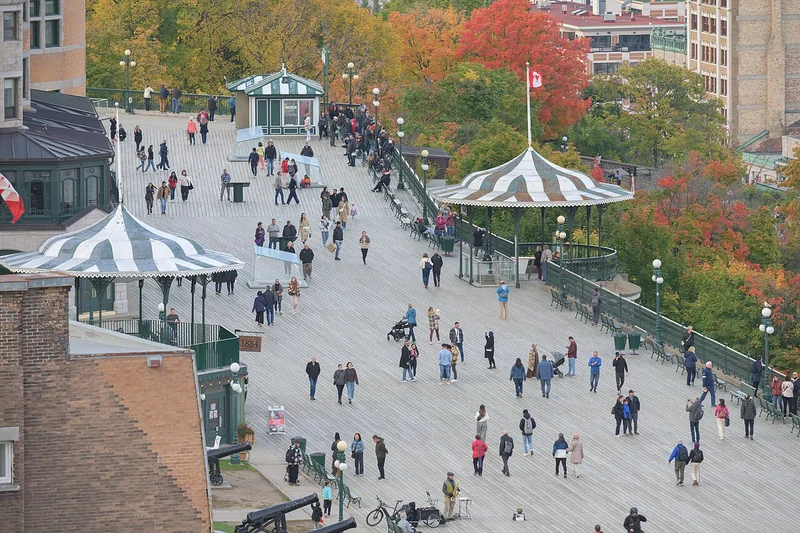
Exposed stretches around Dufferin Terrace can feel very different from nearby sheltered streets. Make the viewpoint a brief stop if that suits the conditions. Staying until you are uncomfortable can spoil the next part of the walk.
The Québec City three-day itinerary helps you understand where the main sights sit in relation to one another. Adapt the connections for winter, grouping nearby stops and asking locally about alternatives when a staircase or slope looks difficult.
How can you make indoor breaks part of the visit?
Pick somewhere warm before leaving your accommodation: a museum, a lunch stop or somewhere to sit comfortably. Knowing where you are heading avoids a hurried search once your hands are cold and everyone wants a decision.
Take breaks before discomfort takes over. Damp gloves, chilled feet and tired legs are reasons to pause or head back. A brief stop in a doorway rarely offers the same recovery as sitting down and removing a layer.
Québec City's culture and history make indoor time worth planning in its own right. A museum visit can give context to buildings and streets you have just seen. Check current opening arrangements and keep a second option nearby.
Choose meals with the route in mind. A convenient lunch can divide a walk into two manageable sections. If you have dietary requirements, identify suitable places beforehand so that finding food and warmth does not become a lengthy search.
What should your daily cold-weather plan look like?
Decide on the next outing over breakfast. Check the forecast and alerts, look at conditions outside and consider how everyone feels. A forecast helps with preparation; the pavement at your door helps you judge the first stretch.
If travelling together, agree that anyone can ask for a warm stop. People cool down at different rates, particularly when one person is taking photographs and another is waiting. Choose a meeting point indoors if you split up.
Leave extra time before bookings and departures. Getting dressed, crossing a slippery street and finding an entrance can take longer than expected. Useful travel planning includes keeping arrival and departure days simple, when luggage makes changes of route awkward.
Save your accommodation address and booked journey details somewhere easy to retrieve. Keep enough phone charge for the return trip, and save a map that clearly shows street names and your destination.
| Situation | What to check | Practical response |
|---|---|---|
| Fresh snowfall | Visibility and surfaces nearby | Start with a short, familiar route |
| Slippery slope | Footing and alternative access | Choose a gentler connection |
| Windy viewpoint | Shelter and everyone's comfort | Keep the visit brief |
| Damp gloves or socks | Availability of dry replacements | Return to change before continuing |
| Clearance work | Signs and pedestrian directions | Give workers plenty of space |
| Distant attraction | Operation and return transport | Confirm both before departure |
| Tired walking companions | Distance back and transport options | Finish nearby or arrange a ride |
Which clothing choices make walking more comfortable?
Start with boots that fit comfortably with your intended socks and have soles suited to winter walking. Warmth, water resistance and grip are separate qualities. Try the combination before travelling; tight footwear can make an outing uncomfortable even when the boots seem substantial.
Wear layers you can adjust indoors, with protection for your head, hands and neck. Carry spare gloves or socks when useful for your plans. Clothing should let you move easily, including bending down to fasten boots or boarding transport.
Keep frequently used items accessible. A compact bag leaves your hands free, while a secure pocket saves repeated searches for a payment card or room key. Put your phone away between uses rather than carrying it throughout the walk.
Plan how to dry things overnight. Ask your accommodation where damp boots and outerwear can be left safely, and avoid placing them against unsuitable heaters. Dry socks and gloves are more useful the following morning than another outfit packed in your case.
Where should you stay, and when does transport help?
Look closely at the approach to your accommodation. A central address can still involve stairs, a slope or an awkward final stretch with luggage. Ask the property about access if winter walking, mobility or carrying bags is a concern.
Nearby food and indoor destinations can make a base especially convenient. Being able to return for a rest or dry clothing gives you more choices during the day. Check the surrounding streets as well as distances to sights.
For public transport, check current routes, fares, payment arrangements and service notices with RTC. Save the outward and return journey details before leaving reliable internet access. Confirm the direction of travel and the correct stop rather than assuming the return is directly opposite.
Transport is worth considering whenever it makes the day easier, even for a short journey. Before waiting outside, check current service information and locate the stop accurately. If standing in the cold is difficult, discuss alternatives with your accommodation.
How should you approach festivals and an ice-hotel visit?
Seasonal attractions can give a winter trip a particular focus, but check current arrangements before organising your stay around them. A photograph from another season tells you little about this year's access, booking conditions or available activities.
Start with Québec City Tourism's official information and follow its current references to organisers and attractions. Verify dates, operating status, location and what your booking includes. Check outward and return transport together, especially for anything beyond the centre.
Read the distinction between a visit and an overnight experience carefully. They can involve different preparation and commitments. Keep a comfortable city alternative available in case operations change or another outdoor outing does not suit the day.
What helps when travelling with children or limited mobility?
Plan around the person who needs the most frequent stops. Children may tire of standing still while adults admire a view, and a route that looks manageable on a map may offer few places to rest. Keep the next warm destination clear.
For mobility needs, ask specific questions about entrances, steps, gradients and space for equipment. Describing what you need usually brings a more useful answer than asking whether somewhere is simply accessible. Conditions immediately outside a building deserve attention alongside its interior facilities.
In short
Québec City in winter suits a flexible pace: short walks, warm stops and time to move carefully. Choose accommodation with practical access, prepare for damp clothing and check official information before seasonal excursions. Let each day's conditions guide how far you go.
Frequently asked questions
Can you explore Old Québec on foot in winter?
Yes, when conditions, footwear and your mobility allow. Plan short sections, allow extra time for gradients and change direction if the surface feels uncertain. You can see plenty without walking continuously.
Do you need a car for a winter city break?
A central stay may work well without one. Consider arrival transport and excursions separately, then check the available connections before booking accommodation or attractions outside the centre.
Should you book seasonal attractions before travelling?
Check the current season's arrangements first. Book when required, read the conditions and confirm return transport. Leave some flexibility around other sightseeing so a change does not disrupt the whole trip.
Where should you check the weather?
Use Environment and Climate Change Canada for forecasts and alerts. Check during your stay and before longer outings, then consider the surfaces and visibility immediately outside your accommodation.
Sources and checks
- Québec City TourismChecked: 15 November 2026
- Environment and Climate Change Canada, weatherChecked: 15 November 2026
- RTC, Québec City public transportChecked: 15 November 2026
Itineraries are editorial suggestions for independent visits. Check current prices, opening hours and trail conditions with official providers.