At a glance
A winter mountain day from Lucerne works best with one destination, a checked return journey and a lakeside alternative. Rigi and Pilatus are both worth considering, but the better choice depends on visibility, operating services and how much walking you want. Check current mountain webcams and operator notices before committing. If the summits stay in cloud, a shorter lake outing or a day in Lucerne can be just as satisfying.
What should you decide before choosing a mountain?
Start with what you want: a wide view, a mountain railway journey or a winter walk. Those are different outings, even when they begin at the same station. Transport may be running while nearby paths are closed, and clear skies do not necessarily mean comfortable walking conditions.
For a first visit, one mountain is enough. Leave space for lunch, waiting for connections and returning earlier than expected. A complicated circuit can make a small disruption awkward.
The Lucerne two-day itinerary helps with the wider city stay. Give the mountain the day with the most flexibility, especially if you have another night in Lucerne afterwards.
How can you tell whether the views justify the journey?
Check a mountain forecast, current webcams and operating notices together. Conditions beside the lake cannot tell you everything about the summit. Cloud over Lucerne may sit below clearer upper slopes, while sunshine in town says little about wind higher up.
Look at the webcam timestamp and compare views where available. A sunny image does not confirm that paths are open or every transport stage is operating.
Use the official Lucerne Tourism and Switzerland Tourism websites listed below to find destination information, then follow their references to mountain operators. Check live information again before leaving your accommodation. If conditions remain uncertain, decide whether you would enjoy the journey without a view.
When does Rigi make sense?
Consider Rigi when you want a railway journey with the possibility of a short winter walk. Compare access via Vitznau and Arth-Goldau and confirm the connections and operating arrangements for your date.
Plan the walking separately. Find an officially designated winter route, confirm that it is open and check where it finishes. A line on a summer map is not enough to establish winter access.
Returning the way you came keeps decisions simple. A route involving the lake needs workable connections in both directions. You can also make the summit optional: an intermediate stop may provide enough scenery and outdoor time.
What should you check before choosing Pilatus?
Establish the winter access route first. Consult the operator’s information for the Kriens side, including maintenance closures and the status of each stage. Avoid planning around a summer round trip or assuming that the cogwheel railway from Alpnachstad will be available.
Think of Pilatus as a transport excursion with time outside at the top. Walking beyond the arrival area needs a separate check. Reaching the mountain station does not mean every path or viewpoint is accessible.
If the view is your main reason for going and current cameras show persistent cloud, postponing the ascent may make more sense than hoping conditions improve after you arrive.
Which plan fits the morning’s conditions?
Choose using information you can verify that morning. This table helps narrow the options; it does not replace local notices or confirm access.
Once you have chosen, resist chasing a better view on another mountain. Shortening the outing usually gives you more freedom than adding another set of connections.
| Morning situation | Practical choice | Check first | Leave flexible |
|---|---|---|---|
| Clear views and normal mountain services | One mountain excursion | Uplifts and return connections | Time spent outside |
| Cloud over town, clear summit cameras | Consider an ascent | Camera timestamps and wind notices | Walking distance |
| Persistent cloud at the summit | Lucerne or a lake outing | Local visibility and transport | Whether to leave town |
| Wind or disrupted mountain services | A sheltered town day | Local warnings and indoor options | Waterfront walking |
| Suitable conditions on an open winter trail | A short mountain walk | Trail status and footwear guidance | Turning point |
| Fixed onward journey or limited time | Compact town and lakeside walk | Departure and luggage arrangements | Additional stops |
How should you organise the transport?
Build the complete journey using the official SBB website listed below. Check the exact arrival point: a boat landing, bus stop and mountain railway station can have similar names without sharing a boarding place.
Confirm the mountain section with its operator. Identify the final descent and choose an earlier service as your intended return, leaving the last departure as a contingency. Check ticket validity separately, including travel pass coverage and any mountain supplement.
For a boat connection, look up the winter sailing in both directions. Allow time to find the landing and board without rushing. Save essential journey details on your phone, including a land alternative where practical, and check live information during the day.
What does a realistic mountain day look like?
After breakfast, make the final weather and service checks. Leave with one destination, one possible walk and a return route you understand. Keep other commitments loose enough that an ordinary delay will not spoil the afternoon.
At the mountain station, pause before setting off. Read local notices, find the return boarding point and reassess conditions. If the walk feels unsuitable, a shorter visit near the station can still be worthwhile.
Carry food and water so lunch does not depend on one stop being available. Start back with comfortable margins for connections and daylight. Aim to return with enough energy to enjoy the evening.
What can you do if the summits stay in cloud?
First distinguish cloud over Lucerne from cloud surrounding your destination. Clear upper webcams may support an ascent. If the summit remains obscured, judge the outing on the transport experience and scenery visible along the way.
A lake trip offers a different perspective, provided the sailings and local conditions suit it. Choose a specific destination and understand the return before boarding. Check how far the landing is from the place you intend to visit.
Staying in Lucerne is a sound option too. The Lucerne destination guide gives context for a day closer to town. A compact route with a warm lunch stop often works better than travelling further simply to fill the day.
How can you make a winter walk through Lucerne comfortable?
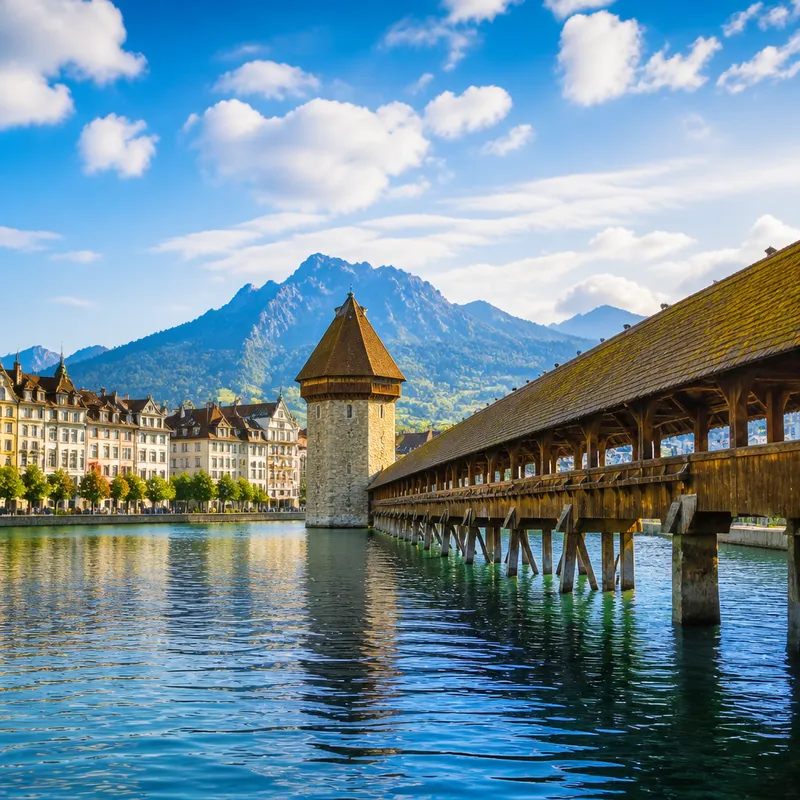
Use the station and lakefront to get your bearings, then make a manageable loop towards the Chapel Bridge, the Reuss and the old town. Keep it easy to shorten, with places to pause indoors.
Watch your footing on bridges, shaded paving and waterfront surfaces after cold conditions. A familiar city route can still need care. Avoid adding steps or elevated paths unless you know they are accessible and suitable that day.
Give the fallback some structure: perhaps a walk, a proper lunch and an indoor attraction whose opening arrangements you have checked. That leaves room to wander without spending the afternoon searching for somewhere warm. Consult official visitor information for current opening details.
What clothing and walking expectations are sensible?
Take layers, a windproof outer jacket, gloves and a hat, even for an outing centred on transport. Standing at a viewpoint or waiting outside can feel quite different from walking through the city.
Choose footwear for your intended route. City trainers are a poor starting point for a snowy mountain walk. If traction aids are recommended, understand their limits; carrying equipment does not make a closed route suitable.
Bring water, a snack, a charged phone and essential journey details. Keep the walking ambition modest if you are unfamiliar with winter terrain. The nature and hiking collection offers ideas for other trips, but this day should follow the mountain’s published winter routes and current guidance.
What changes when people want different things?
Agree on the minimum outing everyone would enjoy before buying tickets. One person may want a long walk while another mainly wants the railway and a view. A short shared visit is easier to organise than separating on unfamiliar winter paths.
Check accessibility information directly if anyone needs step-free access, shorter walking distances or regular indoor breaks. An accessible transport stage does not establish the suitability of the whole journey. Keep enough time for boarding and changes, particularly with children or anyone who finds hurried connections difficult.
Does a mountain fit an arrival or departure day?
With luggage and a fixed onward connection, keep the plan smaller. Check storage arrangements before relying on them and include collection time in the return journey. Leave a margin that can absorb a missed connection.
Consider the journey already completed, too. After an early start or overnight travel, a town walk may be more enjoyable than further changes of transport.
If you continue through Zürich, the Zürich two-day itinerary can help with that separate stop. Put the Lucerne mountain outing on the less constrained day where possible.
In short
Choose one mountain, check winter access and treat walking as a separate decision. Keep a lake or town alternative ready, and leave room in the return journey. A manageable outing gives you time to enjoy the scenery that conditions actually allow.
Frequently asked questions
Can you visit a mountain from Lucerne without skiing?
Yes. Choose a transport journey, viewpoint visit or officially open winter walking route. Confirm pedestrian access and the conditions for your chosen activity.
Should you book before checking the weather?
Read the booking and cancellation terms first. Where practical, retain flexibility until you can check the forecast, current webcams and service notices.
Is a boat trip a reliable winter backup?
It can work if the winter timetable and local conditions suit your plan. Check a specific outward sailing and return connection before setting off.
What if you have only half a day?
Choose a compact Lucerne walk or short lakeside outing. Consider a mountain only if travel, viewing time and a comfortable return margin all fit.
Sources and checks
- Lucerne TourismChecked: 15 November 2026
- Switzerland TourismChecked: 15 November 2026
- SBB, Swiss Federal RailwaysChecked: 15 November 2026
Itineraries are editorial suggestions for independent visits. Check current prices, opening hours and trail conditions with official providers.