At a glance
Use your first Lucerne day for the Reuss bridges, painted Old Town streets and a lakeside pause. Give the second to the Musegg Wall when its seasonal visitor access is open, then choose one museum or a clearly defined boat outing. Two full days suit the city itself. Keep a major mountain excursion as a separate day or a replacement: the overnight guest card’s local transport benefit does not include lake boats or every mountain railway.
Begin with the city before adding the mountains
Lucerne is often treated as the departure point for an excursion, but its bridges, walls and lake deserve their own time. This itinerary keeps the first visit in the city and makes additional outings optional. The route is compact, yet stairs, seasonal access and boat timetables still require decisions. Pick one second-day focus before buying tickets rather than assuming the lake and several surrounding summits all fit into a short weekend.
Accommodation near the station can make arrival and luggage collection straightforward. A stay across the river may place you closer to Old Town evening walks, while a slightly more distant hotel can work with the local network. Check the actual route, stairs and street setting before choosing. Ask your accommodation about the guest card and its eligibility rather than assuming every regional lodging provides the same transport entitlement.
| Day | Main area | Anchor | Important distinction |
|---|---|---|---|
| One | Reuss and Old Town | Chapel Bridge and street loop | Bridge walk differs from tower or museum access |
| Two | Musegg and a selected lake or museum visit | Seasonal wall visit | Guest-card buses and trains exclude boats |
Day one morning: understand the bridges and riverbanks
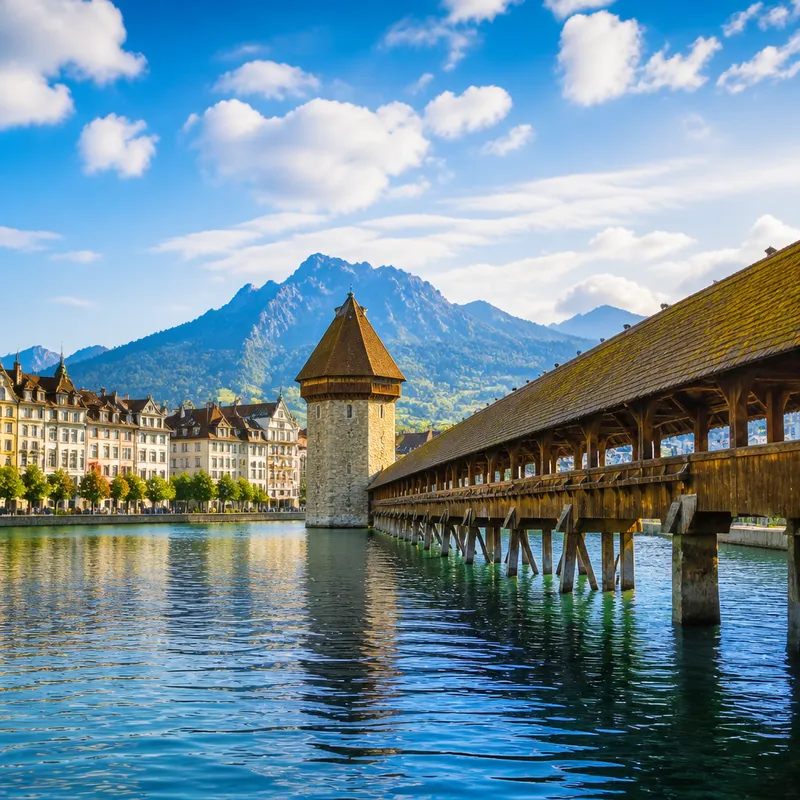
Begin around the Reuss and Chapel Bridge, allowing time to see the setting from the banks before crossing. The covered wooden walkway and nearby Water Tower form a distinctive relationship with the river and town. Stay clear of the main flow when you stop to look or photograph details. Crossing a bridge is not permission to enter every adjacent tower or historic structure, so keep the public walkway as the basic experience.
The bridge’s history includes major fire damage in 1993 and a rebuilding completed for reopening in 1994. That matters when describing what you are seeing: the structure should not be presented as entirely untouched timber from its earliest period. Looking at the panels and surviving or reconstructed elements can make the crossing more thoughtful than treating it simply as a backdrop. Follow local interpretation rather than assuming every detail is original.
After Chapel Bridge, choose an Old Town route through Kornmarkt and Weinmarkt, then continue toward Spreuer Bridge for a different Reuss crossing. The official city guide locates these squares and bridges in the compact historic area. This creates a loop with named points instead of retracing the same riverside. Keep bridge crossings distinct from admission to adjacent historic structures, and follow any local signs if the usual walkway is diverted.
Day one afternoon: painted facades and a lake pause
Use Weinmarkt for a pause among the Old Town façades, then return toward the lake end for a shorter waterfront continuation. If a museum is your selected afternoon interior, arrange its actual opening and entrance before extending the walk. A long lakeside outing changes the day’s scope; the old streets, an indoor collection and a boat departure cannot all share the basic duration of the bridge loop.
Choose one interior if it interests you, with its own visitor calendar and ticket. Otherwise, let the architecture and ordinary street activity provide the afternoon’s substance. Lucerne’s compactness makes it tempting to add several small visits, but the cumulative standing time still matters. Keep room for a seated break before continuing towards the lake, especially if your morning included a long arrival journey.
Finish on a public lakeside route and decide how far to continue according to conditions. Open water and distant hills make a clear contrast with the enclosed streets. Wind or rain can justify a shorter walk and an earlier return. You can appreciate the landscape without boarding a boat or committing to a mountain trip. Keeping this first evening flexible also gives you a chance to adjust the second day after seeing the weather forecast.
Our Zürich itinerary offers another Swiss city stay with a different river, lake and art balance. Give it separate days if you plan both destinations. Travel between them can be straightforward, but a connection does not make two complete itineraries fit into the same sightseeing afternoon.
Day two morning: Musegg depends on the season
The Musegg Wall and its public towers can provide the second day’s main historic walk when visitor access is open. Lucerne Tourism describes the regular public-access season as 1 April to 1 November. Do not plan a winter tower climb based on a summer photograph or assume every section is accessible all year. Recheck current conditions before setting out, since weather, maintenance or local restrictions can also affect access.
Consider stairs and uneven surfaces before choosing a climb. A wall walk or tower view is a different physical experience from the riverside route, and not every member of a group will enjoy the same ascent. Choose the accessible public option that suits you and leave time for rests. There is no need to climb every available tower to make this a worthwhile morning. One carefully enjoyed view can be enough.
When seasonal access is closed, substitute a selected museum or a longer Old Town and lakeside block. Do not attempt to enter a closed section simply because the outer wall is visible from a public street. The winter alternative should feel like a complete city morning rather than a failed attempt at a summer route. Keep lunch convenient for the replacement area instead of travelling across town just to preserve a restaurant booking.
Use the official city map to identify the tower section and approach you intend to take before going uphill. The wall has several towers, and their names or an exterior view do not imply identical access. Pick a manageable part of the seasonal visitor route and leave time for the descent. When tower access is unavailable, the previous day’s historic squares and a chosen museum provide a clearer alternative than an improvised climb to reproduce a summer view.
Choose a boat trip or a museum for the afternoon
A lake outing works well when you choose the exact sailing first. Check the departure pier, duration, return service and current timetable before paying. A short round trip, a one-way boat journey and a wider regional excursion are different plans. If you leave the boat at another destination, allow the onward walk and return connection as part of the trip. Do not assume a later service operates merely because one appears on an old schedule.
A museum is an equally valid second-day focus, especially in poor weather or outside the wall-access season. Pick the collection that interests you and give it a substantial visit rather than adding several brief interiors. A specialist museum can occupy more time than expected when you read the displays carefully. Leave the final hours flexible so a longer visit does not force you to rush through the principal reason you came.
Visitors who prefer a major mountain excursion should substitute it explicitly for a city block or add another day. Check each operator’s weather conditions, timetable and ticket terms. An overnight guest card can provide discounts without making the journey free. The Salzburg itinerary offers a useful comparison for a city stay with nearby hills, while our travel planning guides help allocate excursion days realistically.
Read the guest-card benefit accurately
The Lucerne guest card gives eligible overnight visitors benefits that depend on their accommodation location and the participating services. The published city transport offer includes buses and second-class trains within Zone 10 for qualifying stays in Lucerne or Kriens. It excludes boat trips. Mountain railways, museums and excursions can provide discounts under their own conditions, which are different from an included fare.
Ask the accommodation how to obtain the card and check its validity before using it. Keep identification available when a supplier requires it. A card described as covering your stay should not be assumed to cover travel outside the named zone or every regional rail connection. Compare the actual journey and any discount with the ordinary ticket rather than relying on a broad claim that public transport is free throughout the region.
Spend on the experience you choose
Build the budget around accommodation, meals and the one substantial second-day outing. The main bridge, street and lakeside walks provide much of the itinerary without repeated admissions. If you choose a boat or mountain experience, allow its full ticket and connection cost before purchasing a pass. Avoid adding extra paid attractions simply because a discounted product seems to need several entries to justify its price.
Before travel, recheck Musegg’s seasonal access, the selected boat or museum calendar and your guest-card conditions. Save the correct pier or entrance. If departure is on the second afternoon, keep the last optional walk close to luggage collection and allow the full journey to your station or airport. A calm finish beside the river is preferable to an ambitious final excursion that makes you hurry back through Lucerne.
A lake outing is different from a mountain day
If you select a boat, save the pier and both outbound and return sailings from the current operator timetable. A round trip from Lucerne and a journey that continues to a mountain railway have different connections and total costs. Choose one type before comparing tickets. The guest card’s city transport benefit excludes boats, so a lakeside hotel or an eligible overnight stay does not automatically arrange the water journey.
For a first city-focused visit, allow roughly two to three hours for the chosen bridge-and-square loop with pauses, then give the second day’s tower or museum its own block. If Pilatus or Rigi is your main priority, replace much of the second city day and use the mountain operator’s actual access and weather information. These are alternatives, not extra visits hidden inside a gentle Lucerne afternoon.
Frequently asked questions
Is two days enough for Lucerne?
Two full days cover the bridges, Old Town, lakefront and one selected museum or boat outing. Add another day for a substantial mountain excursion without reducing the city visit.
Can I climb the Musegg towers in winter?
The regular public visitor season is 1 April to 1 November. Plan a different city block outside that period and check current access before travelling.
Does the Lucerne guest card include boats?
The published Zone 10 bus and train benefit excludes boats. Other services may offer discounts, so check the exact operator and ticket rather than assuming the whole lake network is included.
Is Chapel Bridge entirely original medieval timber?
A major part burned in 1993 and was rebuilt before reopening in 1994. Appreciate its historic setting while recognising that the bridge includes reconstructed elements.
Sources and checks
- Lucerne Tourism: Chapel BridgeChecked: 8 October 2026
- Lucerne Tourism: Musegg WallChecked: 8 October 2026
- Lucerne Tourism: guest cardChecked: 8 October 2026
- Lucerne Tourism — 2026–27 city map and squaresChecked: 8 October 2026
- Lucerne Tourism — Musegg landscape and fortificationsChecked: 8 October 2026
Itineraries are editorial suggestions for independent visits. Check current prices, opening hours and trail conditions with official providers.