At a glance
Two days in Innsbruck gives you time for the old town, a riverside walk and a Nordkette excursion if visibility and mountain transport allow. Spend one day around the historic centre and keep the other flexible for the mountains. Arriving by train works well, but plan around two usable sightseeing days rather than assuming arrival and departure days will be enough.
How should you organise two winter days?
Treat the days below as interchangeable. If your first morning offers the better mountain conditions, take it and leave the old town for later. Streets, cafés and historic interiors are easier to enjoy under grey skies than a viewpoint hidden in cloud.
Check the official Nordkette operating information and webcams alongside the GeoSphere Austria forecast. Look at your intended destination: conditions in the valley can differ considerably from those higher up. A clear view from your hotel window is only part of the decision.
Winter daylight also shapes the route. Put riverside views and outdoor wandering earlier in the day, then use the afternoon for an interior or a warm break. Avoid making your final mountain descent the only thing standing between you and an onward train.
| Day | Area | Main experience | Practical check |
|---|---|---|---|
| One, morning | Old town | Maria-Theresien-Strasse and Golden Roof lanes | Pavement conditions and daylight |
| One, afternoon | Inn riverside and historic centre | River views, then one indoor visit | Footing and attraction opening information |
| Two, suitable weather | Nordkette | Mountain transport and maintained viewpoints | Visibility, wind and operating sections |
| Two, poor mountain weather | City centre | Museums, cafés and unfinished sightseeing | Current access and opening arrangements |
| Departure day | Station and accommodation | Collect luggage and travel onwards | Train updates and transfer margin |
Where should you start your old town walk?
From Innsbruck Hauptbahnhof, the Golden Roof area is roughly a 15–20-minute walk, depending on your route and pace. With luggage or slippery pavements, allow longer. If you arrive before check-in, sorting out bag storage makes the first walk more comfortable.
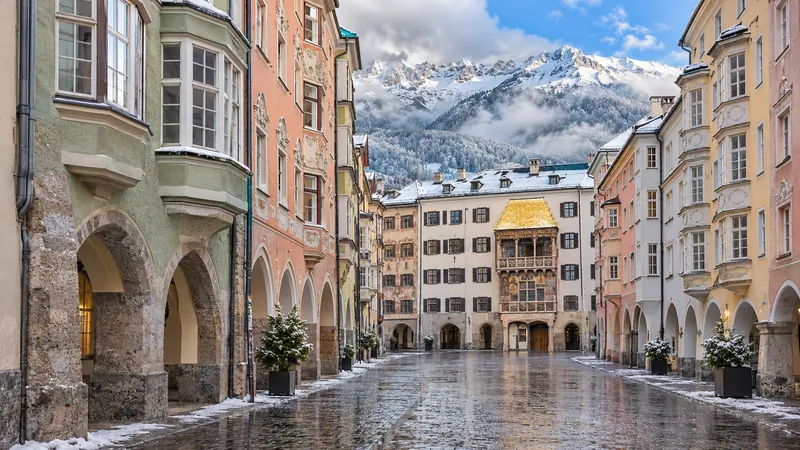
Head towards Maria-Theresien-Strasse, where the mountains give the broad street its distinctive backdrop. Walk past the Annasäule and continue into Herzog-Friedrich-Strasse. The change from open street to older lanes provides a natural introduction to the centre.
Around the Golden Roof, slow down. The attraction itself is a useful landmark, but much of the pleasure comes from painted façades, projecting signs, arcades and views along side streets. You can explore without following a complicated route or committing to every attraction.
Leave room for a warm stop before continuing. Gloves help outdoors, but taking them off to read signs, use your phone and take photographs soon makes a cold morning feel longer. A café break is useful pacing, especially if you have travelled that morning.
How can you fit in the river and an indoor sight?
From the Golden Roof, continue towards the Innbrücke. The river opens up the view after the enclosed old streets, with the colourful Mariahilf houses making a rewarding stopping point. Cross the bridge if footing is comfortable, then take a short riverside wander.
Keep this section modest in winter. Bridge approaches and shaded paths can be slippery, and an attractive route on a map may feel less inviting underfoot. Use treated pavements and turn back when the surface becomes awkward; you do not need a long loop.
Return towards the Hofburg and Hofkirche area for the afternoon. Choose one substantial visit according to your interests, checking current opening and access information through the official tourism sightseeing pages. Leaving space for one interior is more satisfying than hurrying between several entrances.
If you would rather stay outside, consider a short look around the Hofgarten where paths are accessible. With station walks, detours and meal stops, the central day can amount to roughly four to six kilometres. Staying farther out adds distance, so account for the walk home.
What makes Nordkette worth doing on day two?
Nordkette brings a mountain excursion unusually close to a city break. The journey passes through Hungerburg, with further stages towards Seegrube and Hafelekar. These are different levels of outing: reaching Hungerburg does not mean you have travelled to the highest visitor area.
Before buying, check which sections are operating and what the proposed ticket includes. Read any relevant city-card or sightseeing-product conditions rather than assuming the complete ascent is covered. Official Nordkette information is the place to confirm current arrangements, operating schedules and restrictions.
The best reason to go is useful visibility combined with conditions you can comfortably manage. Check webcams at the level you intend to visit, the forecast and the return arrangements. Cloud in town does not settle the question either way; inspect the mountain information before deciding.
Keep around half a day available for travel, waiting, viewing stops and the return. This is a planning allowance, not a promised duration. On a short break, enjoying one viewpoint without watching the clock is preferable to pursuing every stage simply because it appears on the route.
What should you wear and expect on the mountain?
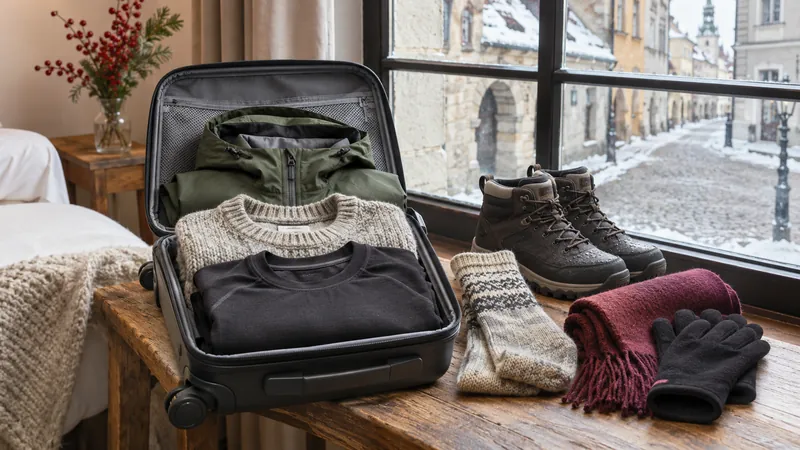
Dress for a colder, more exposed setting than the streets below. Layers, gloves and a wind-resistant outer layer make it easier to adjust between transport and outdoor stops. Wear footwear with dependable grip; smooth everyday soles can make a brief viewing stop uncomfortable.
This itinerary is a sightseeing outing, with walking limited to open, maintained visitor areas. A lift arrival point does not establish that nearby paths are suitable for an ordinary winter stroll. Snow and ice can conceal summer routes, and conditions beyond managed areas require separate judgement and preparation.
Follow local signs and staff advice, and accept that a short stop may be enough. You can appreciate the setting without undertaking a longer walk. If exposure, footing or visibility makes the experience unpleasant, descending earlier is a sensible use of your limited time.
Keep your onward journey in mind before ascending. Collecting luggage, reaching the station and dealing with a delayed connection all need breathing room. If departure is that afternoon, decide beforehand what would make the mountain trip too rushed.
What should you do if the mountain weather is poor?
Keep a city alternative ready before the morning decision. Return to an interior you skipped, spend longer around the old streets or make lunch a leisurely part of the day. Checking opening arrangements in advance prevents a weather change becoming a succession of closed doors.
Hungerburg may suit a shorter excursion, but it also needs a visibility check. A partial ascent is not automatically rewarding when low cloud obscures the view. Decide what you hope to see and whether current conditions support that aim.
Bergisel is another possibility if its visitor facilities are open and conditions suit. It sits south of the centre, so treat it as a planned outing with transport checked beforehand. Avoid squeezing it between several museums merely to replace the mountain excursion with an equally crowded schedule.
How should you arrive from Munich or elsewhere in Austria?
For Munich connections, compare your actual travel date in the Deutsche Bahn and ÖBB journey planners. Look beyond the headline journey duration: transfers, engineering work, ticket conditions and the arrival station all affect how straightforward the trip will be.
If Innsbruck follows a Bavarian stay, the Munich three-day itinerary helps you allocate sightseeing before travelling south. The Munich destination guide provides wider context for organising that part of the journey.
For arrivals from within Austria, use ÖBB to check connections from your starting point. The Salzburg two-day itinerary works as a separate city stop; allow travel time between destinations rather than treating it as sightseeing time.
Similarly, the two-day Vienna itinerary can help with a longer Austrian trip. Give each city usable time on the ground. A late arrival followed by an early departure does not leave the same scope as two complete days.
Where should you stay, and when is local transport useful?
A central base makes this route easier because you can return for warmer layers, rest or dry footwear without a substantial detour. When comparing accommodation, check the actual walking route to the old town and station, especially if you will be carrying bags.
For accommodation farther out or an outing beyond the centre, consult IVB’s official journey planner and ticket information. Check the stop nearest your destination and the return route before leaving. This is particularly helpful when darkness or tiring legs make another walk less appealing.
Keep skiing separate from this sightseeing plan. Equipment, suitable conditions and travel arrangements deserve their own time. Trying to add a full ski day while preserving the old town and Nordkette programme makes a short winter break unnecessarily hurried.
In short
Give the old town and riverside an unhurried day, then use suitable mountain weather for Nordkette. Keep an indoor alternative ready, check official transport information and leave enough time for your onward journey.
Frequently asked questions
Is two days enough for Innsbruck in winter?
Yes, for the old town, a riverside walk, selected interiors and a mountain excursion if conditions allow. Two full days offer much more flexibility than a short overnight stop.
Can you visit Innsbruck without a car?
Yes. The central route is walkable, and local public transport helps with longer journeys. Check your accommodation’s connection before arriving with luggage.
Should you book Nordkette in advance?
Check visibility, operating status and ticket conditions first. If advance purchase restricts your date, weigh that against the value of choosing the better mountain day.
Is snow guaranteed in the city?
No. City streets and higher mountain areas can have very different conditions. Consult current forecasts and webcams, and bring footwear suitable for wet or slippery surfaces.
Sources and checks
- Innsbruck TourismChecked: 15 November 2026
- Innsbruck Tourism: sightseeingChecked: 15 November 2026
- Innsbruck Tourism: NordketteChecked: 15 November 2026
- Nordkette, official siteChecked: 15 November 2026
- ÖBB, Austrian Federal RailwaysChecked: 15 November 2026
- Deutsche BahnChecked: 15 November 2026
- GeoSphere Austria: weather forecast map and tableChecked: 15 November 2026
- IVB, Innsbruck public transportChecked: 15 November 2026
Itineraries are editorial suggestions for independent visits. Check current prices, opening hours and trail conditions with official providers.