At a glance
Give Florence three days for a focused art visit, the Duomo area and an afternoon across the Arno in Oltrarno. Choose Uffizi or Accademia as the first major gallery, then add the other only if art is your main priority. Both normally close on Mondays. A dome climb requires its own booked slot and involves 463 steps with no lift; seeing the cathedral square is a separate option.
Choose what you want to understand, not just recognise
Florence contains enough art to fill a much longer stay. For a first visit, decide which experience matters most: Renaissance painting, sculpture, the cathedral complex or the city seen from its streets and river. These interests overlap, but they do not all need a full ticketed programme every day. One well-chosen collection can make the trip more memorable than a sequence of exhausted gallery visits.
The centre is compact enough to support walking, yet proximity can tempt visitors to overbook. A museum entrance, security process and a detailed collection still require time even when the next landmark is close. Use the three days below as a framework and exchange their order according to your confirmed entries. Arrival and departure periods should be treated honestly as partial days.
Day one: a gallery and the civic heart
Start with the collection that most interests you. The Uffizi suits a substantial painting-focused visit; Accademia is a different choice with sculpture at the centre of many visitors' interests. Read the current collection and ticket information, identify a few works or sections you want to spend time with, and avoid assuming that a short list of famous objects represents the whole visit.
Both institutions normally close on Mondays under the information checked on 8 October 2026, with possible special openings. If Monday is part of your stay, put the street-and-river day there instead. Check the actual date rather than relying on a general weekly rule alone. A museum pass and a reserved entrance may also have different conditions, so confirm what action the chosen product requires.
Use the afternoon for Piazza della Signoria and the surrounding streets. The relationship between public space, sculpture and civic architecture offers context after an indoor visit. It is not necessary to add another palace immediately. A meal and a slow walk can help you absorb the morning rather than turning the day into a second round of information overload.
If you are linking Florence with another Italian city, our Rome itinerary groups its major visits into separate days too. Protect travel time between the cities and avoid scheduling a gallery soon after arrival. The journey from a station to accommodation and onward to an entrance can make a theoretically possible booking an uncomfortable choice.
If the Uffizi is your gallery choice, let Piazza della Signoria and the Loggia dei Lanzi area form the shorter civic continuation outside. Palazzo Vecchio is a separate interior to consider, not part of merely crossing the square. If your booked gallery is the Accademia instead, use the Duomo-area approach as a distinct route and reduce the additional indoor programme. The two collections should not be described as interchangeable stops beside the same entrance.
Day two: decide how to visit the Duomo complex
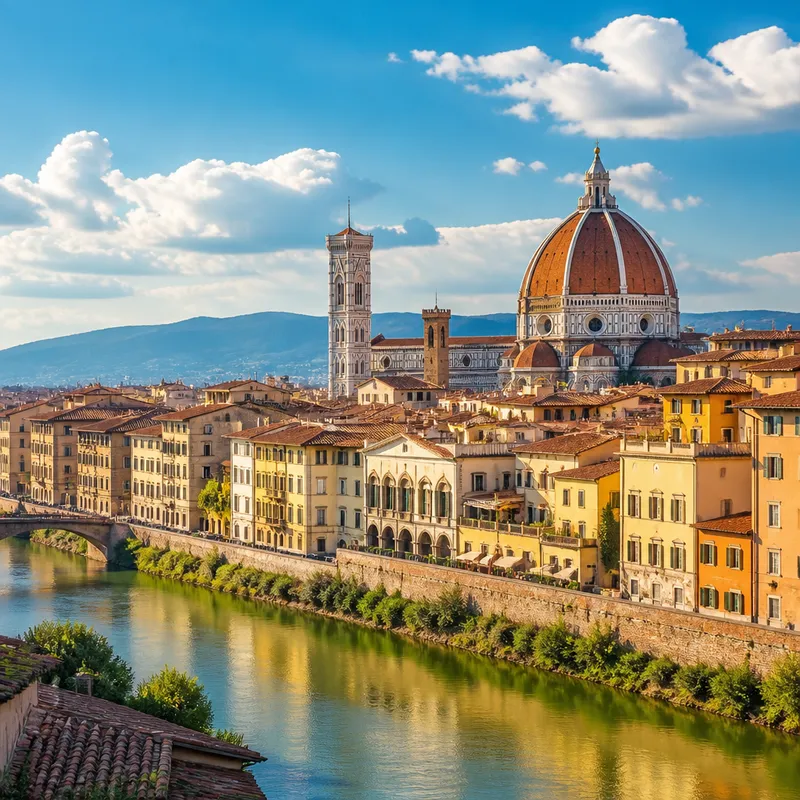
Begin in the cathedral square, then follow the programme appropriate to your chosen monument pass. The cathedral interior, dome, bell tower, museum and other components should not be treated as one undifferentiated visit. Read which areas your product includes, how long it is valid and where a specific timed entry is required. Buying the most inclusive option is useful only if you want and can comfortably complete its components.
Brunelleschi's Dome requires a booked time slot. The official operator states that the ascent has 463 steps and no lift. That is a material decision for anyone with mobility limitations, discomfort in enclosed spaces or difficulty with sustained stair climbing. Choose the climb because the experience suits you, not because it appears on a universal list of things every visitor must complete.
The operator also sets luggage restrictions for the dome route. Check the current storage instructions and arrive with permitted belongings. Do not assume a day bag accepted at another attraction will be allowed here. If some members of the party climb and others do not, agree on a meeting point and a realistic time window. A cathedral-square visit can still be worthwhile without the ascent.
Spend the afternoon nearby or select the cathedral museum if it is part of your priorities. After a substantial climb, a long exposed walk to another viewpoint may add effort without adding much variety. A slower street route, café and time to look at architectural details can provide a better balance. Keep restoration notices in mind for the specific monuments you intend to enter.
Day three: cross the river and explore Oltrarno
Use the Arno and a bridge crossing as the start of the final day. Looking along the river gives a different view of the city from the narrow central streets. Continue into Oltrarno, where you can build a route around a selected square, church, workshop area or museum. Research the individual places that interest you rather than treating a whole district as an attraction with uniform opening hours.
Decide whether the day is mainly an outdoor neighbourhood walk or a substantial interior-and-garden visit. Those are different programmes. A palace collection can take much of the morning; an extended garden route can demand energy and suitable conditions. Choose according to your interests and current access information. Do not buy a broad combination simply because every included place looks appealing in photographs.
If you want a hilltop view, make it an optional finish and consider the route back as well as the ascent. A viewpoint involves movement that a postcard does not show. In warm weather, rain or a tired group, staying near the river can be the more comfortable decision. There is no need to add a second climb to prove that you experienced Florence thoroughly.
Our Venice itinerary offers another Italian city where slowing down between famous landmarks improves the visit. The two destinations have different movement constraints, so compare the actual walking and luggage routes rather than repeating the same daily attraction count.
For a defined Oltrarno section, cross via Ponte Vecchio and use Borgo San Jacopo, Piazza della Passera and the Santo Spirito area as named references. FeelFlorence’s official itinerary explains this neighbourhood route and the relationship with Pitti. Piazza del Carmine can be an extension if that part interests you; a Brancacci Chapel visit needs its own verified admission. This smaller sequence provides a useful alternative to walking every artisan street in an afternoon.
Three days with an adaptable order
Use the table to decide which day should hold each confirmed reservation. Monday can be a good place for the street-and-river programme when the galleries are closed, but check the opening of any extra interior you plan to add. If only two days are available, retain the main gallery and Duomo decision, with a shorter Oltrarno walk as the flexible element.
| Day | Main focus | Booking decision | Flexible block |
|---|---|---|---|
| One | Art and civic centre | Uffizi or Accademia | Signoria and central streets |
| Two | Duomo complex | Chosen pass and optional dome slot | Nearby museum or relaxed afternoon |
| Three | Arno and Oltrarno | Optional researched interior | Neighbourhood walk or viewpoint |
Meals and accommodation that fit the geography
Plan a meal near the area you are exploring, especially after a long museum visit. A famous venue across the city may be less useful than somewhere with suitable food, seating and current opening hours on your route. This guide does not claim personal testing of restaurants or workshops. Compare menus and reservation arrangements according to your own requirements.
Choose accommodation by the actual street and arrival route. Central convenience, evening atmosphere and access with luggage can point to different choices. A room overlooking a lively area may suit one traveller and disturb another. Check stairs and lift details directly if access matters. The ability to return for a rest can be particularly valuable during a trip with several demanding interiors.
For other short trips built around cultural priorities, browse our culture and history collection. Budget for the attractions you truly intend to visit before comparing passes. A saving calculated from six theoretical entrances is not useful if the itinerary only comfortably supports two.
Before finalising the trip
Confirm the gallery calendars, the Duomo product and any climb reservation. Save confirmations offline and allow time for the correct entrance, luggage storage and security. If a priority is unavailable, use a considered alternative rather than purchasing an unrelated expensive tour simply to preserve the original day order. The central streets and river provide meaningful time between selected interiors.
Uffizi, Accademia and Opera del Duomo information was checked on 8 October 2026. Special openings, restoration notices and products may change, so verify your exact dates. The route is an editorial first-visit suggestion, not a promise of queue-free access. Florence becomes more rewarding when you decide what deserves attention and leave enough time to give it that attention.
Choose Pitti, Boboli or a hilltop instead of combining everything
Pitti Palace and Boboli are distinct experiences within the operator’s product choices. Read the exact inclusions and allow for the garden’s slopes before deciding that one combined label means an effortless visit. An art-focused Pitti visit should replace much of the third day’s wandering. An outdoor-led day can retain the Oltrarno streets and one garden section, subject to the access and weather you find.
Piazzale Michelangelo adds a separate uphill approach beyond the smaller Santo Spirito route. Choose it as your later priority and shorten another block; do not count the climb inside the time for the flatter streets near the river. A selected Oltrarno walk can take roughly two to three hours with pauses, excluding major interiors and a long meal. This is an editorial estimate. Save the actual path and return journey, especially if sunset or an onward train fixes the end of the day.
Frequently asked questions
Is three days enough for Florence?
Three full days allow a substantial art visit, the Duomo area and Oltrarno without making every block a reservation. Add time for several large collections and extended garden visits.
Are the Uffizi and Accademia open on Mondays?
They normally close on Mondays under the information checked on 8 October 2026. Special openings can occur, so verify your actual date before setting the day order.
Can I use a lift to reach Brunelleschi's Dome?
No. The official operator states that the ascent involves 463 steps and no lift. It also requires a booked time slot and has luggage restrictions.
Is a dome climb required to enjoy the Duomo area?
No. The square and other selected monument visits provide different ways to experience the complex. Choose components according to your interests and mobility rather than treating every climb as essential.
Sources and checks
- Uffizi Galleries: visiting the UffiziChecked: 8 October 2026
- Accademia: visitor planningChecked: 8 October 2026
- Opera del Duomo: monument passes and climbingChecked: 8 October 2026
- Opera del Duomo: dome accessChecked: 8 October 2026
- FeelFlorence — Oltrarno between Pitti and Santo SpiritoChecked: 8 October 2026
- Uffizi Galleries — Pitti Palace visitor productsChecked: 8 October 2026
Itineraries are editorial suggestions for independent visits. Check current prices, opening hours and trail conditions with official providers.