At a glance
Use your first day in Bilbao for the Guggenheim and the riverside, then spend the second in Casco Viejo, around the Seven Streets and Plaza Nueva. Add Azkuna Zentroa or the Artxanda funicular according to your interests and the weather. Give the museum a proper half-day block and leave time for pintxos instead of rushing between attractions.
How to spend two days in Bilbao
Bilbao makes an unusually good city break for visitors who like a major museum but also want streets, food and architecture beyond it. The river links several of the main sights, while Casco Viejo provides a compact second-day focus. This route puts the Guggenheim first, so its admission time can anchor the trip, then allows a more flexible day in the old town. Swap the days if the museum calendar or your arrival time makes that easier.
The suggested time blocks below include looking around and taking breaks. They are not claims about how long every visitor needs. Someone interested in contemporary art may spend most of a day inside the Guggenheim; someone drawn mainly to the building may prefer a shorter interior visit and a longer river walk. Decide which version fits you before booking a second substantial activity for the same afternoon.
| When | Focus | Allow |
|---|---|---|
| Day 1 morning | Guggenheim exterior and galleries | 3–4 hours |
| Day 1 afternoon | River walk and optional Azkuna Zentroa | 2–3 hours |
| Day 2 morning | Casco Viejo, Plaza Nueva and Ribera area | 3 hours |
| Day 2 afternoon | Artxanda or a flexible cultural visit | 2 hours |
Two compact walking sequences
On day one, keep the Guggenheim and Abandoibarra riverfront together, then turn inland towards the Ensanche streets if you are visiting Azkuna Zentroa. Allow roughly 20–30 minutes for that connection, depending on where you leave the river; museum and meal time are additional. For day two, use Plaza Nueva, Plaza Unamuno, the Santiago Cathedral area, the Ribera market frontage and San Antón as a compact old-town sequence. This leads from the interior squares towards the water instead of repeatedly crossing the river. Artxanda is a separate extension: its lower station is across the river at Plaza del Funicular, so add that transfer after lunch rather than inserting it halfway through the old-town circuit.
Day one morning: approach the Guggenheim from the river
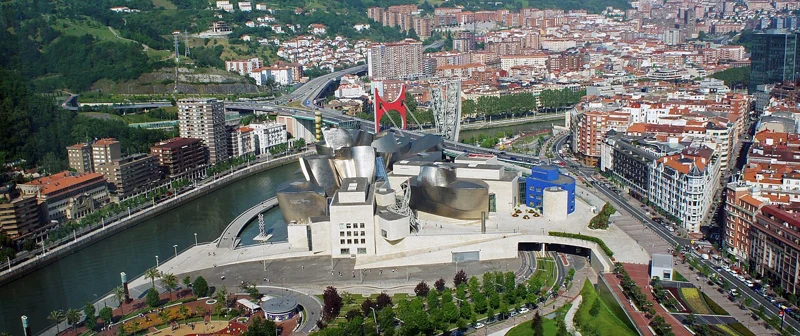
Begin with the museum's exterior rather than walking directly from transport into a ticket queue. Seeing the building from the riverside helps explain its relationship with the city and gives you a different perspective from the entrance approach. Leave time to walk around the accessible public edges and look at the outdoor artworks. Their placement is part of the visit, so avoid scheduling this portion as a hurried photograph after the museum closes.
Inside, use the current exhibition information to choose a route. Richard Serra's The Matter of Time is one of the collection's defining installations, but your visit should also respond to what is actually on display. The museum's own planner offers routes for different interests and durations. Choose a manageable selection and allow yourself to linger when a work catches your attention; the building's scale can make an overly ambitious gallery list tiring.
Reserve the admission product that suits your date and read its conditions. Temporary exhibitions, guided visits and special activities can have their own arrangements. A ticket price mentioned in an old itinerary is a weak basis for a budget, so use the museum's live booking page for the final cost. Check cloakroom and bag guidance before arriving if you have come straight from the airport or railway station.
Day one lunch and afternoon: Abandoibarra at walking pace
After the museum, have lunch before extending the riverside walk. This is a useful moment to decide whether you want more architecture or a rest. A long morning of standing in galleries can make even a level promenade feel demanding, so keep the afternoon adjustable. Pick a nearby place from its menu and atmosphere rather than crossing the whole city for a recommendation that adds another journey.
Use the river as your orientation line as you explore Abandoibarra. From the public paths, the museum can be seen in relation to bridges and the surrounding city rather than as an isolated landmark. Cross only where it improves your route and leave room to sit beside the water. You do not need to walk every stretch of river to understand why this part of Bilbao works well for visitors.
If contemporary art is your main reason for travelling, compare this museum-led day with Madrid’s three-day art and city route. Madrid benefits from more time across several major collections; Bilbao suits a shorter break with one large museum as the anchor. Our art and museums guides offer other destinations where the collection can shape the trip.
Azkuna Zentroa: a useful second cultural stop
Azkuna Zentroa offers a different scale of cultural experience from the Guggenheim. Its Atrium of Cultures is supported by 43 distinctive columns, developed within Philippe Starck's design with scenographer Lorenzo Baraldi. Look at the variations in materials and shapes rather than treating the space merely as somewhere to pass through. The building is especially useful when you want another architectural stop without committing automatically to a second long museum visit.
Check the current programme if an exhibition, film or guided visit interests you. Access to an atrium and admission to a scheduled event are separate things. For this itinerary, allow a short architectural visit unless the programme gives you a reason to stay longer. You could place it after the river walk, or save it as a wet-weather alternative on day two. The point is to add an experience you want, rather than filling the remaining daylight by default.
Finish the first evening close to your chosen dinner area. Bilbao's food culture deserves more attention than eating whatever is nearest when the sightseeing ends. If you want a sit-down meal, make that the evening plan. If you prefer pintxos, leave the route open enough to try a couple of places without having to hurry back across town for another reservation.
Day two morning: Casco Viejo and the Seven Streets
Start the second day in Casco Viejo, Bilbao's old quarter. The Seven Streets give you a useful walking focus, with the Santiago Cathedral area, Plaza Nueva and the river near San Antón creating a compact circuit. Begin by walking slowly through the streets and noticing how the spaces connect. A map can help you return to a particular square, but there is little benefit in trying to cover the quarter in a rigid street-by-street order.
Allow time around Plaza Nueva before the lunch period. Its arcaded setting makes a convenient meeting point if members of your group want to browse separately. Continue towards the river and the Ribera area when you are ready for a change of scene. If a market visit matters to you, check its trading arrangements for the day: a food market and the surrounding restaurants do not necessarily operate on identical schedules.
Choose one historic interior if you want more depth, rather than entering every building on the route. Check admission and worship arrangements at religious sites, then use the rest of the morning for the streets around them. Casco Viejo is also where a longer lunch fits naturally into the itinerary. That leaves the afternoon available for a viewpoint or a return to something you noticed earlier.
How to make a pintxo meal work
Pintxos suit an evening or lunch built around a few short stops. Begin with a bar where you can see something you want to eat, check the menu or ask how ordering works, and buy a small selection. Some items are displayed while others are prepared to order. A smaller first order gives you space to try something elsewhere and reduces the chance that a promising food walk becomes one oversized plate at the first counter.
Tell staff about dietary requirements before choosing, especially when fillings or sauces are not obvious. Keep your own note of what you have ordered and follow the bar's payment system. For a group, agree whether you are sharing dishes or paying separately before ordering. These small decisions make a busy bar easier to navigate and leave more attention for the food itself.
A pintxo route does not require alcohol at every stop. Order the drink you want, and alternate bars with a walk if the evening becomes crowded. Travellers planning a wider Basque trip can continue with our two-day San Sebastián guide, where the old town and seaside neighbourhoods give food stops a different setting. Give each city its own meals and evenings instead of trying to decide which one wins after a single lunch.
Day two afternoon: Artxanda or more time in the centre
Choose Artxanda if the weather gives you a worthwhile city view. The lower funicular station is at Plaza del Funicular, so include the walk there when planning the outing. Check the operator's current service and return arrangements before ascending. The short ride is only one part of the visit; allow time at the top to understand the city's shape and then return without racing towards a train or dinner booking.
If clouds or rain make the viewpoint less appealing, use the afternoon for Azkuna Zentroa, an exhibition or another old-town walk. A two-day visit does not need two separate viewpoint excursions. You may get more from revisiting a favourite street or spending longer over lunch than from taking a transport ride simply because it appears in a list of things to do.
Practical choices for a car-free Bilbao visit
Pick accommodation by the journeys you will actually make. A central base between the old town and museum side of the city can reduce repeated transfers, while staying near Casco Viejo may suit a trip focused on food and evening wandering. Read recent access information for the building itself if stairs or luggage are a concern. A central address does not guarantee a lift or a quiet bedroom.
Use the official arrival information for your chosen airport, coach or rail service and check the final stop, not just the city name on the ticket. For the sightseeing in this guide, walking and local transport are more useful than moving a car between stops. Our car-free travel collection offers other short breaks planned around this approach. Keep your departure afternoon lighter if luggage collection requires crossing the centre again.
Budget for the Guggenheim as the main paid visit, then choose whether a funicular trip or another cultural admission adds enough value for you. Riverside walks, the old-town streets and looking at the public architecture can fill the remaining time. Before travelling, verify the museum date, any event bookings and your transport connections. The route can stay the same even when exhibition programmes and ticket prices change.
Frequently asked questions
Is two days enough in Bilbao?
Two full days work well for the Guggenheim, a river walk, Casco Viejo and either Azkuna Zentroa or Artxanda. Allow longer if you want several major exhibitions or excursions outside the city.
How long should you allow for the Guggenheim Bilbao?
A half-day block is a useful starting point, including the exterior and an interior visit. Art-focused travellers may want longer. Choose a route from the current exhibitions and avoid placing a tight booking immediately afterwards.
Can you see Bilbao without a car?
Yes. The sights in this itinerary can be combined using walking and local transport. Choose accommodation with convenient arrival and departure connections, and include the journey to the Artxanda lower station if you use the funicular.
Should you combine Bilbao and San Sebastián?
They work well as separate stops on a Basque trip. Give Bilbao time for the Guggenheim and old town, and San Sebastián time for its bay and food neighbourhoods. Include the intercity transfer in your schedule rather than treating it as sightseeing time.
Sources and checks
- Guggenheim Bilbao: plan your visitChecked: 23 October 2026
- Guggenheim Bilbao: old quarterChecked: 23 October 2026
- Azkuna Zentroa: the building and columnsChecked: 23 October 2026
- Artxanda Funicular: locationChecked: 23 October 2026
- Artxanda Funicular: services and faresChecked: 23 October 2026
Itineraries are editorial suggestions for independent visits. Check current prices, opening hours and trail conditions with official providers.