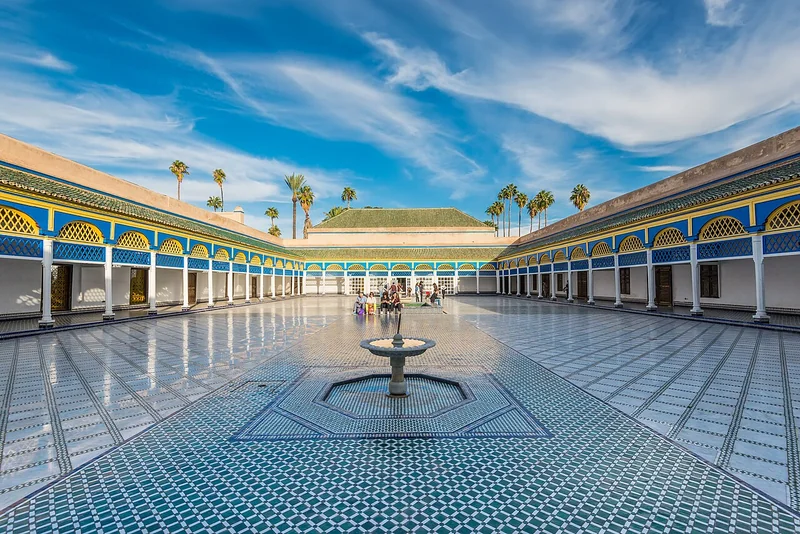
At a glance
Marrakech in winter suits travellers who want to explore historic sights, walk through the medina and linger over lunch without summer heat shaping the day. Sunshine can feel pleasantly mild, while shaded lanes, evenings and rooms without heating can feel cold. Winter does not guarantee quiet attractions or cheaper accommodation, especially around holidays. Choose a comfortable base, organise outdoor visits around daylight and keep mountain excursions flexible until you have checked conditions.
What does winter feel like in Marrakech?
The contrast between sunshine and shade can be more noticeable than you expect. A terrace might feel comfortable at lunchtime, yet a covered lane nearby can have you reaching for a jacket. Once you stop walking or the sun goes down, another layer becomes useful.
Pack everyday clothes that work together, including a warm middle layer, a jacket and comfortable closed shoes. Carry something warm rather than assuming you will return to your room before dinner.
Allow for rain when planning your days. Visit Morocco’s weather advice, listed in the sources, provides seasonal context. Check an official forecast shortly before departure and during your stay; a general description of winter cannot tell you what to expect on a particular afternoon.
Is winter a quieter or cheaper time to visit?
It can be, but “off-season” is an unreliable promise. Christmas, New Year and school holidays can bring demand, while popular sights may remain busy on otherwise relaxed days. Choose winter because its conditions suit your plans, then compare availability for your actual dates.
Look at flights and accommodation together before committing to either. Include baggage, airport transfers and any overnight stay needed before an early departure. A lower airfare may offer little saving once the complete journey is considered.
For travellers comparing city breaks, Marrakech rewards a manageable schedule. Leave space for browsing, meals and pauses rather than treating every available hour as a sightseeing slot.
How should you organise sightseeing around daylight?
Choose one main visit each day, then arrange a walk and a meal nearby. This gives the day a useful shape while leaving room for queues, a slower start or a change in weather. Confirm opening hours and admission arrangements directly before fixing the order.
Use brighter conditions for gardens and longer outdoor stretches. On a cold morning, a leisurely breakfast followed by a short outing may be more comfortable than an early start outside.
The Marrakech three-day itinerary offers a starting point for grouping sights. Adapt it to the forecast, your accommodation and the amount of walking you enjoy.
| Situation | Useful adjustment | What to check |
|---|---|---|
| Sunny afternoon | Choose a garden or longer walk | Forecast and admission arrangements |
| Cold morning | Begin with breakfast and a short outing | Enclosed seating and warm layers |
| Rainy spell | Bring forward a sheltered visit | Opening hours and walking route |
| Rooftop dinner | Keep an indoor alternative | Shelter and evening seating |
| Late arrival | Arrange the final approach beforehand | Vehicle access and meeting point |
| Mountain excursion | Keep a city alternative available | Official weather and road notices |
What makes walking in the medina easier?
Map distances do not account for browsing, uneven surfaces, frequent turns or stopping to let others pass. Group nearby visits together and avoid crossing the medina repeatedly between reservations. A shorter route can still take longer than expected.
Download a map and save your accommodation’s location before going out. Ask your host to explain a clear approach from a recognisable landmark, particularly for your first evening. A route with fewer turns may be easier to follow than the shortest option.
Step aside before checking directions, keeping space clear for pedestrians, carts and two-wheeled traffic. If you lose your bearings, contact your accommodation or ask a shopkeeper. After rain, take care on smooth paving and shorten the outing if your shoes become wet.
How do you choose accommodation that feels comfortable?
A beautiful courtyard says little about the temperature of a bedroom after dark. Ask whether your specific room has working heating, whether you can control it and whether extra bedding is available. Get a clear answer before booking if overnight warmth matters to you.
Check breakfast arrangements too. An open courtyard can be appealing in sunshine but less comfortable early in the morning. Ask whether there is an enclosed dining space and confirm hot-water arrangements if recent reviews raise concerns.
Read reviews from winter stays, then verify essential details directly. Summer feedback cannot establish how the same room feels in another season.
Balance appearance with access: establish where a taxi can stop, how far you will carry luggage and who can help you find the entrance.
What deserves time beyond the main sights?
Give individual places enough attention before adding another stop. In a historic building, look at carved details, courtyard proportions and the relationship between rooms and sheltered spaces. Finishing earlier than expected does not mean you need another ticketed visit.
The souks suit an unhurried approach. Browse without feeling obliged to buy, ask before photographing people and request permission before watching someone work in a small workshop. Agree on the price before accepting a service or commissioning an item.
An interest in culture and history can shape a whole day through architecture, craft and everyday street life. Residential lanes are also people’s homes and workplaces, so keep entrances clear and respect a refusal to be photographed.
How should you plan meals and evenings?
Think about seating as well as the menu. Before choosing a rooftop restaurant, check whether sheltered or indoor tables are available. A terrace that feels inviting during an afternoon walk may be uncomfortable once you have been sitting still after sunset.
Carry your evening layer even when you leave the room feeling warm. On arrival night, or after a long day on foot, a meal close to your accommodation can make the evening easier.
Allow time around Jemaa el-Fna without committing the whole evening to being outdoors. Spend a while in the square, then move somewhere comfortable if needed. Confirm menu prices and what is included before ordering, especially when an offer is explained verbally.
Are Atlas Mountain day trips sensible in winter?
Treat a mountain outing as a separate decision from city sightseeing. A mild afternoon in Marrakech tells you little about conditions higher up. Snow, ice or changing weather can affect roads and walking routes, so avoid making assumptions from the city forecast.
Before paying, establish the actual destination, time spent outside and amount of walking involved. A drive with brief stops requires different preparation from a hike. “Atlas excursion” alone is not enough detail to judge suitability.
Check official weather information and relevant road notices, then discuss the route with the operator. For mountain walking, seek advice from a qualified local guide about current conditions and equipment. Read cancellation terms and keep a city alternative ready.
What should you pack for a winter stay?
Build your packing around layers you can add and remove during the day. Clothes that work together are useful between sunny squares, shaded passages and evening meals, without requiring a separate outfit for each activity.
A small day bag should have space for a jacket, a compact rain layer and essentials. Leave enough room to put clothing away when you warm up. Keep valuables secure and carry only what you need for the outing.
Choose shoes you already know are comfortable. Sightseeing involves standing, steps and uneven ground as well as walking, so an unfamiliar pair can become a nuisance. If luggage space allows, bring a spare pair in case the first gets wet. Review the forecast before closing your suitcase.
What should you check before travelling from Central Europe?
Review the full journey, including departure airport, baggage allowance and arrival time. If you are using an airport in a neighbouring country, allow a realistic margin and plan the return journey home as carefully as the outward leg.
Save your accommodation’s address, contact details and arrival instructions offline. Confirm the transfer meeting point and, for a medina stay, where vehicle access ends. Keep this information somewhere accessible without searching through several emails.
Use the Kingdom of Morocco’s official portal and the relevant authorities to check current entry requirements for your nationality and documents. Another traveller’s experience may not apply to you.
Good travel planning combines confirmed essentials with room to adjust. Arrange transport and suitable accommodation, then use current information to decide walks, terrace meals and excursions.
Before departure, tell your accommodation if an arrival delay would affect the meeting arrangements. Keep its telephone number alongside the address, and make sure everyone in your group can access those details. These small preparations are particularly useful when you arrive tired and still need to complete the final walk to your room.
In short
Marrakech in winter works well with daylight walks, unhurried visits and warm places to pause. Choose accommodation for overnight comfort, make arrival straightforward and carry layers throughout the day. Check practical arrangements directly, expect weather to vary and let mountain conditions guide any excursion.
Frequently asked questions
Is Marrakech warm enough for outdoor sightseeing in winter?
Often, particularly in sunshine, but conditions vary. Carry a warm layer, check the forecast and leave room for sheltered breaks. Shaded streets and the walk back after sunset can feel colder than an afternoon terrace.
Do I need accommodation with heating?
Confirmed bedroom heating is a sensible priority if you feel the cold. Ask about your particular room, heating controls and extra bedding. An enclosed breakfast space can also make mornings more comfortable.
Is winter guaranteed to be cheaper and less crowded?
No. Holiday periods and demand for popular properties can affect availability and cost. Compare your exact dates, including flights, baggage and transfers, rather than assuming that a winter booking offers better value.
Can I arrange an Atlas Mountains trip after arriving?
You can wait until conditions are clearer, though availability may vary. Confirm the destination, activity, official weather information and road access before booking. Keep another city day available if the proposed excursion is unsuitable.
Sources and checks
- Visit Morocco, official tourism siteChecked: 15 November 2026
- Kingdom of Morocco, official portalChecked: 15 November 2026
- Visit Morocco, weather adviceChecked: 15 November 2026
Itineraries are editorial suggestions for independent visits. Check current prices, opening hours and trail conditions with official providers.